Africa's Vehicle Parc Growth Opens Doors for Body Parts
Africa is changing faster than the global automotive press sometimes acknowledges. Vehicle ownership across the continent is growing at 6 to 8 percent a year, the average age of vehicles on the road stretches from 14 to 17 years depending on the market, and chinese auto brands have moved from novelty to fastest-growing new car supplier in markets from Lagos to Nairobi to Cape Town. The downstream effect for distributors and importers is simple: every new vehicle added to the parc and every aging vehicle that stays in use is a future body parts customer. Auto parts wholesale and collision repair supply chains built on chinese body parts are quietly becoming some of the most interesting growth opportunities on the continent.
The African Vehicle Parc is Expanding Quickly
Sub-Saharan Africa's vehicle parc is now expanding at 6 to 8 percent annually, with North African markets such as Egypt, Morocco, Tunisia and Algeria running at similar growth rates from a higher starting base. That pace of parc growth is structurally higher than developed markets, where the parc is essentially saturated and only churns at 2 to 3 percent per year.
The drivers are familiar: rising middle-class purchasing power, urbanisation, increased used-vehicle imports from Asia and Europe, and improving access to consumer finance. Each of these forces is structural rather than cyclical, which means the parc expansion will continue for at least another decade.
Why Average Vehicle Age Matters for Collision Repair
Average vehicle age is the second pillar of the African body parts opportunity. Across Sub-Saharan Africa, the typical vehicle on the road is 14 to 17 years old — far older than the 11 to 12 year average in Europe or North America. Older vehicles are more collision-prone because their drivers tend to operate them harder, repair them longer and maintain them less rigorously. They are also far more likely to need collision repair work, because damage accumulates over time.
The implications are significant. A 16-year-old vehicle that suffers a front-end shunt is almost always a write-off for an insurance company that only authorises new OEM parts, but it is a routine collision repair job for a workshop using aftermarket body parts. The collision repair opportunity on African roads is therefore disproportionate to the absolute vehicle count, and chinese auto body parts supply chains are increasingly the only practical way to meet it.
Chinese Auto Brands Lead New Car Growth in Africa
Chinese auto brands are now the fastest-growing new car suppliers across most African markets. Chery, BAIC, JAC, GWM, MG, MAXUS, Foton and JMC each hold meaningful market share, and their combined share has been rising year after year. In Egypt, Chery is one of the top three passenger brands; in South Africa, MG and GWM have become established mid-market choices; in East Africa, Suzuki and Toyota still dominate used imports, but new chinese auto brands are gaining share every quarter.
The shift matters because chinese auto brands bring with them chinese-spec body parts catalogues that are widely available and competitively priced. A workshop in Lagos, Addis Ababa, Maputo or Cape Town can now order chinese auto body parts by model name — Chery Tiggo, BAIC X35, JAC S3, GWM Steed, MG ZS — and have them delivered within a few weeks. That is a fundamentally different supply story than was available even five years ago.
Auto Parts Wholesale Models Adapted for Africa
Auto parts wholesale across Africa has traditionally been dominated by importers who consolidate mixed containers in Durban, Mombasa, Lagos, Tema or Tangier and then distribute inland to smaller retailers. That model still works, but it has been forced to adapt to the new chinese auto body parts demand in two important ways.
First, container consolidation increasingly favours chinese vehicle body parts over generic aftermarket parts, because the chinese auto brand parc is where the volume growth is. Second, regional distributors are starting to hold their own safety stock of fast-moving chinese auto body parts SKUs rather than waiting for replenishment containers — which means importers need to offer shorter lead times and smaller minimum orders. OOZOM's minimum order of one unit and consolidated African routing is built to support exactly this wholesale pattern.
Belt and Road Improves Logistics Connectivity
One of the under-reported tailwinds for african auto parts wholesale has been Belt and Road infrastructure. New and upgraded port facilities in Djibouti, Mombasa, Dar es Salaam, Maputo, Lagos and Tema have improved container turnaround times, while upgraded road and rail corridors from those ports inland have cut transit times for body parts to landlocked markets such as Uganda, Rwanda, Zambia, Zimbabwe and the Democratic Republic of the Congo.
The logistics story is not perfect — customs clearance in some African markets remains slow and unpredictable — but the direction of travel is clear. Lead times are getting shorter, freight costs are stabilising, and the geography of body parts distribution is becoming less of a constraint than it was a decade ago.
Collision Repair Demand Outpaces OEM Supply
Collision repair demand is growing faster than OEM dealer supply in nearly every african market. The reason is structural: most african markets have only a thin official dealer network for chinese auto brands, and the dealers that do exist price parts at import-duty-loaded retail rates that few insurance policies can absorb. Independent workshops therefore handle the bulk of collision repair work, and they depend on the auto parts wholesale channel for supply.
This is where body parts categories like front bumpers, grilles, mirror assemblies and tail lamps become volume movers. Independent collision shops in Lagos, Accra, Nairobi, Johannesburg and Lusaka order these SKUs regularly, and the distributors who hold consistent inventory win their repeat business.
Top Chinese Body Parts SKUs for African Distributors
Based on distribution data from the leading chinese auto body parts wholesalers into Africa, the highest-velocity SKUs are:
- Chery Tiggo 4 Pro and Tiggo 7 Pro front bumpers and grille assemblies
- MG ZS and MG Hector front bumpers, side mirrors and tail lamps
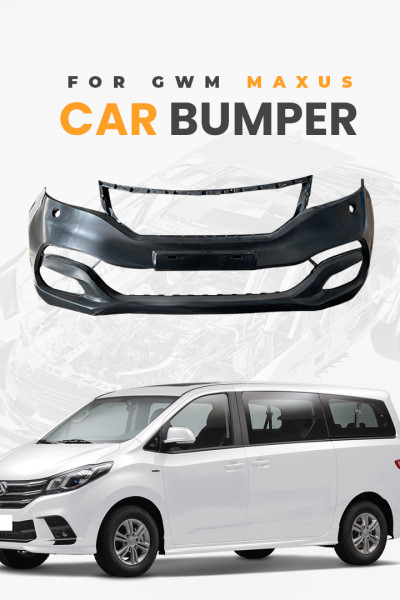
- MAXUS G10 and Deliver 9 van bumpers and sliding door panels
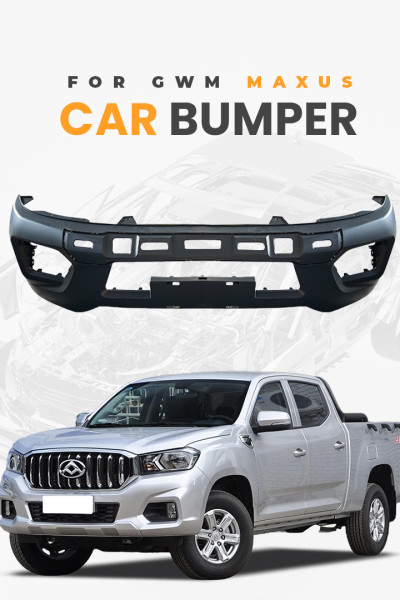
- GWM Steed and P-Series load bed panels and tail lamps
- BAIC X35 and X55 front bumpers, grilles and mirror assemblies
- JAC S3 and S5 front bumpers, grilles and headlamp supports
These six categories alone cover the bulk of independent collision repair work across Sub-Saharan Africa. A distributor that stocks all six at depth can service most walk-in workshop demand within a 24-hour window.
Working Capital Friendly Sourcing for the New Car
One of the advantages of sourcing chinese auto body parts for the african market is the working-capital-friendly order structure. Distributors and wholesalers can order relatively small mixed containers, hold them in regional bonded warehouses, and replenish on a regular schedule rather than committing working capital to very large single shipments. That is a much better fit for the financial reality of african distributors than the high-volume container model that works in larger markets.
OOZOM's order-from-one-unit model is well matched to this dynamic. A distributor in Nairobi can order a single Chery front bumper for a one-off job and also replenish twenty high-velocity SKUs in the same shipment, with shipping cost spread across the consolidated order.


Source chinese body parts and auto parts wholesale for african markets through the OOZOM app.
Conclusion: OOZOM as an African Body Parts Wholesale Partner
Africa's parc expansion and aging vehicle stock make the continent one of the most structurally attractive growth markets for chinese auto body parts and collision repair supply. Distributors that build a focused chinese auto body parts catalogue now will own the wholesale pipeline that feeds the next decade of independent workshop demand. OOZOM supplies auto parts wholesale customers across 21 chinese auto brands — including the Chery, MG, MAXUS, GWM and JAC ranges leading african new car sales — with a minimum order quantity of just one unit and consolidated African routing from a 50,000-square-metre warehouse. Whether the workshop needs a replacement bumper for a one-off job or a container of mixed high-velocity body parts, OOZOM is built to be the auto parts wholesale partner for distributors ready to grow alongside the african parc.