Auto Parts Knowledge | What Is a Car Brake Booster? its Functions and How it Works
We hope this article is helpful for you, We not only provide high quality products, but also offer professional pre-sales and after-sales services.
Whether you need advice on product specifications or have a problem with a product in use, our team is always on hand to provide support and advice, and we firmly believe that customer satisfaction is the key to our success.
Therefore, working hard to ensure that our products are not only of high quality but also cost-effective has made OOZOM one of the preferred suppliers for many of our customers.
- We are committed to providing customers with one-stop auto parts, OOZOM is a professional service provider of all kinds of auto parts, if you are interested in our products, you can contact us directly through the mailbox, if necessary, you can also use WhatsApp for quick consultation.
- contact us
Frequently Asked Questions
Q1. What is a brake booster?
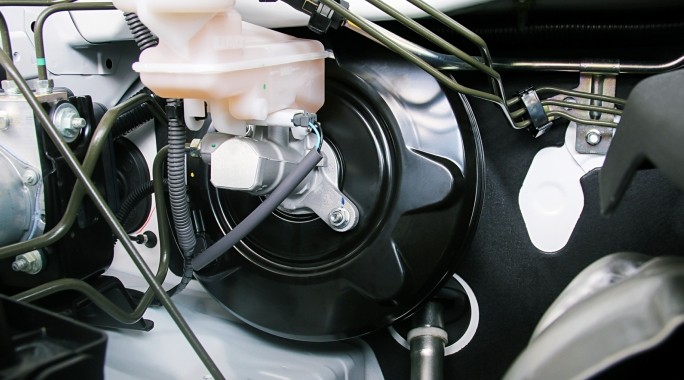
A brake booster is a device mounted between the brake pedal and the master cylinder that multiplies the force you apply to the pedal. It is also called a brake servo and may be vacuum-assisted or hydraulic.
Q2. What is the purpose of a brake booster?
Its purpose is to reduce the effort needed to brake. By amplifying pedal force several times, it lets a driver stop a heavy vehicle quickly and safely without needing extreme leg strength.
Q3. How does a brake booster work?
In a vacuum booster, pressing the pedal opens a valve that admits engine vacuum to one side of a diaphragm. Atmospheric pressure on the other side pushes the diaphragm and its pushrod forward, adding force to the master cylinder. Releasing the pedal closes the valve and a spring resets the mechanism.
Q4. What does a brake booster do when it fails?
The brakes still work mechanically, but the pedal becomes much harder and stopping distances increase. Most drivers notice a sudden change in pedal feel, which should be treated as a safety warning.
Q5. What are the signs of a bad brake booster?
A hard or stiff pedal, a hissing noise when pressing or releasing the pedal, longer stopping distance, a brake warning light, or an engine idle change when braking are all common signs.
Q6. Can you drive with a bad brake booster?
Technically yes, but braking effort rises sharply and emergency stopping becomes much harder. It should be inspected and replaced as a safety-critical repair.