Why the Global Aftermarket Shifts to Chinese Car Parts
For most of the past forty years, the global automotive aftermarket has been a story about three regions: Germany, Japan, and the United States. European suppliers such as Bosch, ZF, Hella, and Mahle dominated electronics and chassis. Japanese suppliers such as Denso, Aisin, and Koito dominated engine management and lighting. American suppliers such as Delphi, Federal-Mogul, and Tenneco dominated gaskets, friction, and exhaust. Distributors in Africa, the Middle East, Southeast Asia, and Latin America sourced almost every replacement body part, mechanical component, and electrical module through this handful of brands — and through the long, fragmented distribution chains that grew up around them. That arrangement is over. Over the last decade, and especially over the last five years, the global aftermarket has shifted, quietly but unmistakably, toward Chinese car parts suppliers. The shift is not a blip, it is not a price-driven fad, and it is not limited to one product category. It is the most significant structural change in the global parts trade since the rise of Japanese suppliers in the 1980s, and distributors who do not understand it will lose share to competitors who do.
This article looks at the data behind the shift, the structural reasons it is happening, the categories where the change is most visible, and what it means for a wholesale distributor or fleet operator deciding where to source body parts wholesale over the next decade. The numbers are drawn from trade data, industry reports, and the operational experience of running a multi-brand export operation from a 50,000 square-metre warehouse stocked with China auto parts from 21 different OEMs.
The Numbers Behind the Shift
The single most striking data point comes from China customs. In 2024, China exported approximately 612 billion USD of automotive products — vehicles plus parts combined — up from roughly 392 billion USD just five years earlier. Parts alone account for the larger share of that growth. Auto parts exports rose from about 78 billion USD in 2019 to over 117 billion USD in 2024, a compound annual growth rate above 8 percent that significantly outpaces the global aftermarket growth rate of 3 to 4 percent.
Within that total, body parts — bumpers, grilles, fenders, hoods, tailgates, mirror assemblies, headlamp surrounds — are now the single largest export category, ahead of engine components, brake parts, and electronics. That is a meaningful change from a decade ago, when Chinese auto parts exports were dominated by commoditised fasteners, rubber components, and basic electrical parts. Today, large-format, design-intensive body panels account for the largest share of the dollar value leaving Chinese factories, because that is where the OE-quality advantage is clearest and the savings versus European and Japanese equivalents are largest.
| Region of destination | Approx. share of Chinese parts exports (2024) | 5-year growth |
|---|---|---|
| North America | 22% | +38% |
| Europe (EU + UK + EFTA) | 19% | +61% |
| Middle East & North Africa | 15% | +44% |
| Southeast Asia | 13% | +57% |
| Latin America | 11% | +71% |
| Sub-Saharan Africa | 9% | +82% |
| Other (CIS, Oceania, etc.) | 11% | +33% |
The fastest growth is in the regions where the price gap matters most. Sub-Saharan Africa and Latin America have grown Chinese parts imports by more than 70 percent in five years. Europe — the historical home of the highest-quality aftermarket — has grown by 61 percent. That growth in Europe is the most telling signal of all, because European buyers are notoriously demanding on fitment, finish, and warranty. The fact that they are buying Chinese car parts at scale is the strongest possible indication that the quality gap has closed.
Why the Quality Gap Closed
For most of the 1990s and 2000s, "Made in China" was shorthand for cheap and inconsistent. That is no longer true in the auto parts industry, and it has not been true for at least a decade. Three forces drove the quality transformation.
First, domestic demand. China is now the world's largest auto market by volume, and Chinese OEMs such as Chery, Geely, BYD, Great Wall (HAVAL), MAXUS, MG, and GAC have built world-class stamping, moulding, and paint shops to supply their own assembly plants. Those same shops produce aftermarket parts that match OE specifications because they use the same tooling, the same PPAP quality control, and the same material certifications. A Chery front bumper produced for the aftermarket in 2025 is built on tooling that may well have stamped the original-equipment part for the Chery Tiggo assembly line.
Second, export-market expectations. Once Chinese OEMs began exporting vehicles in volume to Europe, Australia, the GCC, and Latin America, their suppliers had to meet type-approval standards. That forced upgrades in measurement, paint matching, dimensional control, and traceability. Tier-1 suppliers that could not meet those standards lost OEM business. The aftermarket parts that come out of those upgraded Tier-1 shops today are a generation ahead of the parts that came out of them ten years ago.
Third, tooling technology. Modern injection moulds, multi-axis robotic welding cells, and computerised colour-matching spectrophotometers have made it possible for a mid-sized Chinese moulding shop to produce body panels with surface tolerances under 0.2 millimetres and paint colour matches within a Delta-E of 1.0. The technology is no longer the limiting factor. Training, process discipline, and management are the differentiators — and the leading Chinese suppliers have caught up on all three.
The Cost Advantage Is Real, But It Is Not the Whole Story
It is tempting to attribute the shift purely to price. The price gap is real — a Chinese OE-spec aftermarket bumper typically sells for 50 to 70 percent less than the equivalent European or Japanese part — but if price were the only factor, the shift would have happened in the 1990s, when Chinese labour costs were a tenth of what they are today. It did not, because price without quality is not a sustainable proposition for an aftermarket distributor. Customers eventually notice that a $40 bumper needs replacing every 18 months and go back to the more expensive part that lasted five years.
What changed is that Chinese suppliers are now offering both low price and high quality. That combination is what economists call a leapfrog — a new entrant does not catch up to the incumbent on the incumbent's terms; it leapfrogs past the incumbent by combining cost advantages with quality advantages that the incumbent has not yet achieved. In the auto parts industry, the leapfrog happened first in body parts, then in lighting, then in chassis, and is starting to happen in electronics. For distributors, this means the question is no longer "should I consider Chinese car parts?" but rather "how do I balance Chinese, Japanese, and European parts in my catalogue to maximise margin and reliability?"
Multi-brand Chinese auto parts catalogues now cover 21 brands from a single warehouse — Chery, MG, HAVAL, BYD, MAXUS, GAC and more.
Where the Shift Is Most Visible: Body Parts and Lighting
Not every aftermarket category has shifted at the same pace. Body parts and lighting are furthest along, for three reasons. First, the technology is mature — injection-moulded plastic and polycarbonate have been the dominant materials for two decades, and the leading Chinese moulding shops have invested heavily in modern presses. Second, the barrier to entry is lower than for safety-critical electronics or powertrain components — there is no need to homologate a new ABS module against ten regional standards before you can sell it. Third, body parts are visually obvious to the customer, which means the OE-spec suppliers invest heavily in surface finish, paint matching, and clip quality to win the workshop business.
Distributors in body parts wholesale who stock the major categories — bumpers, grilles, mirrors, fenders, hoods, tailgates, headlamp assemblies, tail lamps — now source 60 to 80 percent of their volume from Chinese suppliers. The remaining 20 to 40 percent is split between genuine European or Japanese parts (for dealer and insurance work) and locally remanufactured parts (for older vehicles out of OE support). In lighting — headlamps, tail lamps, fog lamps, DRL modules — the Chinese share is now above 50 percent in most emerging markets and is rising fast in Europe.
The categories where the shift is happening more slowly are electronics (especially ADAS sensors and infotainment), powertrain (engine and transmission components), and safety (brakes and airbags). Those categories will shift over time, but the regulatory and warranty barriers are higher, and the technology gap is wider. For now, the most reliable signal of a maturing shift in any given category is when a major European or Japanese aftermarket buyer — Bosch, Hella, Magneti Marelli — begins sourcing selected components from Chinese Tier-1 suppliers. That is already happening in lighting and is starting to happen in body parts.
Supply Chain Advantages Distributors Cannot Ignore
Beyond cost and quality, Chinese suppliers have built supply chain advantages that are difficult to replicate elsewhere. The three that matter most for distributors are production lead time, container consolidation, and digital procurement.
Production Lead Time
A typical Chinese Tier-1 body parts supplier can move from a confirmed purchase order to a packed container in 18 to 28 days. A comparable European or Japanese supplier typically needs 35 to 60 days. The lead-time advantage compounds: faster turn means lower safety stock, lower working capital, and faster response to demand spikes. For a distributor running a just-in-time operation, this is a structural advantage that is hard to overstate.
Container Consolidation
Because Chinese suppliers operate across many product categories and brands, a distributor can mix 20 or 30 different parts SKUs from one supplier in a single 40-foot container. The per-shipment freight cost amortises across the entire load, which lowers the landed cost per part significantly. European and Japanese suppliers typically only ship within their own brand, which forces the buyer to consolidate at a regional warehouse rather than at the factory. That adds 10 to 20 percent to the landed cost and 7 to 14 days to the lead time.
Digital Procurement
The leading Chinese auto parts suppliers have invested heavily in digital catalogues, real-time inventory visibility, and mobile procurement apps. A distributor can now place a mixed-brand order, pay the deposit, and watch the production status in real time — without a phone call or a fax. The European and Japanese incumbents are catching up, but most are still operating with PDF catalogues and email-based ordering. For a modern distributor, the productivity gain from digital procurement alone is enough to justify sourcing more volume from China.
What This Means for a Distributor's Product Strategy
If you are a wholesale distributor operating in emerging markets or in any region where the aftermarket is competitive, the strategic implications are clear. The shift to Chinese car parts is not something you can opt out of — it is the structure of the market you operate in. The distributor who wins over the next decade is the one who combines genuine European and Japanese parts for premium jobs with high-quality Chinese parts for volume jobs, all sourced through a supplier relationship that consolidates the entire range under one roof.
A practical starting point is to map your existing catalogue by category and ask three things for each SKU:
- Is there an OE-spec Chinese equivalent? For most body parts and lighting categories, the answer is yes. If yes, source it and benchmark it against your current supplier.
- What is the price gap? If the gap is below 20 percent, do not switch. If the gap is above 40 percent, the savings justify a serious trial order.
- What is the supply chain risk? Single-source dependency on any one region is risky. The optimal strategy is dual-sourcing: keep your European or Japanese supplier as a backup while you ramp volume with a Chinese supplier.
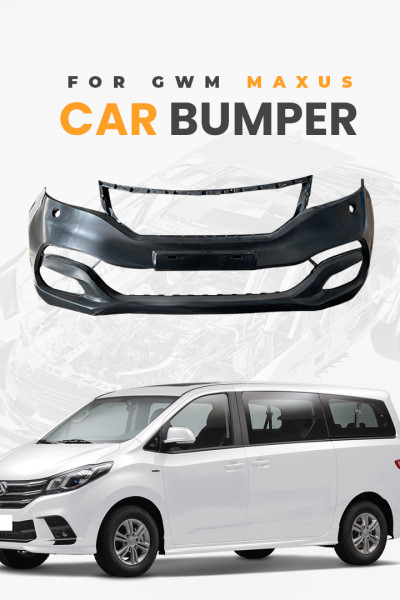
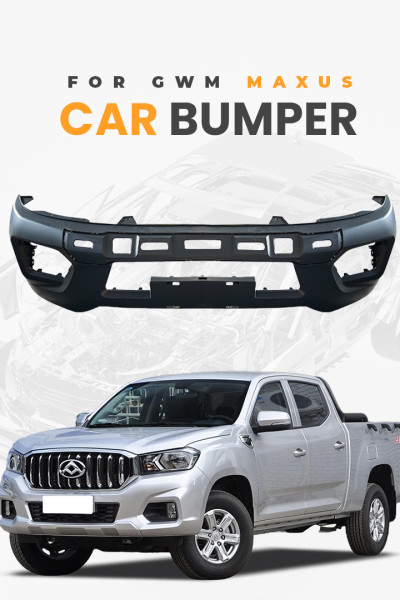
The product grid below shows four high-turnover body parts that a distributor can place on a test order today, with MOQ 1, from a single warehouse. Each links to a verified product page with OE reference, model-year coverage, and current stock — the kind of detail you need to evaluate a Chinese supplier seriously before committing to a full container.


Why the Shift Will Not Reverse
The natural question for any distributor considering this shift is whether it is durable. Will Chinese suppliers lose their cost advantage as wages rise? Will quality regress? Will a geopolitical shock interrupt the flow? The honest answer is that none of these factors are likely to reverse the shift in the next decade, for four reasons.
First, automation is closing the wage gap. Modern Chinese moulding shops are heavily automated, with robotic welding, robotic painting, and computerised inspection. Labour cost is no longer the dominant variable cost — tooling depreciation, energy, and material certification are. China has cost advantages in all four, and they are not going away.
Second, the supply chain is now embedded. Thousands of distributors across more than 100 countries have built purchasing, inventory, and customer habits around Chinese-sourced parts. Reversing that would require every one of them to rebuild their operation from scratch, which is not going to happen.
Third, Chinese OEMs are now global. Chery, MG, BYD, MAXUS, and HAVAL are selling vehicles in Europe, Australia, the GCC, and Latin America. Their aftermarket parts ecosystems travel with them. A distributor who wants to serve the Chery Tiggo owner in Lagos, the MG ZS owner in Santiago, or the BYD Atto 3 owner in Amsterdam has no choice but to source parts from a Chinese supplier, because that is where the parts are made.
Fourth, regulatory barriers are lowering. As Chinese OEM vehicles gain type approval in more markets, their aftermarket parts gain acceptance alongside them. The combined effect is a self-reinforcing trend: more vehicles in market, more aftermarket demand, more parts on the shelf, lower landed cost per part, higher customer satisfaction, more repeat purchases. Distributors who recognise this dynamic and align their product line accordingly will be the winners over the next decade.
Conclusion: Position Your Catalogue for the Next Decade
The shift of the global aftermarket to Chinese car parts suppliers is no longer a forecast — it is the operating reality of 2025. The cost gap, the quality gap, and the supply chain gap have all closed in the body parts and lighting categories, and they are closing fast in adjacent categories. Distributors who want to remain competitive over the next decade need to build supplier relationships with serious Chinese Tier-1 operations, integrate them into their existing product lines, and educate their workshop customers on the new reality.
Build Your Chinese Parts Catalogue With OOZOM
OOZOM is a body parts supplier built for distributors who want to ride this shift rather than resist it. We stock 21 Chinese automotive brands — Chery, MG, HAVAL, BYD, MAXUS, GAC, Geely and more — under one roof, with MOQ 1 so you can place a test order today and scale into a full container tomorrow. Every product page lists the OE reference, the applicable model years, and the current stock so you can quote your workshop without guesswork. With a 50,000 m² central warehouse and consolidated shipping across multiple brands, your landed cost per part is lower than any comparable sourcing arrangement in the industry.