Tank 300 Body Parts: China's Hottest Off-Road SUV
If you have spent any time on export-focused automotive forums in the last three years, you already know the Tank 300 is not an ordinary Chinese SUV. It is a boxy, retro-styled, body-on-frame off-roader that competes directly with the Jeep Wrangler and Ford Bronco on look and feel, while undercutting them on price. From the sand dunes of Saudi Arabia to the wettest mining tracks in Western Australia, owners have put the Tank 300 through the same harsh conditions that once belonged exclusively to the Western Japanese and American nameplates. That popularity translates directly into a profitable aftermarket opportunity for distributors who can deliver Chery front bumpers, Chery grilles, side mirrors, and the broader catalogue of related body panels in volume and on time.
This guide is written for distributors, importers, and trading companies that want to add Tank 300 body parts to their catalogue. We will walk through the vehicle's rise in export markets, the body parts categories that move fastest, the sourcing pitfalls you should plan around, and the supplier capabilities that separate a one-off shipment from a sustainable aftermarket business.
Why the Tank 300 Matters in the Global Aftermarket
The Tank 300 launched in China in late 2020 as the first product of GWM's premium off-road sub-brand, Tank. Within two years the model had been exported under multiple brands and configurations, including the Tank 300 itself, rebadged GWM variations, and Australian-market units sold as the GWM Tank 300. By 2024 cumulative global sales had passed half a million units, with overseas markets contributing more than a quarter of that figure. That is significant volume for an SUV that, just five years earlier, did not exist.
For parts distributors, large installed fleets mean three things. First, there is a recurring replacement demand driven by accident repairs, off-road damage, and cosmetic upgrades. Second, owners of off-road SUVs are unusually willing to spend on accessories and styling, raising average order value. Third, the body shape, headlamp signature, and grille treatment of the Tank 300 are so distinctive that owners actively search for genuine-style replacement parts rather than generic substitutes, which protects margin for distributors that can supply the right SKUs.
The replacement cycle for body panels on a working off-roader is also faster than on a city SUV. Stone chips crack front bumpers within 30,000 km on corrugated roads. Bull bars and recovery points stress mounting brackets. Roof racks and light bars generate new holes in roof panels. Side mirrors are vulnerable on narrow bush tracks. None of these are warranty repairs once the vehicle is past 36 months, and that is exactly where the independent aftermarket lives.
Mapping the Tank 300 Body Parts Catalogue
Before you approach any supplier, it helps to think about the Tank 300 body parts catalogue as a layered system rather than a flat list. At the top layer sit high-velocity consumables that every distributor should stock from day one: front and rear bumpers, grille assemblies, side mirrors, headlamp brackets, fender liners, and door handles. The second layer covers panels that move slightly slower but in larger units: hoods, front fenders, side doors, rear quarter panels, and tailgates. The third layer covers accessories that command higher margins: bull bars, skid plates, roof rails, body cladding, and styling kits.
A practical approach for a new distributor is to launch with all of the top layer plus a curated selection of the second layer, and to treat the third layer as a special-order service rather than a stocking line. That lets you control working capital while still being able to quote when a fleet customer asks for a styling kit or a bull bar.
Most of the top-layer SKUs overlap with the broader GWM and Great Wall Motors family, because Tank shares platforms, paint codes, and many suppliers with its sister brands. That is a useful operational fact: when you build a Tank 300 section, you are simultaneously building part of your Chery, GWM, and Haval sections.
Fast-Moving Body Parts at a Glance
| Category | Typical Velocity | Notes for Distributors |
|---|---|---|
| Front bumper cover and reinforcement | Very high | Stock paint codes for white, black, grey, green |
| Rear bumper cover and step pad | High | Step pad often damaged in urban parking |
| Grille assembly | High | Distinctive Tank styling; protect with foam wrap |
| Side mirror (LH/RH, power-fold variants) | High | Include glass and motor pre-check |
| Hood and front fenders | Medium | Large units; mind container packing density |
| Door shells and tailgate | Medium | Confirm VIN applicability before shipment |
| Bull bars, skid plates, light bars | Special order | Higher margin, longer lead time |
The Tank 300 in the Middle East, Australia, and Beyond
If you sell Tank 300 body parts, you are most likely selling to one of three regional clusters: the Gulf Cooperation Council countries, Australia and New Zealand, or the Commonwealth of Independent States, with growing secondary demand in Southeast Asia, South Africa, and parts of Latin America. Each cluster has its own buying behaviour, and your catalogue should reflect that.
Gulf buyers tend to come in through Saudi Arabia and the UAE, often as re-exports to surrounding markets. They want fast delivery, prefer pre-painted panels in original colour codes, and are very sensitive to packaging quality because panels travel long distances overland after arrival. Australian buyers are more specification-driven: they want to know the part number, the model year range, and the body style (standard, Urban, Off-Road). They will pay for documentation and warranties. CIS buyers, particularly in Kazakhstan and Uzbekistan, want cost-effective options and often buy in larger consolidated containers for distribution across multiple countries.
For each cluster, the SKUs that move fastest are slightly different. Gulf buyers demand front bumpers, grilles, and side mirrors in volume because desert driving is brutal on these parts. Australians add bull bars, light mounts, and recovery-point brackets because owners treat the Tank 300 as a touring platform. CIS buyers ask for complete fender and door shells because local body shops prefer full-panel replacement over repair.
Sourcing Pitfalls You Can Avoid With the Right Supplier
Sourcing Tank 300 body parts from China is not difficult in principle, but it is full of small decisions that compound into profit or loss. The most common pitfalls we see distributors fall into are listed below. None of them are unsolvable, but each one costs money the first time you hit it.
Mixed model-year fitment. The Tank 300 has had at least two facelifts since launch, and the bumper, grille, and headlamp shapes changed with each one. A bumper that fits a 2021 build will not fit a 2024 build without modification. Always confirm the model year and the body style before you book a container.
Paint code drift. Even when you specify an OEM paint code, factory batches drift slightly between production runs. If your supplier does not batch-verify paint with a spectrophotometer before pack-out, you will see mismatched panels on arrival. Build this into your specification.
Mirror electronics mismatch. The Tank 300 side mirror comes in at least four variants: manual fold, power fold, power fold with heating, and power fold with heating and blind-spot camera. Each variant uses a different wiring harness pin-out. Buying the wrong one is a return you will eat, not a return the customer will pay for.
Bull bar certification gaps. In Australia and some Gulf states, bull bars and recovery-point brackets need engineering certification. A supplier that cannot provide test reports or batch traceability is not a real bull bar supplier, regardless of how good the welds look.
Container packing damage. Body panels are large, light, and easy to damage. Suppliers that pack a 40-foot container without internal bracing and foam separators will deliver dented panels. You will absorb that damage through claims, or you will absorb it through lost customers.
What to Look for in a Tank 300 Body Parts Supplier
A reliable Tank 300 body parts supplier should be able to demonstrate four things in writing, not just in sales conversations. The first is a clear catalogue mapping to model years and body styles. The second is factory-level batch inspection records with photos. The third is documented packaging standards, ideally with photos of past container loads. The fourth is a real after-sales policy that covers transit damage, wrong fitment, and warranty replacement.
Beyond those four basics, the suppliers that win long-term business usually add three more capabilities. They hold multi-brand inventory so that you can bundle Tank 300 orders with Chery, HAVAL, BYD, MG, and MAXUS parts in the same container. They offer MOQ 1 ordering on common consumables so that you do not have to commit to a full pallet every time. And they run a warehouse you can visit, ideally a bonded warehouse with real-time inventory you can browse through a mobile app.
"Distributors who visit the warehouse and watch a container being packed learn more in two hours than they learn in two months of email quotes."
OOZOM operates a 50,000 sqm bonded warehouse with parts from 21 vehicle brands, MOQ 1 ordering across the catalogue, and a dedicated mobile app that lets you check live stock and place orders from anywhere. For Tank 300 distributors, that combination removes the three most common friction points in cross-border sourcing: minimum order quantity, supplier fragmentation, and lack of real-time visibility.
How OOZOM Helps You Stock Tank 300 Body Parts
OOZOM has been supplying Chinese auto body parts to overseas distributors for more than a decade. The Tank 300 is one of the lines we know inside out, because the same engineering teams that build Great Wall Motors platforms also supply many of the Tier 1 panel and lighting factories in our network. That gives us direct visibility on production schedules, batch quality, and paint-code availability before any container is booked.
For distributors adding Tank 300 to their catalogue, our recommended starter kit is a curated 4-SKU grid covering the parts that move fastest across all export clusters. Each of the four products below is in continuous production, ships from stock, and supports MOQ 1 ordering so you can scale up gradually as demand confirms.
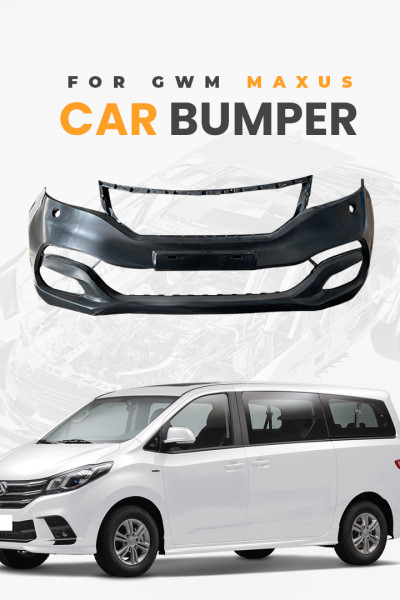
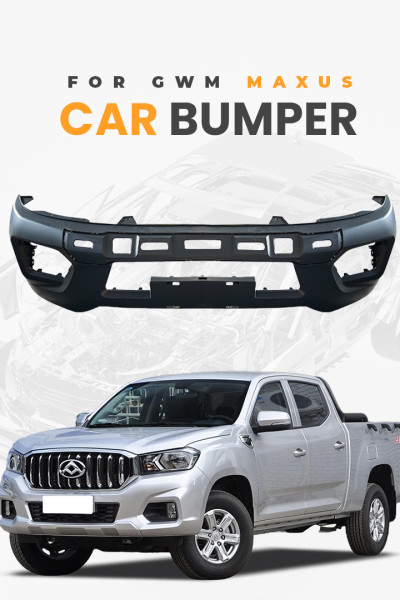
 Chery Front Bumper — PID 18408369
 Chery Grille Assembly — PID 18408454
 Chery Side Mirror — PID 18408314
 BYD Front Guard — PID 18478831
All four products share the same MOQ 1 ordering policy, the same QC inspection protocol, and the same 50,000 sqm bonded warehouse dispatch flow. When you place an order through the OOZOM app, you see real-time inventory, batch photos, and shipping options, and you can mix Tank 300 parts with other brand lines in the same shipment. That is the operational difference between a trading company and a platform.
Building a Profitable Tank 300 Parts Business
A Tank 300 parts business does not become profitable on a single container. It becomes profitable when you reach the second or third reorder from your first ten customers, because that is when the catalogue, the pricing, and the supply chain have all been stress-tested. The pattern we see working distributors follow is consistent: launch with a tight four- or five-SKU starter kit, validate demand over the first six months, then expand the catalogue one category at a time.
The categories that expand most successfully are the ones that share platforms and paint codes with the starter kit. Once you have a Tank 300 grille assembly in stock, adding the matching skid plate, light bar mount, and bull bar bracket is a small operational step with a meaningful revenue impact. Once you have side mirrors in stock, adding the matching camera and harness variants is straightforward. The catalogue grows like a tree, not like a checklist.
Two operational habits separate the distributors who grow from the distributors who stall. The first is keeping a public-facing catalogue with model-year and body-style fitment notes. The second is responding to fitment queries within four working hours. Tank 300 owners are unusually well-informed buyers; they will not wait three days for an email reply when a competitor with a better catalogue will answer in four hours.
Quality Control Standards You Should Insist On
Quality control on Tank 300 body parts is not optional. Even the best factories produce a small percentage of out-of-spec panels, and the cost of one bad batch is larger than the cost of a permanent inspection protocol. At OOZOM, every Tank 300 shipment goes through a documented four-step process.
- Pre-production sample approval. A pre-production sample is photographed, measured, and signed off before the bulk run starts. We do not start mass production against an unverified sample.
- Inline inspection during production. Factory inspectors check fit, surface finish, and paint thickness on the first, middle, and last units of each batch. Photos are uploaded to the order record.
- Pre-shipment random inspection. AQL sampling on dimensions, paint match, and packaging. Rejected units are reworked or scrapped before container packing.
- Container load photo record. Every container is photographed at the moment of loading, with bracing and foam separators visible. The photo record is shared with the buyer before the container leaves the yard.
That protocol is not unique to OOZOM, but it is enforced consistently, which is the part that matters. Many suppliers will describe the same process and then skip the inline inspection under time pressure. The only way to know whether your supplier will follow it is to ask for the photo record on the first three orders and to compare it against what you were promised.
Logistics, MOQ, and Pricing Realities
Tank 300 body parts move most efficiently in mixed containers of 20 to 40 cubic metres. A typical starter kit of one front bumper, one rear bumper, two grilles, four side mirrors, and four guards fits comfortably into a 20-foot container with room for ten to more units of accessories. That is the right scale for a new distributor testing demand in a single regional cluster.
MOQ 1 ordering on consumable parts is now table stakes for any serious Chinese aftermarket platform. The economics work because the supplier holds inventory in a bonded warehouse and aggregates orders into production batches behind the scenes. The distributor sees MOQ 1; the factory sees batch runs of 200 to 500 units per SKU. That is the OOZOM model, and it is what lets small and mid-sized importers compete with the large trading houses on catalogue breadth.
Pricing on Tank 300 body parts has been broadly stable over the last 18 months, with modest reductions on high-velocity SKUs as more factories enter the supply chain. Margins for distributors typically sit between 18 and 35 percent at landed cost, depending on the SKU and the destination market. Accessories carry higher margins than consumable panels, but they also carry longer lead times and higher warranty exposure, so they reward experienced distributors more than first-time importers.
Common Mistakes New Tank 300 Importers Make
After more than ten years of supplying overseas distributors, we have seen the same mistakes appear again and again. The good news is that every one of them is avoidable with a little preparation.
Treating all factories as interchangeable. Two factories making the same front bumper can produce very different quality. The difference shows up at the 12-month point, not at the receiving inspection point.
Buying on price alone. The cheapest quote on a body panel is rarely the cheapest landed cost. Inferior paint, missing brackets, and bad packaging all eat into margin in ways that are invisible on the purchase order.
Skipping the warehouse visit. If your supplier will not let you visit the warehouse, that is a signal. If they will let you visit but cannot show you live inventory of the SKU you want, that is a bigger signal.
Underestimating after-sales. Returns, wrong-fit claims, and warranty replacements are part of the business. Budget for them. Suppliers who refuse to discuss after-sales in writing are not the right suppliers.
Ignoring brand portfolio fit. A Tank 300-only supplier is a single-point-of-failure supplier. A supplier that also carries Chery, HAVAL, BYD, MG, and MAXUS lines gives you portfolio diversification in the same container and the same shipment cycle.
Conclusion: Make Tank 300 a Core Line, Not a Side Bet
The Tank 300 is no longer a niche Chinese SUV. It is a global off-road platform with a real, growing, repeatable parts demand. For distributors in the Middle East, Australia, Central Asia, and beyond, it is one of the most defensible aftermarket lines a Chinese auto parts catalogue can include, because the installed base is large enough to support a real stocking business but small enough that the major Western aftermarket chains have not yet consolidated it.
If you are adding Tank 300 body parts to your catalogue, do it the right way: start with a tight high-velocity SKU set, validate demand on a small container, expand one category at a time, and choose a supplier who can give you real-time visibility, MOQ 1 ordering, multi-brand bundling, and a documented QC protocol. OOZOM ticks every one of those boxes, with MOQ 1 ordering across the catalogue, 21 vehicle brands, and a 50,000 sqm bonded warehouse you can actually visit.
Start Your Tank 300 Parts Programme with OOZOM
MOQ 1 ordering, 21 vehicle brands, 50,000 sqm warehouse, real-time stock through the OOZOM app.