TANK 300 Grille: OEM vs Aftermarket for Export Markets
OEM or aftermarket TANK 300 grille: what changes in fit, finish and landed cost for buyers.
The front grille is the first part anyone sees on a TANK 300 and the first part most importers get wrong. It is also where the difference between an original and an aftermarket unit is easiest to describe, because a grille is a hard surface with a visible shape, a visible finish and a visible fit to the surrounding bodywork.
This guide sets out the trade-offs for export markets specifically, because climate, road rules, dealer expectation and container economics push the decision in different directions from what they do in China. OOZOM has supplied parts for Great Wall group brands since 1993, from a 50,000+ m2 integrated facility with more than 100 specialists in engineering, purchasing, painting and trim.
What OEM Actually Means in Practice
An original equipment grille is made to the factory drawings and carries the factory finish, the factory clip geometry and the factory dimensions. For a buyer whose customers expect the vehicle to look factory fresh, that is the safest position to hold, and it keeps a resale argument simple: the part fitted is the part the vehicle left the factory with.
Original parts also tend to carry the better margin in a stable market, because they are the reference against which every alternative is judged. The trade-off is availability and lead time. If the model year has moved on, an original part becomes harder to source at volume, and a buyer who needs 200 units in a fixed window needs to know that before the window opens.
Where Aftermarket Grilles Fall Short
The recurring failures in aftermarket grilles are predictable. Clip and mounting points slightly off, so the part rocks in high wind or on a wash ramp. A gap of a few millimetres against the headlamp or bumper, which reads as damage rather than as a cheaper part. Black plastic that fades faster than the surrounding body colour, visible on a white vehicle within a year. And a finish that does not match the texture of the factory part in direct sunlight.
The Export Market Reality: Climate, UV and Road Rules
An Australian buyer, a Gulf distributor and a Northern European workshop each stress a grille differently. High UV exposure and heat cycles attack polymer gloss and warp thin mounting tabs. Sand loads the clip channels. Cold makes brittle plastic a real risk on a grille flexed by a kerb. Salt-laden coastal roads attack the metal clips behind the trim.
Road rules matter too, where some markets restrict grille modification or require that a change at the front of the vehicle keeps the lamps clear of the grille aperture. Any accessory that narrows or reshapes the aperture has to be checked against local approval rules, and that check belongs in the buying stage, not the shipping stage.
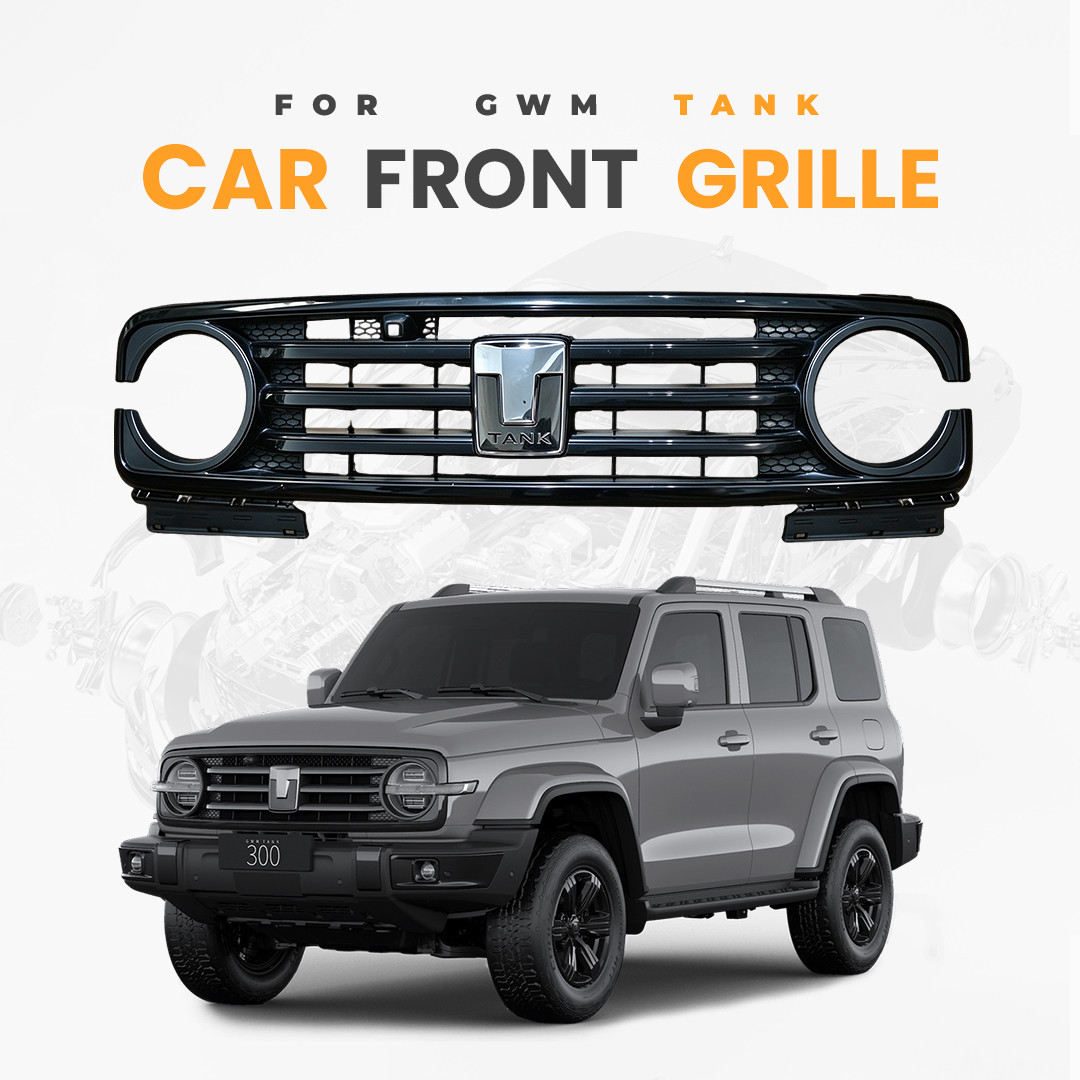
Original factory front grille. The clip geometry and the paint match against the headlamps are what a copy has to reproduce to be accepted.
Fitment: Year, Trim and the TANK 300 Body Kit Question
A TANK 300 grille is not one part. It differs across model years and between the standard, heritage and off-road styled variants, each of which changes the shape and the finish. A complete tank 300 body kit assembled from parts of mixed years is a common cause of an unsellable kit, because the gaps line up even where the individual parts are correct.
Specify the grille against the VIN of a real vehicle, and specify the whole front end against the same VIN. When you buy a tank 300 body kit, the grille, bumper, fog lamp covers and lower trim have to come from one design generation, or the front of the vehicle looks assembled rather than factory.
Building a Complete Front End with Great Wall Tank Accessories
The most profitable accessory order in this brand is rarely a single grille. It is a front end: grille, bumper cover, fog lamp covers and matching lower trim, ordered as one set against one vehicle specification. The customer sees one consistent result, the distributor has one supplier to chase, and the container carries more value per cubic metre.
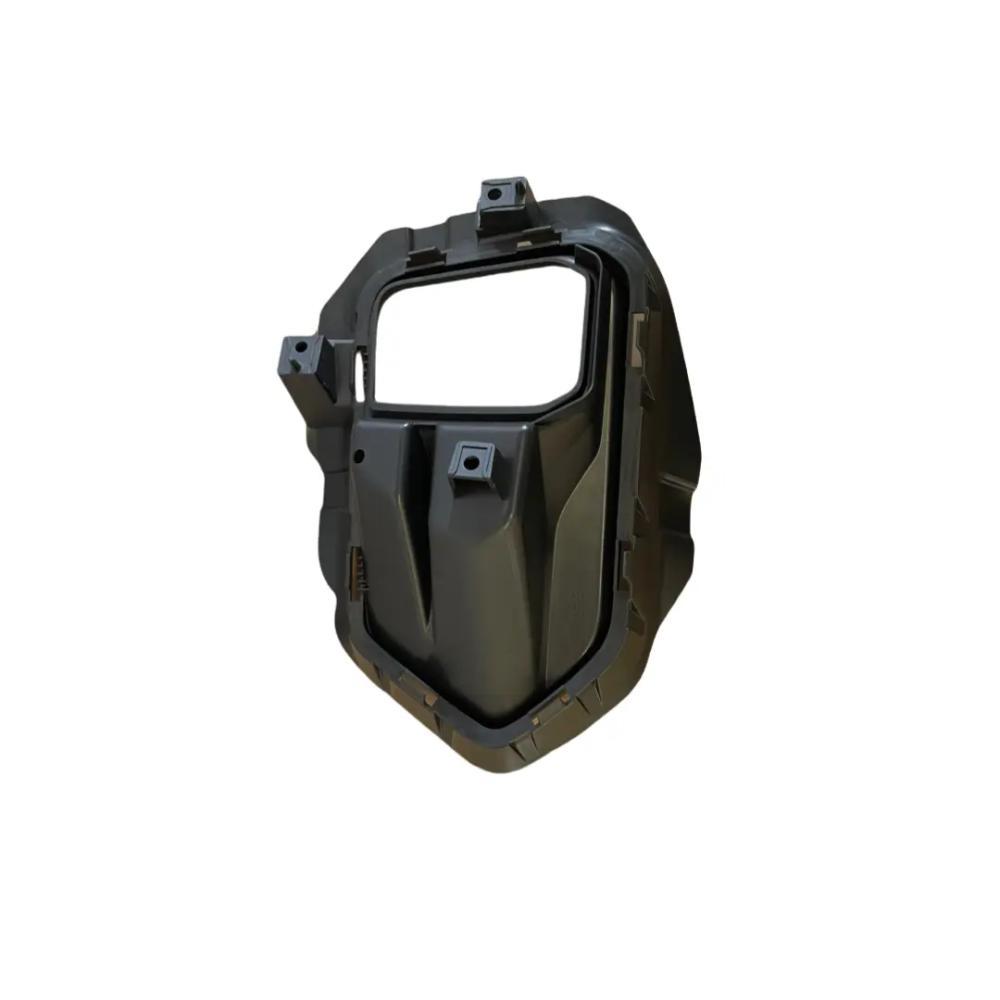
Fog lamp cover for the same front-end set. Matching the accessory generation to the bumper keeps the front of the vehicle consistent.
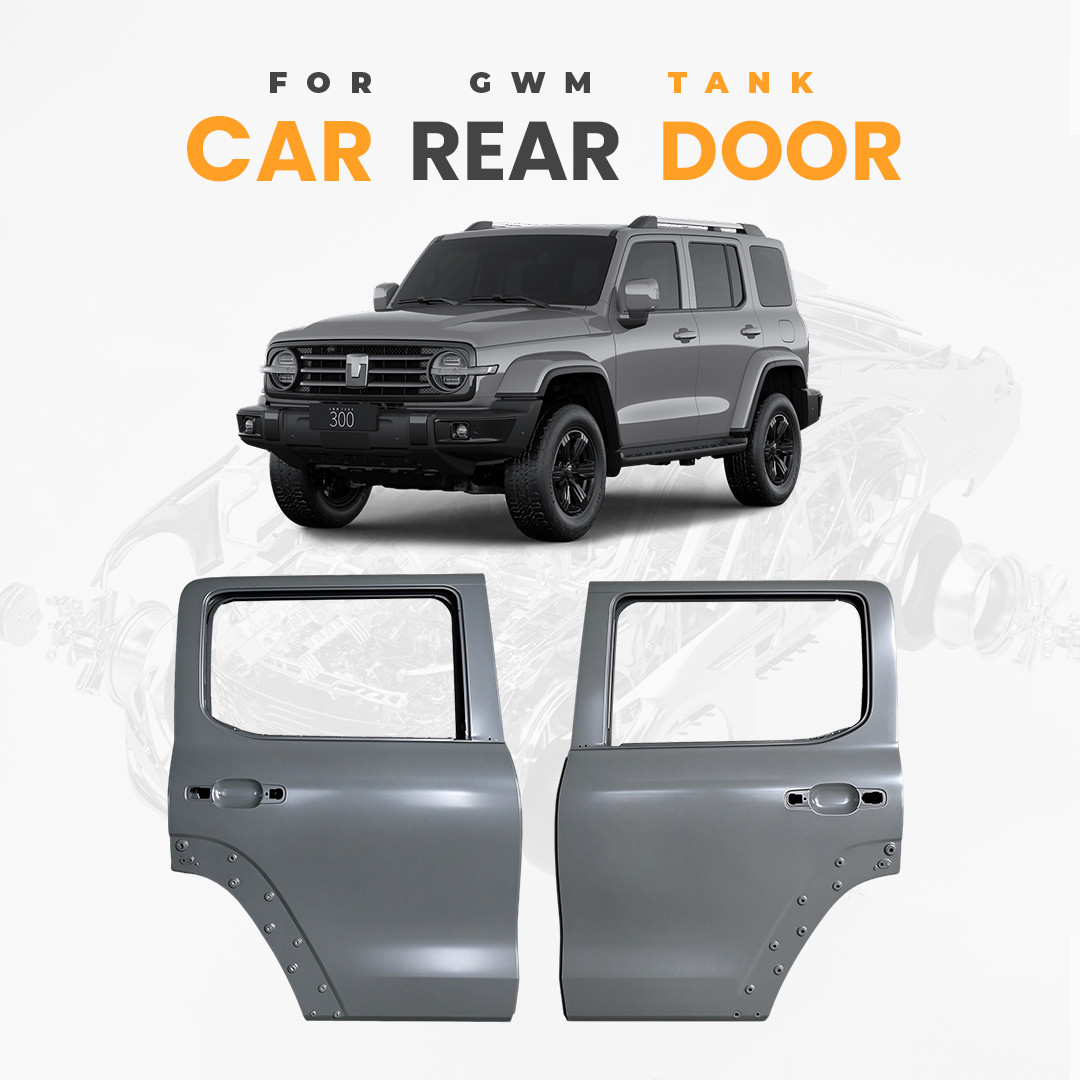
Rear door part from the same programme. A channel covering both ends of the vehicle saves the buyer a second supplier relationship.
Comparing Landed Cost Per Unit, Not Ex-Factory Price
Ex-factory price comparisons mislead in this category, because a grille is heavy for its value, bulks out the container and pays freight on every cubic metre. A part that is cheaper at the factory and 15 percent heavier can be more expensive once it lands. The comparison that matters is the delivered cost per fitted unit, including freight, duty, packaging, the breakage allowance and the returns you expect to absorb.
| Decision point | Original part | Equivalent aftermarket part |
|---|---|---|
| Fit and gap against the headlamp | Factory match | Depends on the mould and the QC sample |
| Finish durability under UV and heat | Factory specification | Needs a UV stabilised grade to hold up |
| Availability at volume | Model-life dependent | Usually broader across years |
| Resale positioning | Strong | Acceptable for accessory and styling buyers |
| Best use | Warranty work, full vehicle builds | Accessory programmes, styling and off-road upgrades |
The decision is usually not either and or. A distributor serving workshops and accessory retailers at once needs both lines, quoted against the same fitment list.
Packaging and Container Density for Grille Sets
A grille is a large flat panel with a fragile clip structure, so packaging is a quality decision rather than a cost decision. OOZOM designs compliant packaging per item type and optimises how the parts are nested into the container, targeting 5 to 20 percent better container utilisation and a damage rate more than 75 percent below the industry baseline. Air, sea and rail freight are available, with the route set around your delivery window. For a mixed order the packing plan decides the result: a grille nested against a bumper cover with correct bracing arrives sellable, while a loose load arrives with cracked clips that the customer charges you for.
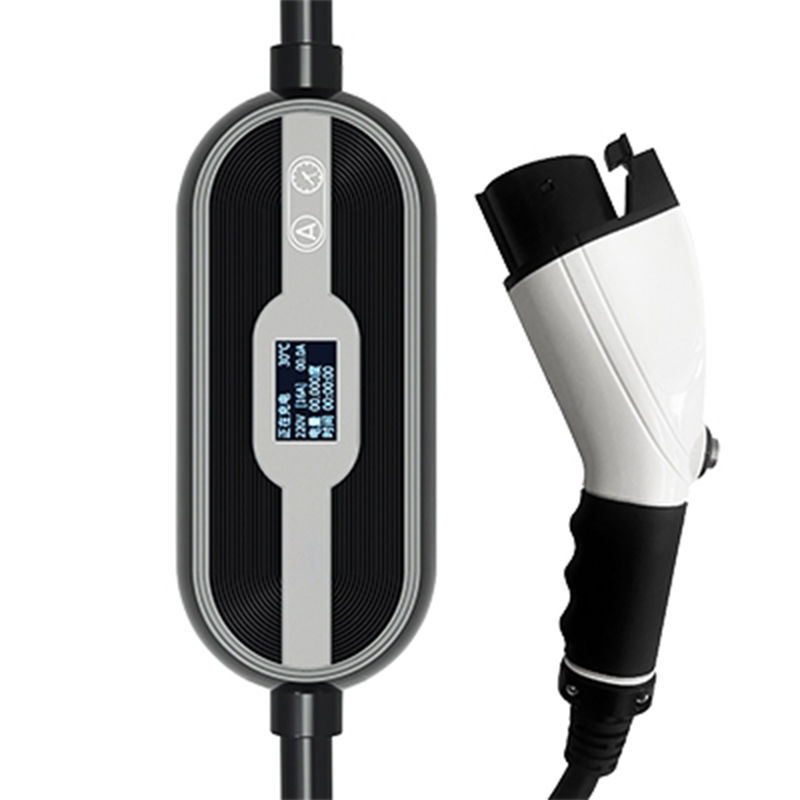
Loading sequence for a mixed accessory container. Grilles are braced and stacked by size so the clip structures carry no point load.
Model Updates Change the Parts You Should Be Buying
TANK has been refreshing the 300 line regularly, and in late 2026 the brand ran an over-the-air update campaign that included the 2025 TANK 300 alongside the Tank 500 Hi4-Z, Tank 400, Tank 500 and Tank 700. A software update does not change a grille directly, but each model-year refresh is normally accompanied by exterior detail changes, and those changes are what invalidate an old fitment list.
The practical rule for buyers is to re-check fitment at the start of each model year rather than reusing last year's spreadsheet. Ask for the current tank 300 parts catalogue with superseded numbers marked, and keep the old numbers in your system for vehicles already in the field.
How to Specify a Grille Order in Writing
Put six things on the purchase order: vehicle model and model year, the VIN reference, the complete part number, the finish expectation, the quantity and the destination port. Add the quality tier, the lead time and the packing standard. That is short enough to send in an email and complete enough to quote against. Sample first, at one piece, and check it against the original in daylight: clip locations, gap to the headlamp, gap to the bumper, surface texture and the mounting boss.
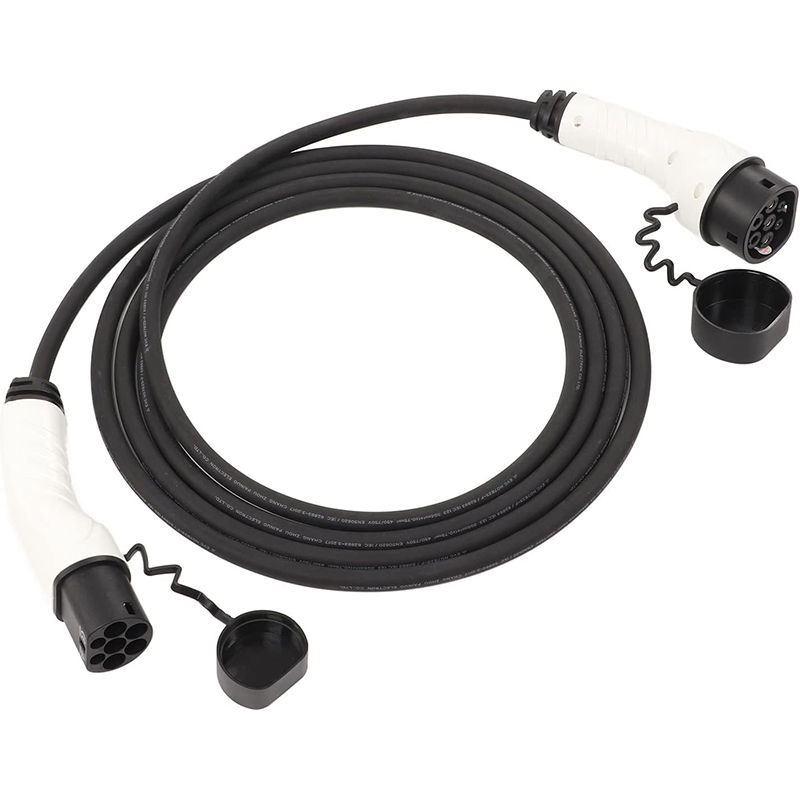
A complete accessory set packed together, so the customer receives one consistent front end rather than parts from several generations.
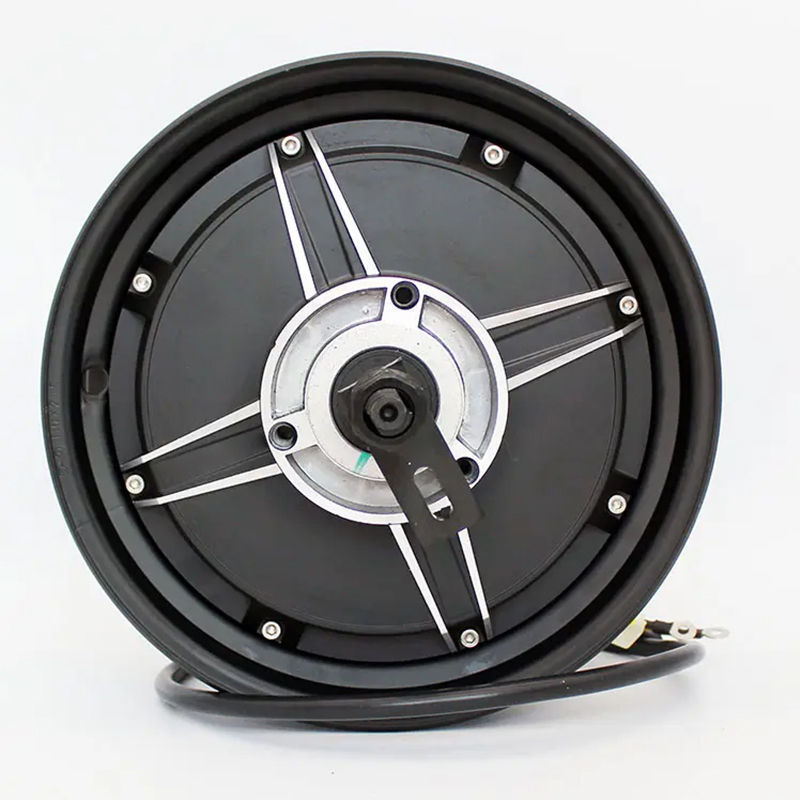
Inspection of body kit components before packing, including clip condition and surface finish.
The Questions to Ask Before You Commit
Ask which model years the quoted part covers and which it does not. Ask whether the clips and the finish are production-equivalent. Ask for the material grade of the housing and the UV stability of the surface. Ask how the part is packed and what the target container utilisation is. Ask what happens if a customer reports a fitment complaint, and how quickly a replacement ships. An off road accessories supplier who can answer all five questions in writing is worth a container; one who answers only the price question is a risk that shows up at the port.
Grille sourcing checklist
- Vehicle model, model year and VIN recorded for every line
- Trim and styling variant confirmed: standard, heritage or off-road
- Grille, bumper and lamp covers from one design generation
- Full part number confirmed, superseded numbers marked
- Quality tier chosen: original, equivalent or third-party
- Material grade and UV stability stated on the quotation
- Local approval rules checked for grille aperture changes
- Approval sample compared in daylight for gap, clip and finish
OOZOM will keep expanding its Great Wall and TANK accessory coverage so that a tank 300 grille, a matched tank 300 body kit and the wider great wall tank accessories programme can be sourced from a single channel with one fitment list. Send us the VINs and the front-end parts you plan to run and our pre-sales engineers will confirm which generation each part belongs to, quote tier, packing and lead time, and support you after delivery with fitment questions and repeat orders. Request a quotation and a one piece sample, and judge the part against the original in daylight before you commit a container.