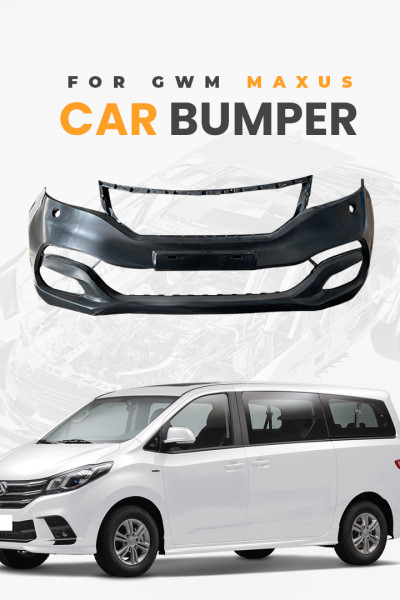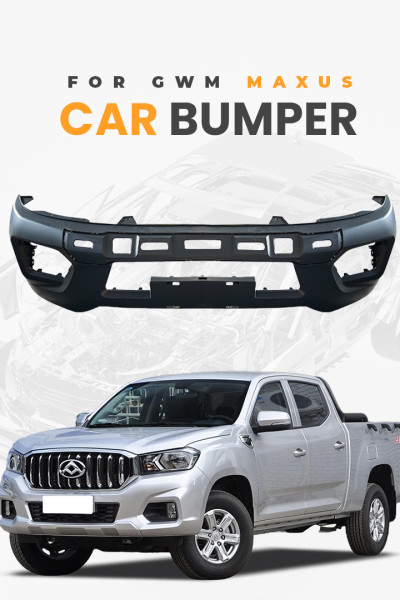
MAXUS G50 Bumper & Grille Aftermarket Guide
The Haval H6 is one of the best-selling Chinese SUVs of the past decade, and it is everywhere — South Africa, Saudi Arabia, Chile, Russia, Malaysia, Australia, Kazakhstan, Egypt, the Philippines, and a long list of secondary markets where the model launched in successive waves from 2014 onward. For a body parts supplier or distributor, that popularity is both opportunity and headache: opportunity because the volumes are real; headache because a "Haval H6 front bumper" is not one SKU but a family of related SKUs across multiple model years and trim levels, and getting the right one matters.
Nothing is worse than receiving a container of bumpers only to discover that 30% of them do not fit the vehicles your customers actually drive. This guide is designed to prevent exactly that scenario. We will walk through how to identify the correct Haval H6 bumper for a given vehicle, how to verify part numbers, how to read fitment notes, how to negotiate wholesale pricing, and how to build a defensible sourcing pipeline that minimizes returns and maximizes margin.
Whether you are a regional wholesaler supplying ten workshops or a body shop manager placing monthly orders, the framework below applies. The model year and trim differentiation is the part that catches most new distributors; everything else is standard wholesale discipline.
Haval H6 Model Years and Why They Matter for Bumper Replacement
The Haval H6 has been produced continuously for over a decade, with three distinct generations and multiple facelifts within each generation. The bumpers are not interchangeable across generations, and within a generation they may differ between pre-facelift and post-facelift versions.
- First generation (H6, 2011 to 2017). The original H6 launched in 2011 with internal code CHS7150 and was produced through 2017 with a facelift around 2014 to 2015. Front bumpers for this generation feature a relatively upright grille opening, conventional halogen headlamps (with a later LED option) and modest lower air intakes. Distributors in markets with aging H6 fleets — Iran, Russia, parts of Africa — still see steady demand.
- Second generation (H6, 2017 to 2020, with the H6 "Coupe" variant). Internal code CHS7151 and successors. Wider grille opening, more sculpted lower bumper with integrated fog-lamp bezels, taller hood line. A facelifted again around 2020 introduced sharper daytime running light signatures.
- Third generation (H6, 2020 to present, with H6 HEV and H6 PHEV variants). Internal code CHS7160 and successors. A complete redesign: larger parametric grille, slimmer LED headlamps, more aggressive lower fascia with prominent side air curtains. The HEV and PHEV variants share most exterior body panels with the petrol version but differ in bumper lower trim and exhaust-area styling.
The practical implication is that you must know which generation — and which facel — the customer is replacing a bumper on. A bumper that fits a 2016 first-generation H6 will not fit a 2019 second-generation H6 even though both are called "H6."
Three pieces of evidence settle the question in 90% of cases: the vehicle's production year (found on the VIN plate), the vehicle identification number itself (the 4th to 8th characters encode model and body style), and a photograph of the existing bumper. When in doubt, ask the supplier for a fitment confirmation against the VIN before shipping.
Front Bumper Anatomy: What a Complete Replacement Includes
A front bumper is not a single part. In the aftermarket world it is usually sold as an assembly — the painted bumper cover plus its embedded or attached components. Knowing what should be in the box prevents the most common dispute: "I received a bumper but no sensors / no grille / no PDC holes."
A complete Haval H6 front bumper replacement typically includes:
- Bumper cover — the painted or primer-finish plastic skin
- Upper grille** (often integrated into the bumper cover or supplied separately)
- Lower grille inserts** — the mesh panels in the lower air intakes
- Fog lamp bezels** — the trim rings around the fog lamps (left and right)
- Splash shield / undertray** — the black plastic panel behind the bumper, sometimes called the engine under-cover
- PDC sensor mounts** — pre-cut holes with mounting brackets for parking-distance-control sensors, if equipped
- Headlamp washer covers** — small flush caps, if the vehicle has headlamp washers
- Tow hook cover** — a small removable cap concealing the screw-in tow eye
- Mounting brackets** — the steel or plastic brackets that bolt the bumper to the vehicle's crash structure
- Bumper reinforcement beam** (sometimes sold separately) — the aluminum or steel crash bar behind the bumper cover
The key question for any distributor is whether the bumper is being sold as a "skin only" (just the painted plastic panel) or as a "complete assembly" (skin plus all accessories). Both are legitimate products, but pricing differs by 30% to 60% and your customer must know which one they are buying. Always specify in the quotation: "bumper cover only" or "bumper with grille, fog bezels, sensor mounts."
Part Numbers, OEM Cross-References and How to Read Them
Every Haval H6 bumper carries a part number — a unique identifier that distinguishes it from every other part in the manufacturer's catalog. Genuine factory part numbers typically begin with the manufacturer code (often "HQ" or "CH") followed by a 9 to 11 digit string. Aftermarket replacements may use the OEM number, a supplier's internal number, or both.
The most useful part-number pattern for distributors is the OEM cross-reference. If a buyer in your market hands you a damaged OEM Haval bumper with a legible part label, you can look up that OEM number in your supplier's catalog and ship an exact-equivalent aftermarket part — usually at a much lower cost than sourcing genuine. This is the bread-and-butter workflow of any successful wholesale body parts operation.
How to find an OEM number in practice:
- On the part itself. Most bumpers have a small molded-in or adhesive label on the back, usually visible from underneath the vehicle. Use a flashlight and mirror if the bumper is still fitted.
- In the vehicle's service manual. The exploded parts diagram in the Haval service manual lists every body panel with its OEM number.
- Via the VIN. Online OEM parts catalogs (Haval's own EPC, plus third-party catalogs like 7car, PartSouq or CarVertical) will return the correct OEM number for any given VIN.
- From the supplier's catalog. A serious aftermarket supplier maintains a fitment table that maps OEM numbers to their own SKUs. Ask for this table up front — it is the single most useful document in any body parts business.
Cross-reference is also how you avoid the worst sourcing mistake: buying a "Haval H6 bumper" that turns out to be for a Haval Jolion or Haval F7. Similar name, completely different part. Always confirm the OEM number matches.
Trim Levels and the Variants That Distributors Get Wrong
Within a single Haval H6 model year, trim levels produce bumper variants. The most common sources of confusion are:
- Standard vs. sport/GT trim. Many H6 generations offer a sport-styled front bumper with deeper lower intakes and a different grille mesh. The sport bumper does not fit the standard vehicle and vice versa.
- With vs. without front camera / radar. Vehicles equipped with adaptive cruise control (ACC) or a forward collision warning camera require a bumper with a specific mounting bracket and sometimes a different grille opening to accommodate the sensor. Ordering a non-ACC bumper for an ACC-equipped vehicle means the sensor cannot be mounted.
- With vs. without fog lamps. Base trim H6 vehicles in some markets do not have fog lamps. The bumper for these vehicles has smooth bezels; the bumper for vehicles with fog lamps has openings and bezels. These are not interchangeable.
- HEV / PHEV vs. petrol. The third-generation H6 hybrid variants share most body panels with the petrol version but the front bumper lower fascia differs (more closed-off grille area for thermal management). Confirm the powertrain before finalizing the order.
For distributors, the rule of thumb is: every H6 bumper order should specify model year, generation, trim level, presence/absence of ACC, presence/absence of fog lamps, and powertrain. A single-page spec sheet attached to the purchase order eliminates 95% of fitment disputes.
How to Source Haval H6 Bumpers Wholesale
Sourcing Haval spare parts at wholesale requires a different conversation than buying one or two bumpers for your own shop. The dynamics shift around three variables: volume commitment, price tiers and supplier relationship depth.
Step-by-step, the wholesale workflow looks like this:
- Step 1 — Build a 12-month volume forecast. Estimate unit demand per part number based on your historical sales (or, if you are a new distributor, on local registration data for the H6 in your market). Distinguish between fast-moving SKUs (top 20% of part numbers, typically 80% of volume) and slow-moving tail SKUs.
- Step 2 — Request a tiered quote. Ask for unit pricing at 1, 20, 50, 100 and 500 pieces for each part number. A clean tiered quote signals a serious wholesale operation. OOZOM, for example, publishes MOQ 1 entry points and wholesale tiers above 20 units, with deeper discounts at 50, 100 and 500.
- Step 3 — Run a pilot order. Order 5 to 20 units across your top fast-moving part numbers. Inspect on arrival for paint quality, dimensional accuracy, accessory inclusion and packaging.
- Step 4 — Convert to recurring call-off. Once the pilot clears, move to a rolling forecast with weekly or monthly call-offs. The supplier holds buffer stock; you release orders against actual demand. Lead times collapse from 30 days to 7 to 10 days.
- Step 5 — Quarterly container consolidation. Slow-moving SKUs are batched into a quarterly FCL shipment alongside other Haval, Chery, MG and BYD parts. Per-unit landed cost reaches its minimum.
The advantage of MOQ 1 entry points combined with wholesale tiers is that you can pilot cheaply, validate quality cheaply, and only then commit to the discount tiers. The capital at risk on the pilot is low — typically under USD 1,500 including freight — while the upside from converting to a recurring program is substantial.


Wholesale body parts for HAVAL, MAXUS, MG and BYD — stocked for MOQ 1 dispatch from a Guangzhou warehouse.
Pricing Benchmarks and Margin Modeling
Distributors often ask: what is a reasonable wholesale price for a Haval H6 front bumper, and what margin can I expect? The honest answer is that pricing varies by generation, finish and order size, but a useful benchmark structure looks like this:
- Entry MOQ 1 price (primer finish, single piece). The factory-floor minimum. Used for sampling and small orders.
- Wholesale tier at 20 to 50 pieces (primer or painted). Roughly 12% to 18% below MOQ 1 entry. This is where the typical small distributor sits.
- Wholesale tier at 100 to 500 pieces. Another 8% to 12% below the 20-piece tier. Mid-size distributors and regional wholesalers operate here.
- Container-load tier (FCL, mixed SKUs). Another 10% to 15% below the 500-piece tier. Reserved for buyers committing to 28 to 45 cubic meters of mixed inventory per shipment.
Painted-to-match bumpers (color-coded to a specific H6 production color code) command a 25% to 45% premium over primer-finish equivalents and are typically only economical at 50+ unit volumes per color code, since paint batch setup is a fixed cost.
For a regional distributor selling to workshops at roughly 2.2x to 2.6x landed cost, gross margin on wholesale H6 bumpers commonly lands between 35% and 55%, which is materially better than the 18% to 25% typical of local OEM channel sourcing. The exact margin depends on freight, duty and last-mile cost in your market, but the directional message is consistent across regions.
Logistics, HS Codes and Shipping Marks for Haval H6 Bumpers
Bumpers are bulky and low-density relative to their value. A single H6 front bumper occupies roughly 0.18 to 0.25 cubic meters when properly braced. That makes freight cost a higher percentage of landed cost than for compact parts like lamps, so logistics discipline matters more.
Key logistics practices:
- HS code. Most Haval H6 bumpers ship under HS 8708 (motor vehicle body parts and accessories). Specific subheadings depend on destination country, but 8708.10 (bumpers and parts), 8708.29 (other body parts) and 8708.99 (other parts) are the most common. Confirm the correct code with your customs broker — misclassification causes duty disputes.
- Packing standard. Demand a written packing spec: each bumper wrapped in EPE foam or PE sheet, protected by molded thermoformed end caps, braced inside a corrugated carton with internal partitions, six-ply or higher. The carton should carry a printed shipping mark (buyer code, part number, quantity, carton number, gross weight).
- Container loading. For LCL (less than container load) shipments, ask the consolidator for a photo of the bumper loaded into the LCL container with bracing. For FCL shipments, insist on a continuous video of loading plus the container number and seal number recorded at sealing.
- Insurance. Marine cargo insurance costs roughly 0.3% of cargo value and pays out when carriers dispute damage claims. It is not optional for any shipment above USD 5,000.
For first-time importers, CIF (Cost, Insurance and Freight) to your destination port is the simplest incoterm and gives the supplier responsibility for both ocean freight and insurance. As volume grows, shift to FOB (Free on Board) with your own freight forwarder to capture freight savings of 8% to 15% on the ocean leg.
Building a Defensible Returns and Warranty Policy
A distributor without a written returns and warranty policy will lose money to fitment errors that were never the supplier's fault. A clear policy protects both you and your customer.
The policy should cover, at minimum:
- Fitment guarantee. If the part does not fit the vehicle specified on the order, the distributor replaces at no charge (assuming the customer supplied the correct vehicle details and the part was confirmed against those details at order time).
- Finish defect window. Paint or chrome defects visible on unpacked inspection, reported within 7 days of delivery, qualify for replacement. Defects reported after the bumper has been fitted or after 30 days are reviewed case by case.
- Transit damage window. Damage visible on unpacked inspection, with photos provided within 48 hours of delivery, qualifies for claim against the carrier and (if insured) the marine cargo policy.
- Non-returnable items. Custom-painted-to-match bumpers, electrical items, and items fitted to a vehicle before inspection are typically non-returnable. Make this clear at order placement.
Communicate this policy in writing on every invoice and on your website. Most disputes vanish when both parties have read the same document before the transaction.
Common Mistakes Distributors Make (and How to Avoid Them)
After several years of observing new entrants into Haval H6 bumper replacement sourcing, a clear pattern of avoidable mistakes emerges. Naming them is the fastest way to dodge them.
- Ordering on model name alone. "Haval H6 bumper" is not a part number. Specify model year, generation, trim level, with-or-without ACC, fog-lamp presence, and color if painted.
- Skipping the pilot order. A USD 1,500 pilot order is cheap insurance against a USD 30,000 mistake on the first container.
- Not asking for OEM cross-reference. If the customer has an OEM number, send it to the supplier for confirmation. A serious supplier replies within 24 hours; an unserious one deflects.
- Ignoring paint codes. A bumper painted to color code "Haval Polar White" for a 2021 H6 will not match a 2023 H6 painted in the same-named color, because suppliers reformulate paints over time. Confirm the actual paint code from the vehicle's VIN plate, not the marketing color name.
- Forgetting the splash shield. Many front bumpers do not include the underbody splash shield. Specify whether you want it included.
- No video of packing. Without a packing video, transit damage claims become he-said-she-said. Always ask for one.
Avoiding these six mistakes resolves roughly 90% of the disputes that first-time H6 bumper distributors encounter.
Once you have a clean pilot order and a tiered quote in hand, the most efficient way to scale is through an integrated inventory platform. The screenshot below shows the OOZOM operations app interface as it appears on a distributor's tablet during a routine call-off cycle.
OOZOM operations app — place wholesale orders, check real-time stock for Haval H6 bumpers and other HAVAL parts, and track shipment status from a single screen.
Conclusion: From Single Order to Sustainable Wholesale Program
The Haval H6 will continue to dominate Chinese SUV export volumes for the foreseeable future, which means the demand for Haval H6 bumper replacement parts is structurally durable. Distributors who build a disciplined sourcing pipeline now — correct part identification, tiered pricing, MOQ 1 pilot orders, recurring call-off, container consolidation — will own a defensible position in their market for years.
The practical next step is small: pick the top five part numbers your customers ask for, request a tiered wholesale quote, place a pilot order under USD 2,000 with full QC documentation, inspect on arrival, and scale from there. The first order is research. The fifth order is business.
OOZOM supports this workflow directly: stocked H6 bumpers (and HAVAL-family parts more broadly) with MOQ 1 entry points, wholesale tiers above 20 units, full container-load programs, third-party inspection support, and consolidated global shipping from a 50,000-square-meter Guangzhou warehouse covering 21 vehicle brands. The infrastructure to build a Haval parts business is already in place — what matters is the discipline to use it correctly from the first shipment.
Margins on body parts are won in the details: the right generation, the right trim, the right accessories in the box, the right paint code, the right HS code, the right shipping mark. Get those details right once and the program compounds. Get them wrong once and the program bleeds. The choice, and the margin, is yours.