Logistics Innovation Cuts Chinese Auto Parts Lead Times
If you last sourced chinese auto parts seriously in 2019, the logistics landscape today would barely be recognisable. Sea-freight transit times from southern China to the major distributor markets have dropped by 20 to 35 percent on key lanes. Customs clearance that used to take two weeks in some destinations now takes three days. Bonded warehousing has shifted from a niche financial tool into a default distribution strategy. And digital freight platforms have made it possible for a small distributor in Lima or Lagos to get real-time container tracking that used to be reserved for the largest trading houses.
For distributors sourcing body parts wholesale from China, these changes are not just operational curiosities. They directly affect working capital, stock-out risk, customer satisfaction, and ultimately margin. This guide explains where the lead time reduction has actually happened, which innovations are real versus marketing, and how a distributor should rethink their logistics strategy in light of the new reality.
What the Old Logistics Reality Looked Like
To appreciate what has changed, it helps to remember what the standard shipping chinese auto parts workflow looked like five to seven years ago. A typical first-time distributor ordering a 40-foot container of body panels would have experienced the following sequence: 25 to 35 days of production at the factory, 7 to 14 days of pre-shipment inspection and inland trucking to the port, 28 to 42 days of ocean transit to the destination port, 7 to 14 days of customs clearance and duties processing, and another 5 to 10 days of inland trucking to the warehouse. The total door-to-door time from purchase order to shelf-ready stock was 70 to 110 days.
That lead time had three painful consequences. First, working capital was tied up for three to four months per container, which made it impossible for small distributors to scale without external financing. Second, demand forecasting had to be perfect three months in advance, which is essentially impossible in a market where new model launches and facelifts shift consumer preference overnight. Third, stock-outs were common and customer relationships suffered when the promised two-week restock turned into a six-week wait.
The structural problem was that the old logistics model was designed for the era when Chinese auto parts exports were dominated by low-mix high-volume OEM shipments to the major Western aftermarket chains. The distributor who wanted a mixed container of 40 different SKUs in smaller quantities was an afterthought, and the logistics infrastructure reflected that priority.
What Has Actually Changed in Chinese Auto Parts Logistics
Five structural changes have reshaped the logistics landscape since 2020. Each one is real, and each one has measurably reduced the time and cost of moving china auto parts from a factory floor to a distributor shelf.
Starter Product Grid: Body Parts With Predictable Lead Times
The four products below are stocked in OOZOM's bonded warehouse and benefit from the new logistics landscape. Each links to a live product page with current stock, MOQ 1 ordering, and shipping options from China to most major destinations.
 Front Bumper — Bonded Warehouse Stock
 Upper Grille — Mixed Consolidation Friendly
 Side Mirror — Air Freight Capable
 Cross-Brand Front Bumper — Consolidation Ready
Three more SKUs that pair well in consolidated shipments under the new logistics economics:
- BYD front guard — fits cleanly into mixed-brand LCL shipments.
- MG reinforcement beam — structural SKU ideal for full container loads.
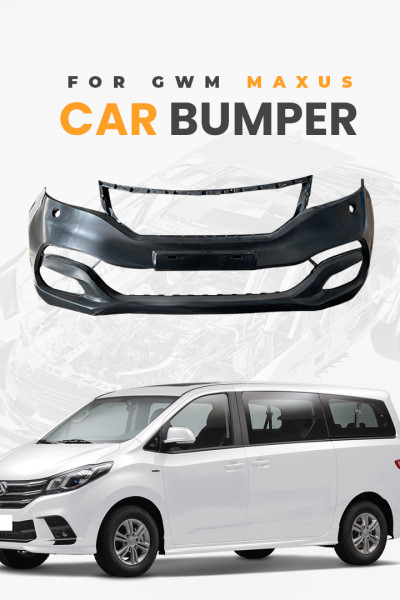
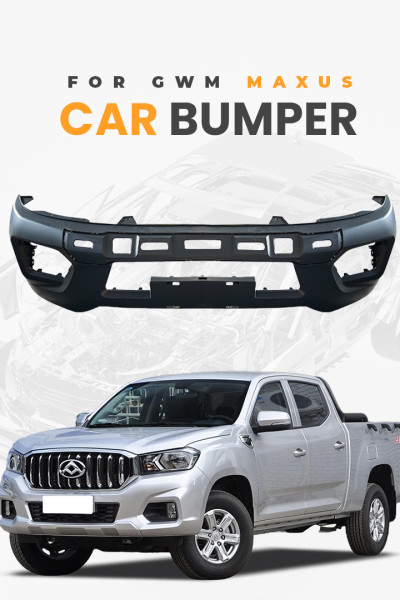
- MAXUS front bumper — large panel that benefits most from bonded warehouse staging.
1. Bonded Warehousing Has Become Default Infrastructure
The single biggest change has been the rise of large bonded warehouses in southern China, typically clustered around Shanghai, Ningbo, Shenzhen, Guangzhou, and Qingdao. These warehouses allow a parts supplier to hold inventory under customs bond, defer duty payments, and ship in small parcels to overseas customers without clearing each shipment through Chinese customs individually.
The effect on distributor lead times is dramatic. A distributor who orders a single bumper from a bonded warehouse can receive it in 5 to 10 days, including order processing, picking, packing, export documentation, and air or sea freight to the destination. That is the new baseline for small and mid-sized orders, and it eliminates the production wait time that used to be unavoidable on smaller orders.
2. Mixed-Container Consolidation Is Now Routine
Mixed-container consolidation (the practice of combining multiple distributors' orders into a single container) used to be a niche service offered by a handful of freight forwarders. Today it is offered as a standard service by the major freight platforms and by parts distributors with bonded warehouse operations. The practical effect is that a distributor can order 40 different SKUs in quantities of 5 to 20 units each, pay a small consolidation fee, and have those SKUs arrive in a single LCL or FCL shipment without managing the container booking themselves.
3. Direct Sailing Routes Have Replaced Trans-Shipment
The major container lines have added direct sailing routes between southern Chinese ports and many secondary destination ports. Routes that used to require trans-shipment in Singapore or Port Klang now operate direct services, which cuts transit times by 4 to 10 days on average. Direct routes are now common to Jeddah, Jebel Ali, Santos, Kingston, Mombasa, and several West African ports.
4. Digital Freight Platforms Have Reduced Documentation Lag
The documentation cycle used to add 3 to 7 days to every shipment because bills of lading, certificates of origin, and inspection reports were issued on paper and physically circulated between the supplier, the freight forwarder, the customs broker, and the distributor. Digital freight platforms now issue and transmit these documents electronically, often in real time as the shipment is loaded. The documentation lag has effectively been eliminated.
5. AI-Driven Customs Classification Has Reduced Clearance Time
Customs authorities in major importing markets have deployed AI-driven HS code classification tools that automatically assign the correct tariff code and duty rate to incoming shipments. The tools are particularly effective on commodity categories like auto body parts, where the HS code structure is well-defined. The result is faster clearance and fewer manual inspections on routine shipments.
New Lead Time Benchmarks for Chinese Auto Parts
The combined effect of these innovations is that the old 70-to-110-day door-to-door lead time has compressed significantly. The table below shows typical current benchmarks for distributors sourcing from bonded warehouses in southern China.
| Service | Old Lead Time | New Lead Time | Reduction |
|---|---|---|---|
| Single-unit air freight (5 to 20 kg) | 10 to 18 days | 4 to 7 days | ~60% |
| LCL sea freight (100 to 500 kg) | 35 to 50 days | 22 to 32 days | ~35% |
| FCL sea freight (20 to 40 ft) | 45 to 65 days | 28 to 40 days | ~40% |
| Mixed consolidation from bonded warehouse | 50 to 70 days | 30 to 42 days | ~45% |
| Rush production + air freight | 25 to 35 days | 14 to 21 days | ~50% |
These benchmarks are not theoretical. They reflect actual transit times that distributors are achieving today on lanes from Shenzhen, Shanghai, and Ningbo to major destination markets. The implication for distributor tips is that the old playbook of placing one big container every three months is no longer the only viable strategy. Smaller, more frequent replenishments are now competitive on lead time, and they are dramatically better on working capital and stock-out risk.
The Strategic Shift: From Bulk Containers to Continuous Replenishment
The most important strategic implication of the new logistics landscape is that distributors can now operate a continuous replenishment model rather than the old bulk-container model. Instead of placing one large order every quarter, a distributor can place smaller orders every two to four weeks, mix SKUs across multiple brands, and adjust quantities in response to actual sell-through data.
The economic logic is straightforward. Working capital tied up in slow-moving inventory is expensive. A 40-foot container of mixed parts that takes 120 days to sell through is, in effect, financing the supplier's inventory for four months. A 20-foot container or LCL shipment that takes 45 days to sell through frees that capital for the next replenishment, and the compounded effect over a year is a meaningful improvement in return on working capital.
The continuous replenishment model also enables a much sharper merchandising strategy. The distributor who knows that a particular grille assembly is selling at 12 units per week can place a replenishment order before stock runs out, rather than waiting for the next quarterly container cycle. That means fewer lost sales, fewer backorders, and happier retail customers.
How Distributors Should Rethink Their Logistics Setup
Given the new logistics landscape, distributors should review four elements of their setup in 2026.
1. Container Sizing and Frequency
Most distributors are over-sizing their containers. A 20-foot container holds roughly 28 to 30 cubic metres of cargo, which is enough for a mid-sized distributor's monthly replenishment. The default should be a 20-foot container or an LCL consolidation every four to six weeks, not a 40-foot container every three months. The exception is when freight rates on 40-foot containers drop enough to make the larger container clearly cheaper per cubic metre.
2. Air Freight as a Tactical Tool
Air freight used to be prohibitively expensive for most body parts, but the rise of e-commerce-focused air freight providers has compressed the cost gap between air and sea on smaller shipments. A distributor should treat air freight as a tactical tool for stock-out prevention and high-margin SKUs, not as a last resort. A typical 50 kg shipment by air from Shenzhen to most major destination markets now costs 4 to 6 dollars per kilogram, which is workable for headlamps, mirror assemblies, and grille assemblies.
3. Bonded Warehouse Partnerships
Working with a supplier who operates a bonded warehouse changes the economics of small orders. The MOQ drops to 1 unit, the duty payment is deferred until the shipment leaves the warehouse, and the documentation burden drops substantially. OOZOM, for example, operates a 50,000 sqm bonded warehouse with parts from 21 brands, which lets distributors mix SKUs in single shipments without going through full customs clearance at the Chinese end.
4. Real-Time Tracking Integration
Real-time shipment tracking is no longer a premium service reserved for large distributors. The major digital freight platforms offer API access to container milestones, customs status updates, and last-mile delivery confirmation. A distributor who integrates this data into their inventory management system can automate reorder triggers, alert customers proactively, and reduce the time their team spends on logistics coordination.
The Limits of Logistics Innovation: What Has Not Improved
It would be misleading to suggest that all logistics friction has disappeared. Three categories of friction remain stubbornly resistant to innovation.
Customs inspections on flagged shipments. When a customs authority flags a shipment for physical inspection, the delay can still be 7 to 14 days even with the best freight forwarder. The flagging is often driven by HS code mismatches, missing certificates, or commodity-specific risk profiles. Distributors who source from suppliers with consistent documentation practices see fewer flags.
Demurrage and detention charges at congested ports. When destination ports are congested, demurrage and detention charges can add hundreds of dollars per day to a shipment. The 2024 congestion at several European and Middle Eastern ports was a reminder that even modern logistics infrastructure can hit capacity limits.
Documentation gaps in the origin country. Despite the rise of digital documentation, some Chinese suppliers still issue paper certificates, late-stage inspection reports, or incomplete commercial invoices. These gaps slow clearance on the destination side and force the distributor's broker to chase missing documents.
The practical mitigation for these friction points is to work with a body parts supplier who has a track record of clean documentation, who can recommend reliable freight forwarders in the destination market, and who can advise on the best lanes for each shipment.
Common Distributor Mistakes in the New Logistics Landscape
The new logistics capabilities create new opportunities, but they also create new ways for distributors to make mistakes. Five mistakes are particularly common.
Over-relying on air freight. Air freight is fast, but it is also expensive, and distributors who default to air for everything erode margin. The right balance is sea freight for planned replenishment and air freight for genuine emergencies.
Ignoring consolidation windows. Most bonded warehouses operate on fixed consolidation schedules (typically weekly or bi-weekly). A distributor who orders outside the consolidation window waits for the next one, which can add 5 to 10 days to the order. Plan orders around the consolidation schedule.
Underestimating inland trucking time. In some destination markets, the inland trucking leg from the port to the warehouse takes longer than the ocean transit. Distributors who focus only on the sea-freight leg forget to plan for the inland delivery, and they end up with stock sitting at the port for weeks.
Failing to track supplier-side production lead time. The new logistics speed is on the export side, but production lead time at the factory has not changed much. A 15-day production run for a custom-painted bumper is still a 15-day production run. Distributors who mistake faster logistics for faster overall supply chain speed end up over-promising to customers.
Not validating the freight forwarder's track record. The new digital freight platforms make it easy to switch forwarders, but they also make it easy to land with a forwarder who has no experience in your specific lane. Always validate a forwarder's recent shipment history on the route you need before trusting them with a container.
How OOZOM Helps Distributors Capture Logistics Gains
OOZOM was built specifically to compress the lead time between a distributor order and a retail shelf. The operational capabilities that matter most are:
- 50,000 sqm bonded warehouse with 21 brands. Order a single part, mix across brands, and ship under bond without individual customs clearance.
- MOQ 1 ordering on most SKUs. Test demand before committing to a container.
- Real-time tracking through the mobile app. Track shipments from warehouse pick through to delivery confirmation.
- Established freight relationships with major forwarders. Direct sailing routes, LCL consolidation, and air freight options are pre-negotiated.
- Clean documentation discipline. Every shipment ships with a commercial invoice, packing list, certificate of origin, and where required, a material certificate and SGS or BV pre-shipment inspection report.
Conclusion: Logistics Innovation Is the New Competitive Advantage
The logistics innovations of the last five years have fundamentally changed what is possible for distributors sourcing from China. The 70-to-110-day lead times that used to be the industry baseline have compressed by 30 to 50 percent, and the rise of bonded warehouses, mixed consolidation, direct sailing routes, and digital documentation has made smaller, more frequent replenishments the dominant strategy. The distributors who capture this opportunity will operate with lower working capital, faster customer response, and stronger margins than the distributors who stick with the old bulk-container playbook.
The right starting point is to choose a body parts supplier who runs a bonded warehouse, supports MOQ 1 ordering, and offers real-time tracking through a mobile app. OOZOM ticks all of those boxes, with 21 vehicle brands, a 50,000 sqm warehouse, and door-to-door shipment visibility.
Source Auto Parts with Shorter Lead Times from OOZOM
MOQ 1 ordering, bonded warehouse shipping, 21 vehicle brands, real-time tracking through the OOZOM app.