How to Source Car Radiators for Hot Climate Markets
When ambient temperatures climb past 45°C and dust storms are a seasonal reality, the car radiator becomes the single most stressed component under the bonnet. Distributors and importers serving African and Middle Eastern aftermarket customers need a sourcing playbook that goes far beyond comparing price lists. The wrong radiator wholesale choice leads to warranty claims, customer churn, and the kind of reputational damage that no amount of marketing budget can undo. This guide walks you through the technical, commercial, and logistical filters that separate a reliable heat dissipation programme from a costly one in the world's hottest vehicle markets.
Why Hot Climate Markets Demand a Different Radiator Specification
OEM engineers design radiators for a target ambient temperature of roughly 25–30°C. The moment a vehicle operates in Saharan, Gulf, or sub-Saharan conditions, the cooling system loses 20–30% of its efficiency simply because the air entering the grille is already hot. Add airborne sand, salt-laden coastal humidity, and chronic stop-and-go traffic in congested cities, and the radiator core faces corrosion, abrasion, and thermal fatigue simultaneously. This is why bestune radiator and similar Chinese-platform components built for global export are increasingly specified with reinforced brazed seams and high-density fin packs that hold up under desert duty.
The business impact for distributors is straightforward: every warranty return costs you the unit price, the freight, the installer's time, and a customer who will not come back. Specifications matter more than unit price in this category.
Core Specifications Distributors Should Verify Before Placing a Bulk Order
Before you commit to a container load, request the following documentation from your supplier. A serious OEM-aligned partner will provide these without hesitation:
- OE part number cross-reference and fitment chart for popular African and Middle Eastern fleet vehicles
- Core thickness, tube count, and fin density specifications with dimensional drawings
- Pressure-test and burst-test certificates from an independent lab (SGS, TÜV, or BV)
- Salt-spray test results confirming 240+ hours of corrosion resistance
- Country-of-origin statements, HS codes, and full export documentation for customs clearance
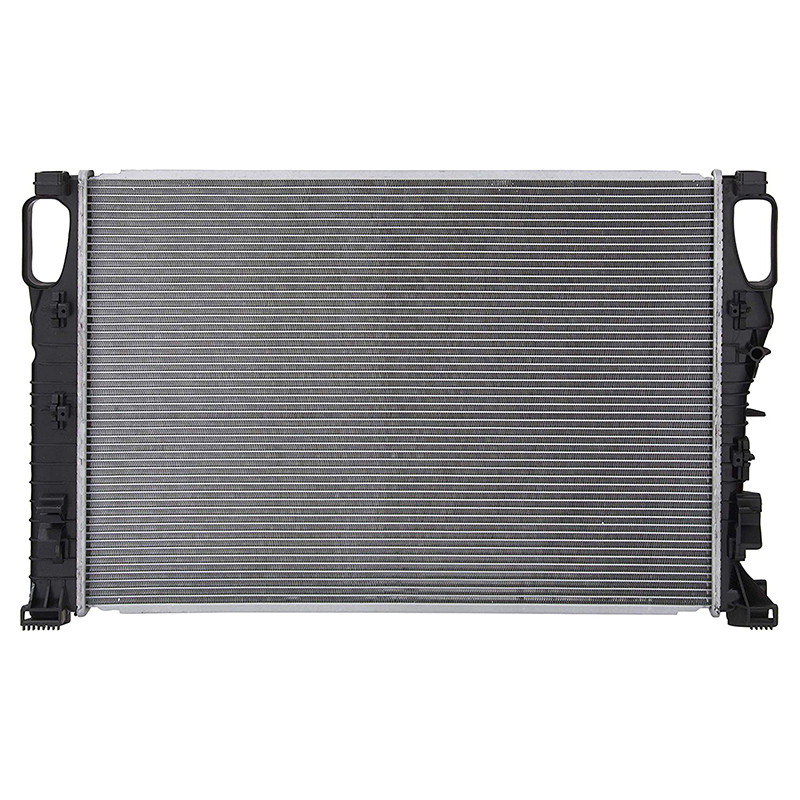
For example, OOZOM's wholesale car radiator programme for the 2022 Bestune line was developed around exactly these benchmarks: rapid heat dissipation, corrosion-resistant brazed aluminium construction, and verified drop-in fitment that eliminates the rework installers complain about with cheaper cores.
Material Choices That Matter: Aluminium, Plastic, and Copper-Brass
Full aluminium radiators with brazed seams offer the best combination of lightweight construction, rapid heat dissipation, and corrosion resistance for hot climates. Plastic-tank aluminium-core designs reduce cost while maintaining acceptable durability for passenger vehicles, though they require careful seal inspection at the tank-core joint. Traditional copper-brass radiators remain relevant for heavy commercial applications where repairability matters, but their higher cost and weight make them a niche choice in most modern radiator wholesale programmes.
For Middle Eastern conditions where road salt is rare but thermal cycling is extreme, full aluminium is the clear winner. For coastal African markets with salt-laden air, insist on the addition of an epoxy-based internal coating to extend service life beyond the standard warranty window.
Reading the Market: Africa and the Middle East Are Not One Segment
Treating "MENA" or "Africa" as a single homogeneous market is a common mistake new importers make. Gulf Cooperation Council states (Saudi Arabia, UAE, Kuwait, Qatar, Oman, Bahrain) demand newer-model vehicles, premium brand allegiance, and Just-In-Time logistics because inventory carrying costs are high. North African markets (Egypt, Morocco, Algeria, Tunisia) lean toward compact and commercial vehicle radiators with more price-sensitive buyers. Sub-Saharan markets (Nigeria, Kenya, Ghana, Tanzania, Angola) prioritise ruggedness and the ability to source spares for vehicles 5–10 years into their service life.
A radiator wholesale range that covers the 2022 Bestune, Wuling, and Changan platforms gives you access to a fast-growing segment of light commercial and passenger vehicles increasingly seen across all three regions. The Chinese brand footprint in Egypt, the UAE, and several West African capitals has expanded sharply, and the right bestune radiator stockist becomes the default supplier for workshops that have grown tired of unreliable alternatives.
Logistics Considerations: How to Move Radiators Without Damage
Radiators are bulky, fragile at the core, and awkward to stack. Damaged-on-arrival claims can wipe out an entire shipment's margin. Insist on the following packaging protocols from your supplier:
- Individual foam corner protectors on every tank and core edge
- Heavy-gauge corrugated outer cartons with at least 8mm wall thickness
- Vertical orientation during shipping, clearly marked on the carton
- Palletised loads with shrink-wrap and edge protectors
Climate-controlled container ventilation is recommended for sea freight to Gulf ports during summer months, since aluminium cores can reach 70°C in a closed container sitting on the quayside at Jeddah or Jebel Ali.
Pricing Strategy and Margin Protection in the Hot-Climate Aftermarket
Radiator pricing in the Middle Eastern and African trade is competitive, but it rewards distributors who combine volume with technical service rather than pure cost leadership. A workshop owner in Riyadh or Lagos is buying more than a part: they are buying the confidence that the supplier will resolve any warranty claim quickly. Build your landed cost calculation to include a buffer for warranty replacement, typically 1–2% of unit value, and price accordingly. Distributors who race to the bottom on radiator pricing eventually find themselves unable to fund the warranty support that keeps customers loyal.
Building a Sustainable Radiator Programme, Not a One-Off Shipment
The distributors who win in African and Middle Eastern markets are the ones who treat the relationship with their radiator supplier as a partnership rather than a transaction. That means quarterly business reviews, shared forecast planning, joint marketing collateral, and a clear escalation path for warranty cases. OOZOM operates on this partnership model with distributors in over 40 countries, providing not just the parts but the technical documentation, marketing assets, and field support that turn a one-time shipment into a recurring programme.
For importers evaluating a new radiator wholesale line, start with a pilot container covering the highest-velocity part numbers, validate the product in your local market with a small group of trusted workshops, and only scale once field failure rates are confirmed below 0.5% across the first six months. This disciplined approach protects both your capital and your reputation in markets where word travels fast and trust is hard-won.
Final Recommendations for New Entrants to Hot-Climate Radiator Distribution
If you are entering the African or Middle Eastern car radiator trade for the first time, prioritise the following three actions in your first 90 days: secure a supplier who provides full technical documentation rather than just photos and price lists, request sample radiators for third-party laboratory testing before placing bulk orders, and build relationships with two or three regional logistics partners who understand the routing challenges to inland African destinations. These steps cost little relative to a full container and dramatically reduce the risk of your first import becoming a learning exercise rather than a profitable one.