How to Set Up a Chinese Auto Parts Wholesale Business
Chinese auto parts have moved from the margins of the global aftermarket to its centre of gravity. In the last five years, exports of Chinese-made body panels, lighting assemblies, mirrors, and underbody components have roughly tripled, and the country's share of the world's independent aftermarket supply now sits somewhere between 35% and 45% depending on how you count. For a new wholesaler, the question is no longer whether China can supply your shelves — it is whether you can build a defensible business on top of that supply without getting crushed by the same competition that has bankrupted dozens of would-be importers over the last decade.
This guide is written for someone who is seriously considering — or already committing to — building a wholesale business that sources from China. It is not a "10 easy steps to riches" pitch. It is a candid walk through market research, supplier due diligence, capital planning, logistics, regulatory clearance, channel development, and the operational systems you will need on day one. By the end, you should know whether this business makes sense for you, and if it does, what the next 90 days of work should look like.
Step 1: Define Your Market and Your Customer Before You Source Anything
The single biggest mistake new Chinese auto parts wholesalers make is sourcing first and defining their market afterwards. They pick a handful of Chinese suppliers based on Alibaba search results, place a trial container order, and then scramble to find someone — anyone — to sell it to. This almost never works. The businesses that succeed are the ones that start with a specific, narrowly defined customer base and reverse-engineer the supply chain backward from that customer.
Before you contact a single supplier, answer these four questions in writing:
- Who exactly is your customer? Independent workshops? Insurance fleet operators? A regional e-commerce platform? A specific dealership network? Each customer type has different price points, different service expectations, and different product mix requirements.
- What parc of vehicles are they servicing? The Chinese-brand EV parc (BYD, MG, Chery, HAVAL, MAXUS, Geely, NIO) is structurally different from the Japanese parc, the German parc, and the American parc. They require different SKUs, different fitment standards, and different packaging.
- What is your geographic reach? A local city, a country, a region? The answer determines whether you need container-load economics or whether pallet-and-parcel logistics will do.
- What is your defensible advantage? Lower price? Faster delivery? Better fitment? Better catalog? Better payment terms? Whichever advantage you claim, you must be able to defend it on day one — not in a year, on day one.
The output of this exercise is a one-page customer thesis. If you cannot write that thesis clearly, you are not ready to source from China. The good news is that this thesis often tells you immediately whether the opportunity is real. Many aspiring importers discover at this step that the market they were targeting is either too small, too competitive, or too far from a workable supply chain to support a real business.
Step 2: Understand the Chinese Auto Parts Supply Landscape
Not all Chinese auto parts suppliers are the same, and treating them as interchangeable is the second-most-common mistake new importers make. The Chinese auto parts supply base is layered. Each layer has different economics, different risks, and different implications for your business model.
The four main supplier types you will encounter are:
- OEM-tier manufacturers — companies that produce parts for the assembly lines of vehicle brands. These are the highest-quality and often the most expensive, but they also offer the deepest catalogs and the most reliable fitment. OOZOM operates at this tier.
- Aftermarket specialists — companies that do not supply assembly lines but produce panels, lighting, or trim specifically for the aftermarket. Quality ranges from excellent to poor depending on the factory.
- Trading companies and consolidators — intermediaries that source from multiple factories and resell. Convenient but risky: you often do not know which factory actually produced the part you are buying.
- White-label producers — small factories willing to put any brand on any product. Useful for branded resale but risky if you do not control the underlying quality.
For most new wholesalers, the right starting position is OEM-tier or top aftermarket specialist — paying 5 to 15% more than the cheapest trader but eliminating most of the quality and consistency problems that come with the bottom of the market. Across 21 Chinese vehicle brands, the OEM-tier suppliers in particular tend to share tooling, fixtures, and engineering documentation across platforms, which gives you far more accurate fitment than a generic trader can offer.
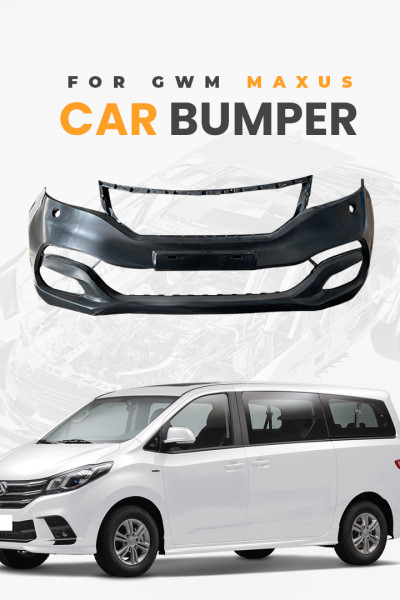
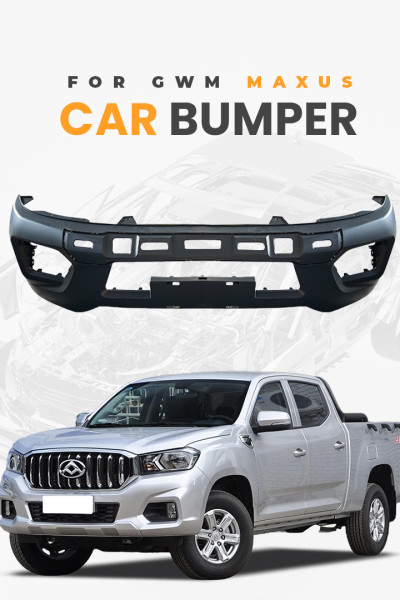
The supplied grid below shows a representative cross-section of body parts available through OEM-tier sourcing — exactly the kind of catalog a new wholesaler should be evaluating on day one.


Step 3: Supplier Due Diligence — The Five Checks That Actually Matter
Once you have identified a shortlist of candidate suppliers, the next step is due diligence. Most importers do this badly. They rely on a video call, an Alibaba Gold Supplier certificate, and a couple of trade-show references. None of those are reliable indicators of supplier capability. The five checks below are what experienced importers use, in this order.
Check 1: Business licence and export history
Every legitimate Chinese supplier has a business registration number on file with the State Administration for Market Regulation. Verify it. Confirm the company has been operating for at least five years. Confirm it has export experience to at least three of your target markets. A supplier with no export history is a supplier who will struggle with your documentation requirements.
Check 2: Factory audit (in person or by third party)
Visit the factory, or hire a third-party inspection company (SGS, Bureau Veritas, TÜV) to do it for you. The audit must confirm: production capacity, quality management system (ISO 9001 or IATF 16949 preferred), tooling condition, and workforce stability. A factory that refuses an audit is a factory you do not want to work with.
Check 3: Sample evaluation
Order samples — paid samples — from at least three finalists. Evaluate each against an OE part, measuring dimensional accuracy, material thickness, finish quality, and paint adhesion. If a supplier cannot or will not provide a paid sample, drop them. MOQ 1 ordering on samples is the most important early-stage risk-reduction tool you have.
Check 4: Reference customers in your target market
Ask the supplier for two or three reference customers who currently import the same product family into the same country. Call those references. Ask specifically about: on-time delivery rate, defect rate, and how the supplier handled claims. A reference that gives you generic praise is useless. A reference that gives you specific examples — both good and bad — is invaluable.
Check 5: Financial health and ownership
Use a credit check service (e.g. CreditSafe, China-based Qichacha) to verify the supplier's financial health and ownership structure. A supplier undercapitalised or in the middle of an ownership dispute is a supplier whose deliveries will eventually slip.
Step 4: Capital Planning — How Much You Actually Need
Capital planning is where most underprepared importers run out of runway. They budget for the inventory cost and forget everything else. The full cost of setting up a Chinese auto parts wholesale business in 2026, assuming a single 20-foot container as the first inventory order, breaks down approximately as follows:
| Cost line | Typical range (USD) | Notes |
|---|---|---|
| Inventory (1 × 20 ft container) | $15,000 – $45,000 | Depends on SKU mix; body panels are bulky but cheap |
| Sea freight + insurance | $2,500 – $6,000 | Route- and season-dependent |
| Customs duties + VAT/GST | $2,000 – $8,000 | Varies by HS code and destination country |
| Last-mile warehousing | $1,500 – $4,000 (initial) | First 3 months of pallet storage |
| Website + e-commerce platform | $2,000 – $8,000 | Including catalog photography |
| Working capital buffer | $10,000 – $20,000 | To cover the first 90 days of operating loss |
| Total realistic budget | $35,000 – $90,000 | Lower end assumes a lean start; upper end includes a sample container plus marketing |
Two rules of thumb worth internalising before you sign any cheque:
- Budget 2x what you think you need. The single most common reason new wholesalers fail in their first year is undercapitalisation. Customs delays, quality disputes, and slower-than-expected sales all consume cash faster than the spreadsheet predicted.
- Never spend more than 40% of your capital on a single supplier relationship. Concentration risk is the silent killer of import businesses. If your primary supplier has a factory fire, a regulatory issue, or a quality scandal, you need enough financial buffer to survive six months while you qualify an alternate.
Step 5: Logistics, Customs, and Incoterms
Once capital is in place, you need a logistics plan. For most new wholesalers, the right starting position is to let the supplier handle export-side logistics and take responsibility only for import-side clearance and last-mile delivery. The Incoterm that works for this arrangement in 2026 is CIP (Carriage and Insurance Paid to) your destination port or airport — you take ownership at the named place, with the supplier paying freight and insurance to that point.
The logistics decisions that drive your cost-per-SKU are:
- Mode. Sea freight for full containers; air freight for samples and urgent top-ups. Sea freight is roughly one-fifth the cost per kilogram but takes 18 to 30 days for most routes.
- Consolidation. If your first container is not full, use a consolidation warehouse in Shanghai or Ningbo to share container space with other importers. Consolidation adds 7 to 14 days of lead time but cuts freight cost per cubic metre significantly.
- Customs broker. Engage a local customs broker in your destination country before your first shipment. They will classify your goods, calculate duties, and pre-clear documentation. Do not try to clear customs yourself on a first shipment.
- Insurance. Always buy marine cargo insurance, even if your supplier includes it in the Incoterm. The premium is roughly 0.3% of cargo value and protects you against the long tail of transit damage and loss.
Customs classification is the single largest source of unexpected duty bills. Body panels typically classify under HS 8708 (parts of motor vehicles), but specific subcodes vary by part family. A bumper is 8708.10, a mirror is 7009.10, lighting is 8512.20, and so on. Duty rates range from 0% to 10% depending on your country and any free-trade agreements in force.
Step 6: Channel Development — How You Will Sell
You have your market thesis, your supplier, your container, and your inventory in place. Now you need customers. Channel development is where the daily work of running the business actually happens. Three channels work well for a new Chinese auto parts wholesaler in 2026, and you should run at least two of them in parallel.
Channel 1: Independent workshops (relationship-driven)
The classic channel. Workshop owners buy on relationship, reliability, and speed — not price alone. Visit 10 workshops per week, carry samples, and offer same-week delivery on stocked SKUs. The workshop channel has high lifetime value but slow ramp-up.
Channel 2: E-commerce and marketplaces (volume-driven)
List your inventory on eBay, Amazon, regional marketplaces, and your own Shopify storefront. The marketplace channel is low-touch, scales quickly, but competes on price. Useful for liquidating slow-moving inventory and learning what the market actually wants.
Channel 3: B2B platforms (scale-driven)
List on Alibaba, TradeKey, and Made-in-China to reach international buyers searching for Chinese sources. This channel works well for container-load orders from established distributors in other markets. Expect lower per-unit margin but higher per-order value.
The OOZOM app shown below is designed for exactly this combination: distributors and workshops can browse the catalog, search by VIN or OE number, place orders, and track shipments from a single interface. If you are evaluating platforms, look for suppliers who give you this kind of tooling rather than just a static catalog.
Step 7: Operational Systems You Need Before You Ship
Many new wholesalers underestimate how much operational infrastructure is required to run even a small import business profitably. The systems you need before your first container arrives are:
- Inventory management. A real SKU-level system that tracks on-hand, on-order, committed, and allocated quantities. Spreadsheets work for the first 100; past that they break.
- Catalog with fitment data. Each SKU must be tied to OE part numbers, vehicle platform, production date range, and trim level. Without this, you will sell the wrong part, and your return rate will destroy your margin.
- Quality control workflow. Pre-shipment inspection by you or a third party. Random-sample AQL inspection of every batch. Documented non-conformance process for when defects are found.
- Order-to-cash pipeline. From order receipt to pick-pack-ship to invoice to reconciliation. Most new wholesalers use Shopify or a purpose-built B2B platform; both work.
- Returns and claims process. A documented, written policy that your customers know about. A "no questions asked" fitment guarantee on stocked SKUs is the single most powerful customer-conversion tool in this business.
Each of these systems can be built from scratch with a few hundred dollars of software and a few weeks of setup. Trying to run without them is how importers end up with five-figure inventory write-offs in month four.
Step 8: Pricing, Margin, and Working-Capital Discipline
The economics of a Chinese auto parts wholesale business in 2026 are tight but workable, provided you protect your gross margin. Most successful importers in this space target a 35% to 55% blended gross margin, with at least 8% to 12% net margin after all costs. Hitting those numbers requires discipline in three places:
- Cost discipline on the buy side. Negotiate volume tiers with your supplier, but never chase the absolute lowest unit cost. A 5% lower buy price that costs you a 15% return rate is not a discount.
- Margin discipline on the sell side. Resist the temptation to discount your way to volume. Workshop customers value reliability more than price; e-commerce customers will pay a small premium for accurate fitment data; B2B buyers will pay for documented quality systems.
- Working-capital discipline across the cycle. Cash flow in this business is brutal. You pay suppliers in advance or on net-30 terms; you ship 30 to 60 days later; you collect from customers another 30 to 90 days after that. You need a cash buffer to survive the entire 90 to 150-day cash conversion cycle.
Two commercial tools that materially help with cash conversion: letter of credit (for first-time supplier relationships) and pre-payment or deposit terms (for new customer relationships). Use both until trust is established.
Step 9: Regulatory and Compliance Considerations
Every country you sell into has its own regulatory regime for auto parts. The most common compliance areas you must address are:
- Type approval and homologation. Some part families (lighting, mirrors, glazing) require type approval in many jurisdictions. Sourcing from an OEM-tier supplier dramatically simplifies this because the parts have already been type-approved in their domestic market.
- Material and substance compliance. REACH (EU), Prop 65 (California), and various other substance regulations restrict the use of certain heavy metals and phthalates. Confirm your supplier's compliance in writing, and renew the confirmation annually.
- Product liability. If a part fails and causes an accident, you may be liable as the importer-of-record. Carry product liability insurance — it is inexpensive relative to the downside risk.
- Country-of-origin labelling. Most jurisdictions require "Made in China" or equivalent marking on the product and packaging. Customs will reject mislabelled shipments.
- Intellectual property. Avoid any SKU that copies a protected design (logo, trademark, distinctive styling). Counterfeit-risk SKUs are not worth the legal exposure, even at a 30% margin.
A short compliance conversation with a customs broker and a product liability insurer in your destination market will surface 90% of the issues before your first shipment, and is far cheaper than discovering them after.
Step 10: Growth — From One Container to a Real Business
The first 12 months of a Chinese auto parts wholesale business are about survival and learning. By month 12, you should know your top 50 SKUs, your top 20 customers, your real margin profile, and your actual cash conversion cycle. That knowledge is what determines whether you grow or stall. The growth levers that work in this business, in roughly this order:
- Deepen the existing catalog. Most new wholesalers under-utilise their existing supplier relationship. Your supplier almost certainly produces 3x to 5x the SKUs you currently buy. Adding catalog depth at the same supplier, with the same quality system, is the cheapest growth.
- Add a second supplier for your top SKUs. Single-source dependency is a risk. Qualifying a second source for your top 20 SKUs gives you pricing leverage and supply continuity.
- Expand to adjacent part families. Once body panels are flowing, add lighting, mirrors, underbody, and trim. Each new family adds operational complexity, but it also multiplies the customer's wallet share.
- Cross brands within the same supplier. Across 21 vehicle brands — including Chery, BYD, MG, MAXUS, HAVAL, Geely, NIO, and others — your OEM-tier supplier can usually cover 80%+ of the Chinese-brand parc in your market.
- Build a recurring customer base. Workshops that order three times become customers for five years. Insurance fleets that order once become multi-year contracts. Recurring revenue is the foundation of a defensible wholesale business.
Conclusion: Building a Defensible Wholesale Business on Chinese Supply
Setting up a Chinese auto parts wholesale business in 2026 is more accessible than it has ever been, but the bar for sustained profitability is also higher. The opportunity is real: Chinese supply is mature, quality is high, prices are competitive, and the global parc of Chinese-brand vehicles is still growing rapidly. The risk is also real: undercapitalised operators, undifferentiated offerings, and channel commoditisation can compress margins to nothing in months.
The wholesalers who thrive in this environment share five habits. They define their customer before they source. They qualify suppliers rigorously. They price for value rather than for volume. They invest in operational systems from day one. And they grow depth before breadth.
OOZOM exists to make that journey easier. We supply body panels, lighting, mirrors, grilles, and underbody components across 21 Chinese vehicle brands directly from our 50,000 sqm Shanghai warehouse, with documented OE-spec quality systems, custom foam packaging, and a written fitment guarantee. We support new wholesalers with MOQ 1 ordering on every SKU so you can qualify our parts and your market before committing to a container load.
Browse the full catalog, request a sample panel for fitment testing, or talk to our wholesale team about container pricing and exclusive-territory arrangements for your market. The next decade of the global aftermarket will be built on Chinese supply — the only question is who builds the channel that captures it.
Ready to start? Reach out to the OOZOM wholesale team for catalog access, MOQ 1 sample pricing, and a tailored starter inventory recommendation for your market.