How to Reduce Auto Parts Import Costs: A Guide
auto parts importcost reductionbody parts wholesalequality control chinaMOQ 1 auto partschinese auto parts
For distributors and workshop owners across Africa, the Middle East, Central Asia, and Latin America, importing auto parts from China has moved from a side experiment to a core revenue line. The price gap on body panels, lighting, and exterior trim is often 40–60% below equivalent stock from traditional channels. Yet margins quietly disappear when buyers hit the same five traps: hidden fees, quality drift on the second container, surprise tooling charges, and damaged goods arriving in rusted steel racks.
This guide is written from the perspective of a working supplier — OOZOM — that ships body parts to more than 80 countries every year from a 50,000 m² bonded warehouse. It is built around the question our buyers actually ask: how do we keep the unit cost low without giving up the quality that keeps our customers coming back?
Why China Is Still the Lowest-Cost Source for Auto Body Parts
The first thing to understand is why the price gap exists at all. It is not simply cheaper labor. It is the entire ecosystem — steel mills within 200 km of stamping plants, mould shops on the same industrial park, and tier-2 paint lines operating three shifts a day to feed OEM and aftermarket customers simultaneously. That density compresses every cost between raw coil and a finished front bumper or side mirror.
- Vertical integration: A single supplier can source its own steel, run stamping, plastic injection, e-coating, and top-coat paint within a 30 km radius. The same part in Europe or North America passes through 3–4 separate companies, each adding margin.
- Aftermarket tooling amortisation: Moulds for popular body panels (e.g. Chery Tiggo front bumper) are typically amortised across tens of thousands of units, dropping per-unit tooling cost to a fraction of OEM equivalents.
- Multi-brand shared platforms: Many Chinese plants run Chery, BYD, MG, MAXUS, HAVAL, Geely, and Changan tooling under one roof. Shared overhead means shared savings.
For a distributor buying 100+ body panels a month, that ecosystem easily produces a 40–55% landed-cost advantage over equivalent stock from a European parts dealer — even after ocean freight, duty, and last-mile delivery are added in.
The Five Hidden Costs That Quietly Wipe Out the Savings
The price list never tells the whole story. Most first-time importers underestimate the real cost by 15–25% because they forget one or more of these line items. A clear view of the full landed-cost picture is the foundation of any cost-reduction plan.
1. Tooling and mould amortisation
Some factories quote rock-bottom unit prices but quietly bury mould costs in a one-time "tooling fee" that can be USD 2,000–15,000 per part. Ask whether the mould is shared (already amortised across other buyers) or dedicated (made for your order only). Shared tooling on a high-runner like the Chery Tiggo 7 Pro grille should cost you nothing — that is the whole point of buying from a stock-and-flow aftermarket supplier.
2. Sampling fees that double up
Expect two rounds of samples on a new part: a soft-tool sample for fitment and a hard-tool production sample for finish. Negotiate these into the unit-price ladder — or accept them as a sunk USD 200–400 line item per SKU — before you sign the PO.
3. Surface treatment shortcuts
The single largest quality killer is paint and e-coat. A front bumper quoted 8% cheaper than the market may have skipped the e-coat dip and is selling you a powder-coated-only part. It will rust at the mounting brackets within six months on a coastal route. Always request the paint process in writing.
4. Packaging that does not survive the route
Cheap foam, no edge protectors, no carton strength — and you eat a 4–8% damage rate. Over a year, that damage rate alone wipes out the savings. See our packaging case study on how OOZOM drove damage to under 1%.
5. After-sales and warranty exposure
If the price seems impossibly low, ask what warranty the factory actually stands behind. A 90-day paint warranty from a real factory is worth more than a 12-month promise from a trader who disappears after the second shipment.
| Hidden cost | Typical impact on landed price | How to control it |
|---|---|---|
| Dedicated tooling | +5–12% (one-off) | Insist on shared/multi-buyer moulds |
| Sub-standard e-coat | +3–6% (rework & returns) | Request paint process spec sheet |
| Packaging damage | +2–4% | Specify carton spec, edge guards, foam density |
| Warranty shortfalls | +1–3% | Negotiate written warranty in contract |
How to Choose the Right Supplier: Stock-and-Flow vs Project-Based
There are two fundamentally different ways to buy auto body parts from China. Picking the wrong model is the single biggest reason import projects stall or quietly lose money.
Stock-and-flow aftermarket suppliers
These suppliers carry ready tooling on dozens of high-runner SKUs across multiple brands. They ship from existing inventory or run short batch cycles (often 100–500 units per SKU) on a rolling schedule. You benefit from: MOQ 1 ordering on most parts, fast sample turnaround, no tooling risk, and proven fitment because the moulds have already been validated in the field.
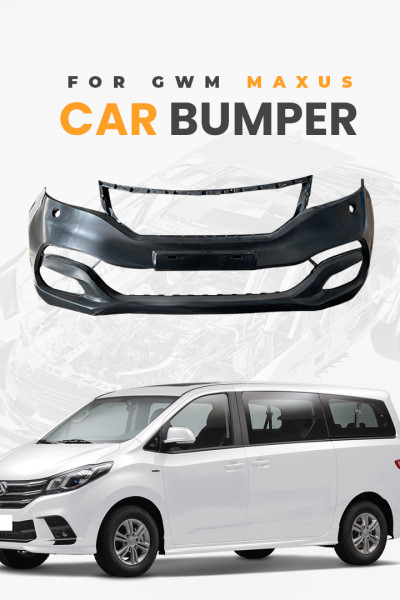
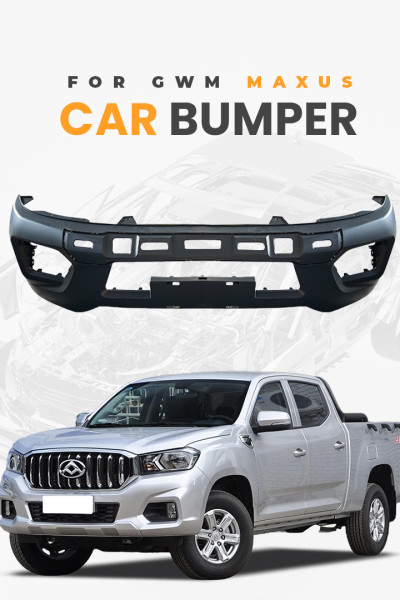
OOZOM operates this model across 21 brands including Chery, BYD, MG, MAXUS, HAVAL, Geely, GAC, Changan, JAC, Great Wall, Tank, Lynk & Co, Jetour, NIO, Hongqi, BAIC, Leapmotor, Exeed, Wuling, Dongfeng, and Skyworth. The BYD Sealion 07 front guard and the MAXUS Deliver 9 front bumper are typical stock-and-flow SKUs with shared tooling and immediate dispatch.
Project-based OEM suppliers
These suppliers take a purchase order, build a dedicated tool, and produce a batch sized for your order. Unit prices can be attractive on large volumes (5,000+), but they bring dedicated mould cost, longer lead times (60–120 days), and all the risk on first-article fitment. They make sense for distributors building a private-label brand on a specific vehicle, but they are the wrong choice for the first 18 months of any new sourcing programme.
Eight Concrete Tactics to Reduce Import Costs Without Losing Quality
The list below is the playbook our account managers walk every new OOZOM buyer through in their first three orders. Each tactic is something we have seen actually move the P&L, not just a slogan.
Tactic 1 — Buy MOQ 1 on the first order, then scale by family
Do not commit to a 500-unit MOQ on a part you have never tested. Order MOQ 1 on 8–10 SKUs that cover the highest-value collision lines on your target vehicle — a front bumper, a grille, a side mirror, a fender. Once you know the winners, scale the orders by family. This is the lowest-risk way to build a catalogue.
For example, the Chery Tiggo 8 Pro front bumper and the Chery Tiggo side mirror are both available at MOQ 1 from OOZOM, which lets a distributor launch a full Chery body programme with a sample budget under USD 1,000.
Tactic 2 — Bundle SKUs into one shipment, one supplier
Ocean freight, customs clearance, and last-mile delivery are mostly fixed costs. Splitting the same volume across three suppliers triples those costs. A single supplier with a wide catalogue — even if their unit price is 2% higher on a specific SKU — will usually give you a lower landed cost overall. OOZOM buyers regularly consolidate 40–80 SKUs from 6–8 vehicle models into one 40HQ container.
Tactic 3 — Specify the paint spec in writing, not in conversation
"Good paint" is not a specification. The right paint spec for an exterior body panel is: phosphate degrease → e-coat (min 18 µm) → primer (15–20 µm) → topcoat (25–35 µm) → clearcoat (35–45 µm) → 80°C × 30 min bake. Put that in the proforma invoice. If the factory pushes back, that is your signal to walk away.
Tactic 4 — Use the existing colour database instead of custom colour
Custom colour matching adds 5–10 days and USD 200–500 per SKU. For 90% of body panels, the OEM colour code (e.g. "Bournville Brown" for HAVAL, "Atlantis Blue" for MG) maps to an existing factory colour recipe. Ask for the colour card and pick from stock — your customers will not notice the difference.
Tactic 5 — Consolidate packaging spec across the whole order
Instead of negotiating packaging part-by-part, set one packaging spec that applies to every panel in the container: 5-ply corrugated carton, edge protectors on all four corners, EPE foam at 30 kg/m³, desiccant pack for any painted surface, and a stretch-wrap pallet. The packaging cost is the same whether you ship 5 SKUs or 50 SKUs — but the damage rate drops sharply.
Tactic 6 — Pre-book freight during the slow season
Ocean rates from Ningbo and Shanghai to West Africa, the Gulf, and South America swing by USD 800–2,500 per 40HQ between peak and shoulder seasons. If your inventory plan allows, pre-booking during the May–July low gives you the same container for a fraction of the Q4 price.
Tactic 7 — Use a bonded warehouse, not direct drop-ship
A bonded warehouse — like OOZOM's 50,000 m² facility in China — lets you consolidate, inspect, and re-pack orders before they ship. You can hold inventory in bond (deferring duty) and release it as your customers need it, which converts a cash-flow-heavy import business into a working-capital-light one.
Tactic 8 — Negotiate the warranty, not the unit price
A factory that is willing to write 12 months on paint and 24 months on structural integrity into the contract is a factory that has already tested the part. A factory that will only offer 30 days is telling you something. Negotiate warranty terms first, then accept a small premium for the longer cover.
Building a Realistic Landed-Cost Worksheet
The fastest way to lose money on Chinese auto parts is to budget against the supplier's EXW price. The honest landed-cost worksheet looks like this for a representative Chery Tiggo body panel order (USD figures are illustrative for a mid-2026 trade lane):
- EXW unit price (FOB Ningbo): 100% baseline
- Sea freight (40HQ, Ningbo → Apapa / Jeddah / Santos): +5–8%
- CIF insurance (0.4% of cargo value): +0.4%
- Import duty (varies; ~5–25% by HS code and destination): +5–25%
- Clearance, handling, last-mile: +2–4%
- Inspection & rework buffer (2% allowance): +2%
- Damage allowance (target <1% with proper packaging): +1%
- Working capital cost (30–60 day float): +1–3%
Once you add it all up, an EXW price that looked like a 45% saving often lands at a 20–28% real saving — still substantial, but only after the worksheet is built honestly. The exercise is worth doing before the first PO, not after the third.
App Snapshot: Sourcing & QC Workflow in the OOZOM Buyer App
Distributors and dealers use the OOZOM buyer app to manage the full sourcing workflow — from quote to shipment. The screen captures the layered inspection flow described in this article: document review, golden sample sign-off, DUPRO check, and PSI sign-off, all with timestamps and signed PDFs attached to the order.
Sourcing and quality-control workflow inside the OOZOM buyer app — every step timestamped, every document attached.
Quality Control Without Inflating Cost
Quality control is where most distributors swing between no inspection at all and full third-party pre-shipment inspection on every order. Neither extreme is right. The smart play is a layered approach that catches the expensive failures without adding 2–3% to the unit cost.
Layer 1 — Document review at quote stage
Before any deposit is paid, the supplier should provide: process flow chart, paint specification sheet, raw material certificates for steel and PP, packing list of every carton, and at least three reference buyers. Anything missing at this stage is a sign that the factory is trading, not manufacturing.
Layer 2 — Golden sample approval
Once the first production sample lands, sign it off in writing as the "golden sample". Every subsequent shipment is measured against that sample. Without a golden sample, every dispute is unresolvable.
Layer 3 — During Production Check (DUPRO)
For orders above 200 units, a mid-production inspection (when ~30% of goods are packed) catches the most common defect — paint run, mis-aligned bracket, or wrong colour code — before the entire batch is finished. A DUPRO typically costs USD 150–250 and saves thousands.
Layer 4 — Pre-Shipment Inspection (PSI)
The standard PSI at 80–100% packing stage is the safety net. Random sampling per AQL tables, full carton drop test, paint thickness measurement with an elcometer, and bracket torque test. Done by your own inspector or a third party — both work.
OOZOM buyers can also use our in-house QC team at the bonded facility. Because we run inspections on the same warehouse where the goods are packed, we catch and re-pack in one step — no third-party scheduling delay.
Product Grid: 4 Stock-and-Flow Body Parts Available at MOQ 1


From the Field: How a Lagos Distributor Cut Landed Cost 22%
One of our regular buyers runs a Chery, BYD, and HAVAL programme from Lagos. In 2025, after three years of escalating container costs, we sat down with him and rebuilt the sourcing plan around the eight tactics above. The headline result: landed cost dropped 22%, defect rate dropped from 4.3% to 0.8%, and order frequency went from one 40HQ every 90 days to two 40HQ every 60 days — without raising working capital, because bonded storage at OOZOM's warehouse deferred duty until dispatch.
The biggest single move was bundling SKUs across three brands into one container instead of running a dedicated container per brand. The second biggest was switching from a 12-SKU starter order every quarter to an MOQ-1 rolling model on slow-movers plus consolidated bulk on fast-movers.
That same approach is available to new buyers — you do not need to be a 12-container-a-year account to access it.
Conclusion: Smart Sourcing Beats Cheap Sourcing
Importing auto body parts from China is still the most reliable way to keep a body-shop or parts-retail operation competitive on price. The opportunity has not gone away. What matters in 2026 is how you source: shared tooling, MOQ 1 entry, bonded warehouse, written paint specs, layered QC, and consolidated multi-brand containers.
Start a Smarter Sourcing Programme with OOZOM
Order from MOQ 1 on 21 car brands, supported by a 50,000 m² bonded warehouse, in-house QC, and packing engineered to cut damage under 1%. Browse the catalogue at oozom.com or jump straight into a sample order on the parts below.
More reading from the OOZOM editorial team:
- HAVAL H6 front bumper — MOQ 1, shared mould
- MG HS front beam — crash-rated structural panel
- MAXUS Deliver 9 front bumper — van and light-commercial programme
- BYD Sealion 07 front guard — flagship EV body panel