GAC Motor Body Parts: The Untapped Aftermarket Opportunity
GAC Motor is the passenger-car division of Guangzhou Automobile Group, one of the largest automotive conglomerates in China and a major producer of chinese auto parts, and a partner of Toyota and Honda in joint-venture manufacturing. GAC's own-brand vehicles (sold under the GAC Motor, Trumpchi, Aion, and Hycan sub-brands) have been quietly building export volume across the Middle East, Southeast Asia, Latin America, Africa, and Eastern Europe, but the international GAC body parts aftermarket has not kept up. For distributors, that gap is the opportunity. GAC has scale, real export volumes, distinctive design, and an aftermarket supplier ecosystem that is structurally thinner than the ecosystems supporting Chery, Geely, or MG. The distributors who recognise this now will own a defensible position by the time the major trading companies wake up.
This guide explains where GAC sits in the global GAC motor parts market, which SKUs to prioritise, and how to build a sustainable GAC parts programme without the common mistakes that catch new entrants to the brand.
GAC's Position in the Chinese Auto Export Landscape
GAC Motor sits in an unusual position in the Chinese auto industry. It is large enough to matter (more than 2 million vehicles sold in 2024 across the GAC group), but it is not yet a household name outside China. The export push began in earnest around 2018 and has scaled steadily since, with cumulative overseas sales passing 600,000 units by the end of 2025. The strongest markets are the Middle East (particularly Saudi Arabia, the UAE, Kuwait, and Qatar), Southeast Asia (Indonesia, Thailand, Malaysia, the Philippines), Latin America (Chile, Peru, Mexico, Colombia), Africa (Egypt, Nigeria, Kenya, South Africa), and Eastern Europe (Russia via re-export channels, Kazakhstan, Uzbekistan).
The product mix that drives that export volume is distributor-friendly. The GS3 Emzoom, the GS4, the GS5, the GS8, the Emkoo, and the Empow are the volume models outside China, and they span the compact SUV, mid-size SUV, and sedan segments that dominate global demand. The Aion range brings EV models into the catalogue, including the Aion Y and the Aion S, which are increasingly relevant in markets with active EV adoption incentives.
The fact that GAC has joint-venture DNA matters for distributors. The GAC engineering teams have spent decades working with Toyota and Honda on quality systems, and the manufacturing discipline in GAC's own-brand plants reflects that heritage. The result is that GAC vehicles tend to be among the most consistent Chinese brands in build quality, which translates into a more predictable aftermarket demand profile.
Why the GAC Aftermarket Is Structurally Underserved
Despite the volume, the international aftermarket for GAC motor parts is structurally underserved. Three forces explain why.
1. Most GAC volume is still very recent. The bulk of GAC's overseas sales have happened since 2020, which means the on-road parc in most export markets is still young. The collision repair cycle has not fully kicked in yet, and the supply chain has not had time to consolidate. Distributors entering the category now will be positioned for the demand spike that is coming as the parc ages into the 3 to 5 year window.
2. GAC's dealer footprint outside China is selective. Unlike Chery or MG, GAC has not built a comprehensive authorised service network in most export markets. The brand's distribution relies heavily on local importers and independent dealers, which means the independent aftermarket is the primary service channel rather than the secondary one. That gives distributors who enter the category a larger share of total demand than the equivalent share on a brand with a strong dealer network.
3. The Chinese aftermarket tier-1s have not focused on GAC. The major Chinese aftermarket suppliers have concentrated on the brands with the largest export volumes (Chery, MG, HAVAL, Geely, BYD). GAC has slipped below their priority list, which means the parts supply chain is thinner and more fragmented than the chains supporting the top-five brands. The distributor who solves this supply problem captures disproportionate value.
The Highest-Velocity GAC Body Parts
Based on order data from OOZOM's distributor network and on collision frequency data from export markets, certain GAC body parts categories dominate the demand. The grid below is the practical starting catalogue for any distributor entering the GAC category.
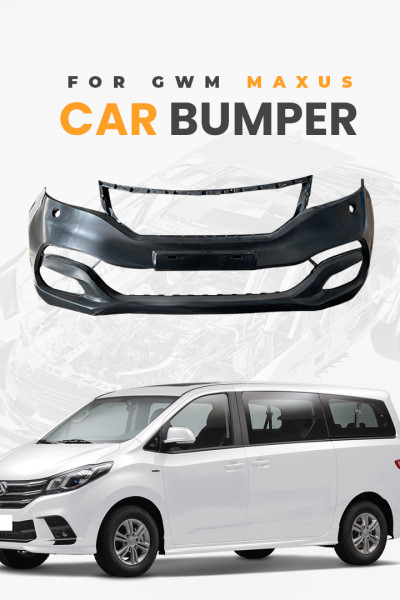
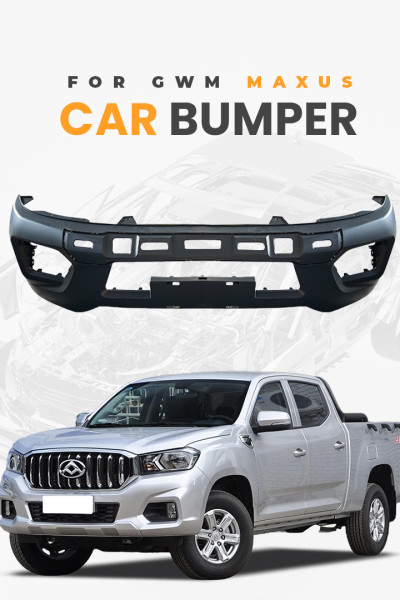
 Front Bumper — GS3 / GS4 / Emkoo Platform
 Upper Radiator Grille — GS5 / GS8 Fitment
 Side Mirror — Power Fold with Signal
 Front Bumper — Cross-Reference SKU for Multi-Brand Stock
Each of these four parts serves a different demand scenario. The front bumper and grille cover the dominant urban collision work in dense Middle Eastern, Southeast Asian, and Latin American cities. The side mirror addresses the universal mirror-damage problem in narrow streets and crowded car parks. The cross-reference SKU is a strategic addition for distributors building multi-brand catalogues, because it lets a single part serve multiple vehicle platforms across different Chinese brands.
Regional Demand Patterns for GAC Parts
GAC's strongest export markets cluster in five regions, each with its own parts demand profile.
Middle East
Saudi Arabia and the UAE are GAC's strongest markets, with the GS3 and the GS8 leading volume. The hot climate creates accelerated paint fade and UV degradation on exterior parts, which drives demand for higher-grade painted replacements. Egyptian distributors also re-export GAC parts across North Africa, which makes Egypt a strategically important consolidation market.
Southeast Asia
Indonesia, Thailand, Malaysia, and the Philippines are scaling GAC volume, with the Emkoo and the Empow leading sales. The dense urban traffic in cities like Jakarta, Bangkok, and Manila generates high front-bumper and mirror damage rates, which creates steady replacement demand. Thai distributors in particular value OEM-grade paint match.
Latin America
Chile, Peru, Mexico, and Colombia are GAC's strongest Latin American markets. The Mexican distribution channel in particular is a strategic hub, with parts being re-exported across Central America and into the southern United States. Mexican distributors prioritise quick fulfilment and competitive pricing.
Africa
Egypt, Nigeria, Kenya, and South Africa are the African growth markets. The South African market is quality-sensitive and willing to pay premium prices for OEM-grade replacements, while the Nigerian and Kenyan markets are more price-sensitive but volume-heavy.
Eastern Europe and Central Asia
Russia (via re-export through Central Asia), Kazakhstan, and Uzbekistan are smaller but growing GAC markets. The climate is harsh on body panels, and demand for durable, well-painted replacements is high.
How to Verify a GAC Body Parts Supplier
The supplier verification checklist for GAC body parts is similar to the checklist for any other Chinese brand, with a few GAC-specific additions.
1. Ask which GAC platforms the supplier actively covers. GAC has a wide model range across the GS, Emkoo, Empow, Aion, and Hycan sub-brands. A serious GAC body parts supplier should be able to list the specific platforms they cover and the model years within each platform.
2. Confirm familiarity with GAC-specific paint codes. GAC uses a distinctive colour palette, including some signature metallics and pearlescents that are not offered by other Chinese brands. The supplier should be able to paint-match against GAC's factory colour codes.
3. Validate fitment documentation depth. GAC has done facelifts across the GS3, GS4, and GS5 ranges, and the body parts change between facelifts. A quality supplier should provide platform-specific fitment charts that map part numbers to model years and sub-models.
4. Ask about EV-specific body parts experience. The Aion range is GAC's EV sub-brand, and EV-specific body parts (with charging port cutouts, sensor mounts for ADAS, and aerodynamic trim) are a growing category. A supplier with Aion experience is more likely to support the full GAC catalogue as it evolves.
5. Confirm export documentation capabilities. GAC parts are exported to markets with widely varying regulatory requirements. The supplier should be able to issue certificates of origin, material certificates, SGS or BV pre-shipment inspection reports, and any market-specific documentation (EUR.1 for Europe, SASO for Saudi Arabia, etc.) on request.
Common Pitfalls for New GAC Distributors
Five mistakes appear with predictable regularity when distributors enter the GAC category.
1. Confusing GAC Motor with GAC Toyota or GAC Honda. GAC's joint ventures with Toyota and Honda produce vehicles under those brand names, not under the GAC Motor brand. The body parts for a GAC Toyota Camry are not interchangeable with the body parts for a GAC GS8. Make sure your catalogue distinguishes between the brand lines clearly.
2. Underestimating paint match requirements. GAC's signature colour palette is distinctive, and customers notice when aftermarket parts do not match. Distributors who offer pre-painted parts in OEM colour codes capture more sales than distributors who sell only primer-grey parts.
3. Building the catalogue around discontinued models. Some early GAC models (the GS5 first generation, the GA3, the GA5) are no longer in production. Distributors who catalogue these models first will end up with dead stock. Focus on the current-generation GS3, GS4, GS8, Emkoo, and Empow, plus the active Aion EVs.
4. Ignoring the EV transition. GAC is one of the Chinese OEMs with the most aggressive EV strategy through its Aion sub-brand. Distributors who treat GAC as an ICE-only brand will miss the Aion opportunity, which is growing fastest in markets like Thailand, Indonesia, and parts of Latin America.
5. Sourcing from a supplier without GAC export experience. GAC export volumes are still small relative to Chery or Geely, which means the supplier ecosystem for GAC parts is thinner. A distributor who sources from a supplier without specific GAC export experience is more likely to receive mislabelled or ill-fitting parts.
Pricing and Margin Economics for GAC Parts
The margin economics of GAC body parts are attractive because the dealer-installed pricing in most export markets is high, while the wholesale landed cost from China remains competitive. The typical gross margin benchmarks for distributors are:
- Front and rear bumper covers: 30 to 45 percent gross margin at landed cost.
- Grille assemblies: 35 to 50 percent.
- Side mirror assemblies: 40 to 60 percent, with the higher end of the range in markets where dealer pricing is exceptionally high.
- EV-specific body parts: 35 to 50 percent, with newer SKUs commanding premium margins as supply is still constrained.
- Structural parts and reinforcement beams: 35 to 50 percent.
The mirror margin is particularly attractive in markets where GAC's authorised service network is weak, because the dealer alternative is either unavailable or extremely expensive. A distributor who quotes a mirror replacement at 40 percent below dealer pricing tends to capture the entire independent aftermarket in their catchment area.
How GAC Fits Into a Multi-Brand Catalogue
GAC is rarely the only Chinese brand a distributor carries. The strategic value of GAC is that it fits naturally into a multi-brand catalogue alongside Chery, MG, Geely, HAVAL, BYD, Changan, and Lynk & Co. Many of these brands share Tier 1 suppliers in China, and the part geometries are often similar even when the badges are different.
A distributor who builds a multi-brand catalogue around OOZOM's 21-brand consolidated warehouse, for example, can mix GAC parts with Chery, Geely, MG, HAVAL, and BYD parts in a single shipment. The container economics are better, the documentation is unified, and the customer gets a one-stop experience. The GAC catalogue becomes a natural extension of the existing relationship rather than a separate supply chain.
The practical sequence for adding GAC to an existing multi-brand catalogue is straightforward: start with the four highest-velocity SKUs (front bumper, grille, mirror, and a complementary protection part), validate sell-through over the first six months, then expand into rear bumpers, headlamps, fenders, and EV-specific parts as the demand profile clarifies.
How OOZOM Supports GAC Distributors
OOZOM has been supplying Chinese auto body parts to overseas distributors for more than a decade, with active GAC programmes covering the GS3, GS4, GS5, GS8, Emkoo, Empow, and Aion ranges. For distributors evaluating us as their GAC partner, the capabilities that matter most are:
- MOQ 1 ordering on most GAC SKUs. Test a single bumper or grille before committing to a container.
- 21 vehicle brands from a single 50,000 sqm bonded warehouse. Mix GAC with Chery, Geely, MG, HAVAL, BYD, Changan, and Lynk & Co in one shipment.
- Real-time stock and order tracking through the mobile app. Check inventory, place orders, and monitor shipments from anywhere.
- Documented export experience to the Middle East, Southeast Asia, Latin America, Africa, and Eastern Europe. Certificates of origin, pre-shipment inspection, and material certificates are standard.
- Platform-specific fitment documentation. Each GAC SKU ships with model year and sub-model fitment notes.
- EV-specific body parts experience. The Aion range is supported with charging-port cutouts, sensor mounts, and aerodynamic trim.
Conclusion: GAC Is a Defensible Brand Bet for Forward-Looking Distributors
GAC Motor is one of the most structurally interesting Chinese brands in the export market right now. The brand has real volume, a maturing parc, a distinctive design language, a multi-sub-brand portfolio that includes both ICE and EV models, and an aftermarket that is underserved relative to the demand. The distributors who recognise this now will own a defensible position by the time the major trading companies wake up.
The right starting strategy is to focus on the four highest-velocity SKUs (front bumper, grille, mirror, and a complementary protection part), source from a body parts supplier with documented GAC export experience, and pair the GAC catalogue with adjacent Chinese brands to maximise container economics. OOZOM supports all of that with MOQ 1 ordering, a 21-brand consolidated catalogue, a 50,000 sqm central warehouse, and real-time stock visibility through the mobile app.
Build Your GAC Parts Catalogue with OOZOM
MOQ 1 ordering, 21 vehicle brands, 50,000 sqm warehouse, real-time stock through the OOZOM app.