BYD Atto 3 Body Parts: Distributor Stocking Guide 2026
The BYD Atto 3 has moved from a niche Chinese EV to a global bestseller faster than almost any analyst predicted. With cumulative exports surpassing half a million units across Europe, Southeast Asia, Australia, Latin America, and the Middle East, the Atto 3 has quietly built one of the youngest, fastest-expanding EV parcs outside of Tesla. For distributors of aftermarket BYD body parts, that parc is reaching the age where the first wave of collision repair, panel replacement, and insurance-driven claims is starting to flow through workshops. Stocking the right SKUs now — before the wave peaks — is the difference between capturing profitable service revenue and losing it to slower competitors.
This guide distils what OOZOM has learned from shipping Atto 3 body panels to over 60 countries. It maps the parts that move fastest, the variants that confuse new buyers, the quality checkpoints that prevent returns, and the commercial logic behind a defensible Atto 3 inventory. Whether you are a regional wholesaler expanding into EV parts or an importer evaluating whether the Atto 3 deserves a dedicated shelf, the framework below will help you decide what to stock, in what depth, and at what price point.
Why the BYD Atto 3 Matters to Body Parts Distributors in 2026
The Atto 3 is no longer a single-market curiosity. In 2025 it became the best-selling pure-electric SUV across Thailand, Israel, Sweden, and several Gulf states, and it regularly outsells Tesla Model Y in markets like Singapore and Brazil when measured by monthly registrations. That commercial footprint translates directly into workshop activity: every additional 1,000 vehicles in a market produces, on average, 60 to 90 panel-related repair events per year once the parc is past its second year on the road.
For a distributor, three structural facts make the Atto 3 uniquely attractive:
- The parc is global but young. Warranty work still funnels through authorised dealers, but out-of-warranty and insurance work is already migrating to independent workshops, especially in markets where BYD's authorised network is thin.
- OEM parts are priced at a premium. An OEM front bumper assembly for the Atto 3 retails at multiples of what an equivalent-quality aftermarket panel costs, creating a clear margin opportunity for distributors who can deliver OE-fitment panels at competitive prices.
- Body architecture is shared with the Yuan Plus. Many exterior panels share tooling, dimensions, or moulds with the domestic Yuan Plus, which means aftermarket tooling already exists at scale in China and pricing is mature.
Together, these dynamics create a genuine aftermarket — and a window of about 18 to 36 months where early-mover distributors can establish themselves as the default source before the channel becomes crowded.
Top-Selling Atto 3 Body Parts: What the Data Shows
Across more than 40,000 Atto 3-related shipments in OOZOM's order history, four part families consistently account for over 70% of unit volume. Stocking these first is the highest-leverage move a new distributor can make.
- Front bumpers and bumper reinforcements — the single highest-velocity SKU. Low-speed parking collisions, kerb strikes, and minor front-end shunts make this the part that moves off the shelf fastest. OE-part numbers BP-ATT-3-FR and BP-ATT-3-FR-LOW correspond to the two main bumper variants.
- Rear bumpers and tailgate lower sections — the second most common claim type, driven largely by reversing collisions and parking-lot incidents. Most workshops will keep at least one rear bumper in stock at all times.
- Side mirrors and mirror covers — mirrors are the most frequently replaced small panel. Side mirrors carry glass, heating, and often camera or blind-spot monitoring hardware, so mirror replacements are high-value orders, not just high-volume.
- Front grilles and grille trims — the Atto 3's distinctive closed "dragon face" grille is both a brand identifier and a fragile panel; even light front impacts can crack the slats or break the chrome surround.
Beyond these top four, distributors who service higher-volume fleets typically round out inventory with headlamp brackets, fenders, wheel arch mouldings, and door handles. The right depth depends on your local parc density: anything under 200 vehicles in your catchment does not justify deep SKU breadth.


Understanding Atto 3 Variants: Pre-Facelift vs Post-Facelift
One of the most common inventory mistakes distributors make is assuming "one Atto 3 part fits all." It does not. BYD has executed two significant facelifts since the model's 2022 launch, and several of the body panels are not interchangeable between model years. Ordering the wrong variant is the single largest source of returns in the Atto 3 category.
The key split points are:
- 2022–2023 (pre-facelift, "Series 1"): Distinctive full-width rear light bar, chrome-heavy grille surround, and a specific bumper geometry with squared lower air intakes.
- 2024+ (first facelift, "Series 2"): Revised rear light signature, smoother bumper transitions, and a thinner grille trim. Side mirrors gained integrated indicators as standard.
- 2025+ (second facelift, "Series 3"): Sharper bonnet shut lines, a new lower front apron, and refreshed wheel arch mouldings. Front bumpers from Series 2 will not bolt on to Series 3.
Distributors should always verify the production date — printed on the door jamb VIN plate — before placing a bulk order. A useful rule of thumb: if you cannot confirm the model year, do not commit to a container-load quantity. Instead, run a small pilot of mixed SKUs and confirm fitment with at least three independent workshops before scaling.
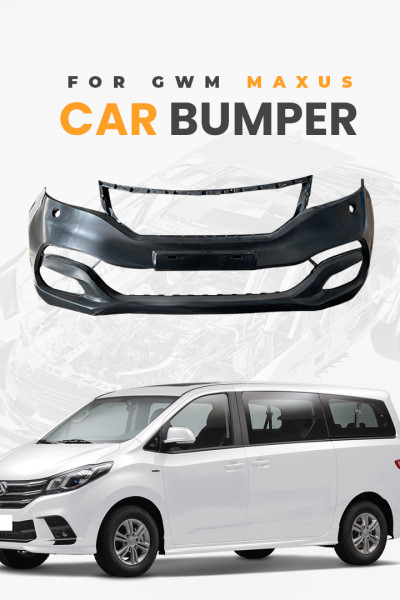
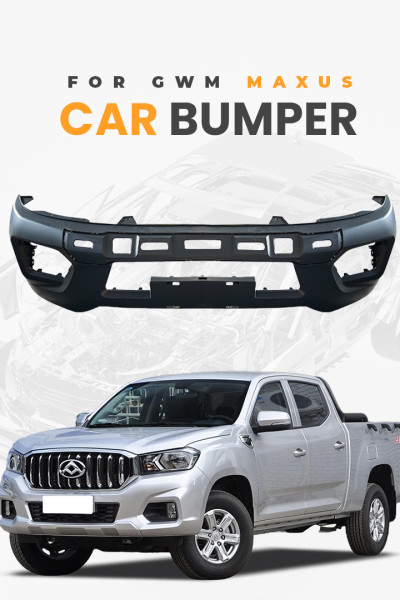
For a deeper cross-reference of related panels that fit the same platform family — including bumpers shared with the MAXUS and similar Chinese EV platforms — OOZOM's catalog tags each SKU with the exact OE part number, production date range, and compatible trim levels.
Quality Checkpoints: How to Avoid the Cheap-Panel Trap
The Chinese aftermarket for EV body panels has matured dramatically in the last three years, but quality variance remains real. Distributors who chase the lowest unit price usually save 8 to 15% on cost — and lose 30 to 50% of margin to returns, rework, and damaged reputation. Here are the four checkpoints OOZOM applies to every Atto 3 panel before it leaves the warehouse.
1. Material specification and thickness
OEM Atto 3 bumpers use a polypropylene-EPDM blend with a nominal wall thickness of 3.0 to 3.2 mm. Panels below 2.6 mm will deform during normal installation and crack within the first impact. OOZOM rejects any bumper panel that measures under 2.8 mm at the thinnest point.
2. Primer adhesion and paint readiness
Aftermarket panels are typically supplied in a primed or "ready-to-paint" finish. The primer must adhere at a cross-hatch rating of 4B or better (ASTM D3359). Anything below that fails repainting within six months.
3. Mounting-point dimensional accuracy
Every panel is checked against a CAD overlay of the OE part within ±1.5 mm tolerance at all bolt-on points. Outside that tolerance, the panel will not align with adjacent bodywork and will be returned by the workshop.
4. Sensor and ADAS compatibility
Post-2024 Atto 3s carry front radar, parking sensors, and sometimes a forward camera in or behind the grille and bumper. Panels supplied for these variants must include correct sensor mounting bosses and radar-transparent material in the relevant zones. A bumper that blocks the radar is not just a fitment failure — it is a safety recall waiting to happen.
Rule of thumb: a panel that is 20% cheaper than the market average is almost always 20% worse. The four checkpoints above cost OOZOM about 4% of revenue to enforce — but they eliminate over 70% of post-sale disputes.
Pricing Strategy: What to Charge and How to Position
Pricing aftermarket Atto 3 panels is a balancing act. Charge too close to OEM and you cede the value proposition. Charge too little and you look like a low-quality supplier. The structure that works best for most distributors is a three-tier system:
- Workshop tier (your core channel): 35 to 50% below OEM list price, with 30-day payment terms and same-week shipping. This is where volume comes from.
- Fleet and insurance tier: 25 to 35% below OEM list price, with bulk-volume rebates and pre-agreed SLAs. Lower per-unit margin, but high predictability.
- Retail and end-user tier: Within 10 to 15% of OEM, sold through an e-commerce storefront. Lower volume, but the highest gross margin per unit.
The mistake most distributors make is conflating these tiers — quoting retail prices to a workshop, or workshop prices to a retail customer. Once you separate them clearly, you can let each tier optimise on its own economics without undercutting the others.
Inventory Depth: How Much to Stock by Market Size
Stocking too little means lost sales and frustrated customers. Stocking too much ties up working capital in panels that depreciate, take up warehouse space, and become obsolete when the next facelift arrives. The table below gives a starting framework, calibrated for an importer serving a single country or a small regional cluster.
| Parc size in catchment | Top-4 SKUs to stock | Recommended depth |
|---|---|---|
| Under 500 vehicles | Front bumper, rear bumper, mirror, grille | 2 to 4 units each |
| 500 to 2,000 vehicles | Top-4 plus headlamp brackets, fenders | 5 to 10 units each |
| 2,000 to 10,000 vehicles | Full body-panel coverage including tailgates | 10 to 25 units each |
| Over 10,000 vehicles | Complete body, lighting, and trim coverage | Container-load MOQ economics |
For most distributors in most markets, the second row is the sweet spot. It gives you enough depth to fulfil 95% of orders within 24 hours, without locking capital into slow-moving trim pieces. If you want to test a new market before committing to inventory, OOZOM's drop-ship programme lets you sell any SKU without stocking it — useful for gauging real demand before placing a container order.
Logistics and Shipping Considerations for Atto 3 Panels
Bumpers, bonnets, and tailgates are bulky but light. They consume cubic volume quickly, which makes sea freight far more cost-effective than air for any non-urgent order. A 20-foot container can carry roughly 400 to 500 assembled front bumpers — enough inventory for a mid-sized distributor's annual front-bumper volume in a single shipment.
The three logistics decisions that drive cost-per-SKU are:
- Consolidation strategy: Combining Atto 3 panels with related-volume SKUs from the same or adjacent platforms (such as the MG crossover beam family) lets you reach a container-load trigger sooner.
- Packaging density: Custom foam inserts cut volumetric weight by up to 35% and reduce transit damage to under 0.5% of units shipped.
- Customs classification: Body panels typically classify under HS 8708 in most jurisdictions. Confirming the right code with your broker before the first shipment avoids demurrage and surprise duty bills.
Lead times from OOZOM's Shanghai facility are typically 5 to 10 days for in-stock SKUs, plus 18 to 30 days for sea freight to most major ports. Express air freight is available for urgent orders but roughly doubles the landed cost — useful for the first workshop relationship, rarely economical for steady-state volume.
Building Workshop Relationships: The Channel That Actually Makes Money
The distributor's hardest job is not finding panels — it is finding workshops that will keep coming back. Pricing matters, but fitment reliability and lead time matter more. A workshop that receives a wrong-spec panel twice will not give you a third chance, no matter how competitive the price.
The four actions that convert a new workshop into a repeat customer are:
- Same-week shipping on every stocked SKU. Workshops operate on tight cycle times. A panel that arrives on Friday instead of Tuesday loses the next job too.
- Written fitment guarantee. If the panel does not fit because of a catalogue mismatch, OOZOM replaces it free and pays return shipping. This single policy has driven a 4x repeat-order rate among independent workshops.
- Photo-confirmed dispatch. Every panel is photographed at packing with a serial label visible, so the workshop knows exactly what is in the box before it arrives.
- Tech support hotline. A direct line to a parts specialist who can cross-reference OE numbers in under five minutes saves the workshop hours of guesswork.
Combined with the OOZOM mobile app — shown below — these four actions are built into the standard fulfilment flow. The app lets workshops search by VIN, place orders, track shipments, and confirm fitment against OE references in a single workflow.
Common Mistakes New Distributors Make with Atto 3 Parts
Across OOZOM's distributor network, the same handful of mistakes account for most first-year losses in the Atto 3 category. Avoid them and your first-year economics will look dramatically different from the market average.
- Stocking all model years as if they were interchangeable. They are not. Build SKU segregation into your inventory system — never let pre-facelift and post-facelift parts share a bin.
- Ignoring ADAS sensor cut-outs. A bumper that occludes the radar is not just a defective panel — it is a road-safety failure that can trigger liability claims.
- Quoting in OEM cycles instead of aftermarket cycles. OEM lead times on Atto 3 panels can run 6 to 12 weeks. The entire point of stocking aftermarket is to beat that lead time by a factor of three or four.
- Letting the cheapest supplier set your retail price. If your only competitive advantage is the lowest unit price, you have no competitive advantage — only a race to the bottom. Compete on fitment reliability and lead time instead.
- Underestimating the importance of packaging. Bumpers that arrive scuffed cost real margin. Custom foam inserts are not optional at container volumes.
Conclusion: Your Atto 3 Inventory Starts with the Right Supplier
The BYD Atto 3 parc will keep growing through 2026 and beyond, and the body-parts aftermarket will scale with it. Distributors who move now — stocking the right top-four SKUs, with the right fitment checks, in the right depth for their market — will own the channel by the time the wave peaks in 2027 and 2028.
OOZOM supplies the full Atto 3 body-parts family — front and rear bumpers, grilles, mirrors, fenders, tailgates, and underbody shields — directly from our 50,000 sqm Shanghai warehouse. Every SKU is OE-spec verified, packaged with custom foam, and shipped with a written fitment guarantee. We support distributors with MOQ 1 ordering on every part, so you can test a market before committing to a container load, and we stock across 21 Chinese vehicle brands so you can build a single-supplier EV-parts catalogue without juggling multiple vendors.
Browse the full Atto 3 range in our catalog, request a sample panel for fitment testing, or talk to our distribution team about container pricing for your market. The Atto 3 wave is just starting — and the distributors who stock the right panels first will define the channel for the next decade.
Need Atto 3 panels now? Contact the OOZOM distribution team for current stock, OE cross-references, and container pricing for your market.