Auto Parts Sourcing Checklist for New Importers
Sourcing auto parts from China for the first time can feel like stepping into a market the size of an ocean. There are tens of thousands of factories, hundreds of trading companies, dozens of certification regimes, and at least five common ways for a first container to go wrong. The good news is that almost every cross-border auto parts failure follows a pattern, and the patterns are well understood. This checklist walks you through the steps that experienced distributors use to keep their first container profitable and their second container even more profitable.
Whether you are an independent trader testing your first order or an established distributor adding a new product line, the principles below apply. We will start with the strategic decisions you make before you contact any supplier, then move through supplier evaluation, quality control, logistics, and after-sales. At each stage we will flag the failure points that have cost real importers real dollars.
If you only take one idea away from this article, take this: the cheapest quote on a body panel is rarely the cheapest landed cost. The goal of a sourcing checklist is not to find the lowest unit price; it is to build a supply chain that you can rely on for the next three to five years.
Step 1: Define the Product You Want to Source
Before you contact a single factory, you need a written product specification that is specific enough to defend in a customs dispute. Vague briefs produce vague quotes, and vague quotes produce wrong parts. For body parts in particular, the specification must include the vehicle make, model, model year range, body style, engine variant where it affects panel fitment, OEM part number if available, paint code if relevant, and the specific sub-components included in the SKU (for example, a grille assembly with or without the camera mount).
A useful technique is to take one of your target SKUs, photograph it from six angles, write a 200-word description, and send that as your first inquiry. Suppliers who respond with a quote that matches your description are suppliers who can read. Suppliers who respond with a generic catalogue PDF are suppliers who will probably send you whatever they have in stock.
Two more strategic decisions belong in Step 1. First, decide whether you are sourcing a single SKU or a portfolio of SKUs. The economics are very different: a single SKU order lets you validate one supplier, while a portfolio order lets you validate a platform. Second, decide whether the product is a consumable (high velocity, low margin, low risk) or an accessory (lower velocity, higher margin, higher warranty risk). Most first-time importers should start with consumables because the cycle from order to cash is shorter and the failure modes are easier to recover from.
"Write your product specification as if you were going to dispute a claim six months from now. If it would not hold up in writing, it is not finished."
Step 2: Build a Shortlist and Filter for Real Capacity
The Chinese auto parts market has thousands of registered suppliers for any given SKU. Your job in Step 2 is to filter that list down to five to ten real candidates, and then to evaluate those candidates on criteria that actually predict performance, not on criteria that produce a glossy sales pitch.
The criteria that actually predict performance fall into four buckets: production capacity, quality systems, commercial reliability, and communication speed. Production capacity is checked by asking for monthly output, factory floor size, and workforce numbers, and then cross-checking the answer against public records. Quality systems are checked by asking for ISO 9001, IATF 16949 (for OEM-grade products), and any brand-specific certifications, and by asking for sample inspection reports from recent orders. Commercial reliability is checked by asking for trade references, banking references, and at least two years of audited financials for orders above USD 100,000. Communication speed is checked by sending a structured inquiry and timing the response.
The filter that most new importers skip, and that separates successful importers from the rest, is the on-site audit. You do not need to visit every candidate, but you need to visit the finalists. A one- or two-day factory visit, plus a warehouse visit, will tell you more about a supplier than a hundred emails. Look at the factory floor: is the equipment current? Are the workstations organised? Are the workers in proper PPE? Are the finished goods stored cleanly, or are they stacked on a wet floor? Are the export cartons stacked on pallets with corner protectors, or are they loose?
Step 3: Validate With Samples Before You Book a Container
Sample evaluation is the single most cost-effective step in the entire sourcing process. A USD 200 sample that prevents a USD 50,000 wrong shipment is the highest-ROI spend any importer can make. Every serious sourcing programme begins with a documented sample phase.
Order samples from at least three finalists. For each sample, document the received condition with photographs, measure critical dimensions against the OEM part or the published specification, check paint match against the OEM paint code, and evaluate packaging. Reject any sample that arrives damaged, that misses critical dimensions, or that shows visible paint defects. A supplier that cannot ship a clean sample will not ship a clean container.
Sample testing should include a fitment check on an actual vehicle whenever possible. A panel that looks right on the bench can still be off by 3 mm on the mounting flange, and 3 mm is the difference between a clean install and a body shop complaint. If you do not have access to a vehicle, your supplier should be able to provide a fixture or a test fitment record.
Step 4: Lock Down Quality Control in Writing
Once you have selected a supplier, the next step is to lock down a written quality control agreement. This document is more important than the purchase order, because it determines what happens when something goes wrong, not whether something goes wrong.
A complete QC agreement covers four phases of inspection. The first is pre-production, where a sample from the bulk run is approved before mass production starts. The second is during production, where an inspector checks fit, finish, and packaging on a defined cadence, typically at 10 percent, 50 percent, and 90 percent of batch completion. The third is pre-shipment, where a final AQL-based inspection is performed on the packed goods. The fourth is container inspection, where photos are taken of the loaded container with bracing and foam separators visible.
Each phase needs a defined owner, a defined reporting format, and a defined consequence for failure. A common pattern is: the supplier pays for the inline and pre-shipment inspections, the buyer pays for any third-party inspections, and the photos from all four phases are uploaded to a shared order record within 24 hours of each inspection. OOZOM uses exactly this protocol on every MAXUS bumper, MG beam, and HAVAL bumper shipment that leaves our warehouse.
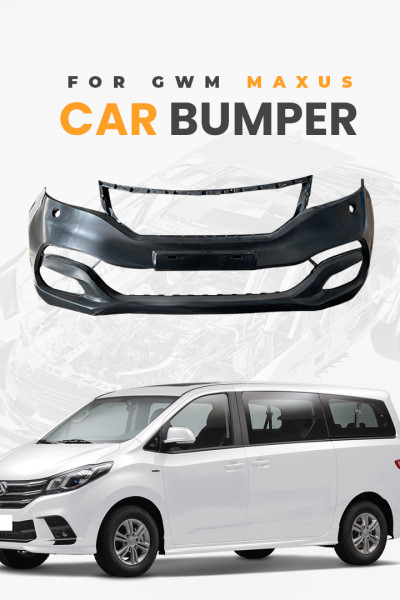
 MAXUS Front Bumper — PID 18477727
 MG Front Beam — PID 18477872
 HAVAL Front Bumper — PID 18478092
 Chery Front Bumper — PID 18408369
Step 5: Negotiate Commercial Terms That Protect You
Commercial terms on a cross-border auto parts order are not just about price. They cover Incoterms, payment, lead time, packaging, labelling, after-sales, and dispute resolution. New importers tend to focus on price and ignore the rest, then discover the rest when the first claim arrives. The right approach is to treat every commercial term as a separate negotiation and to get every term in writing.
On Incoterms, the safest choice for a first-time importer is CIF (cost, insurance, freight) to your destination port, because it puts the freight and transit insurance responsibility on the supplier. EXW (ex-works) is cheaper on paper but transfers every logistics risk to you, which is rarely what a new importer wants. FOB (free on board) sits in between and is the most common compromise.
On payment, the standard pattern for first orders is 30 percent T/T in advance and 70 percent against a copy of the bill of lading, with the balance released after pre-shipment inspection. Once you have a track record of successful orders, you can move to 100 percent against BL or to open-account terms with insurance. Avoid 100 percent upfront on the first order; it concentrates too much risk on the buyer.
On lead time, agree the production lead time separately from the shipping lead time. A 30-day production lead time plus a 25-day shipping lead time is a very different operational reality from a 45-day production lead time plus a 10-day shipping lead time, even though the total is similar. Pin both down, and include a penalty clause for late shipment that is meaningful enough to deter slippage without being so punitive that it breaks the deal.
Step 6: Plan Logistics, Customs, and Documentation
Logistics planning is where a lot of first containers run into trouble. The goods leave the factory on time, the supplier packs them well, and then they sit in a Chinese port for two weeks because an HS code is wrong or a certificate of origin is missing. Build a documentation checklist and verify it 14 days before the goods are ready to ship.
The standard documentation pack for a body parts shipment includes a commercial invoice, a packing list, a bill of lading or airway bill, a certificate of origin (Form E for ASEAN, EUR1 for EU, FTA certificates where applicable), any required conformity certificates for the destination market, and any brand-specific labelling requirements. For Gulf destinations, you may also need a SASO certificate or equivalent. For Australia, you may need an RFCA conformity check. For the EU, you may need REACH compliance documentation.
Container packing deserves its own paragraph because it is the single most common source of in-transit damage on body parts. A correctly packed 40-foot container for body panels uses internal bracing, foam separators between layers, corner protectors on stacked units, and pallet bases for fragile parts. The supplier should photograph the container at the moment of loading, and those photos should be in your inbox before the container leaves the yard.
Step 7: Build an After-Sales Process Before You Need One
After-sales is the part of the import business that everyone agrees is important and that almost no one plans for. By the time a customer is calling about a damaged mirror or a wrong-fit bumper, the sale has already happened, and the only question left is whether you have a written process for resolving it. Without a written process, you will absorb costs you cannot defend; with one, you can resolve claims quickly and keep the customer for the next order.
A workable after-sales process has three components. The first is a clear return authorisation procedure that the customer can follow without needing to email you personally. The second is a defined timeline for resolution: inspection photos within five working days, replacement or refund decision within ten working days, and credit note issued within fifteen working days. The third is a shared responsibility matrix between you and your supplier that makes it obvious who pays for what.
A useful pattern is to budget 3 to 5 percent of revenue for after-sales, and to track every claim against the supplier that produced the part. Within six months you will have a clear data-driven view of which suppliers are worth keeping and which are quietly costing you money. Suppliers who refuse to participate in after-sales in writing should be replaced before the next container, not after.
The Distributor's Pre-Order Checklist
- Product specification written and double-checked for fitment range
- Three or more suppliers evaluated on capacity, QC, references, and communication
- At least one factory visit completed, ideally with a warehouse walk-through
- Samples ordered, measured, and fitment-tested on a real vehicle where possible
- QC protocol agreed in writing across all four inspection phases
- Incoterms, payment, lead time, packaging, and after-sales all in writing
- Documentation pack confirmed with HS codes and certificates of origin
- Container packing plan reviewed and photo record agreed
- After-sales process documented with timelines and responsibility matrix
- Working capital allocated for two reorder cycles before launch
Step 8: Choose Between a Factory and a Platform
One of the most important strategic decisions a new importer makes is whether to source from a single factory or from a multi-brand platform. Both models work, but they suit different business profiles.
A single-factory relationship gives you the lowest unit price and the deepest product expertise, but it concentrates your risk on one supplier. If that factory has a capacity crunch, a quality issue, or a financial problem, your business is exposed. Single-factory relationships also force you to manage multiple factory relationships if your catalogue includes multiple brands, which multiplies your operational overhead.
A multi-brand platform like OOZOM gives you a different trade-off. Unit prices are slightly higher because you are paying for the platform's services, but you get access to parts from 21 vehicle brands in a single relationship, MOQ 1 ordering that lets you test demand without overcommitting capital, a 50,000 sqm bonded warehouse that holds stock you can see in real time, and a documented QC protocol that runs the same way on every shipment. For most new distributors, the platform model is the right starting point because it lets you launch with a broader catalogue faster, then transition to direct factory relationships once you know which SKUs are worth scaling.
The deciding factor is usually your catalogue breadth. If you are importing one SKU from one brand, a single factory is fine. If you are importing 20 SKUs from five brands, the operational cost of managing five factory relationships will quickly exceed the savings from direct sourcing. That is the moment to move to a platform.
Common Sourcing Mistakes and How to Avoid Them
After more than a decade of supplying overseas distributors, we see the same mistakes every year. They are not unique to auto parts, but they have outsized consequences in body parts because of the product size, value, and fitment sensitivity.
Treating the lowest quote as the best quote. The lowest quote usually excludes packaging, excludes QC, excludes after-sales, and excludes the cost of the inevitable rework. Compare quotes on a total-cost-of-ownership basis, including warranty reserves.
Skipping the sample phase to save time. Skipping samples saves four weeks and usually loses four months when the wrong container arrives. There is no scenario in which skipping samples is the right choice.
Relying on a single inspection report. One inspection at one point in production is not a QC system. You need at least three inspection touchpoints, with the photo record shared in writing.
Ignoring documentation until the goods are ready. HS codes, certificates of origin, and destination-market conformity checks take time to issue. Start the documentation pack at the inquiry stage, not at the shipping stage.
Under-budgeting for after-sales. A 1 percent after-sales reserve is wishful thinking. A 3 to 5 percent reserve is realistic for a new importer, and it is the difference between a healthy business and a stressed one.
Choosing a supplier with no English-speaking export team. Communication gaps cost money. If your supplier cannot produce a clear English-language quotation, packing list, and commercial invoice, they cannot service your business efficiently.
The Role of MOQ 1 in Modern Auto Parts Sourcing
MOQ 1 ordering has changed the economics of cross-border auto parts in the last five years. The traditional model forced importers to commit to factory-level minimums, often hundreds of units per SKU, which locked up working capital and made it impossible to test demand. The modern platform model lets you place an MOQ 1 order against a bonded warehouse, with the factory seeing a batch run in the background.
MOQ 1 is not just a convenience feature. It changes the inventory risk profile of an import business, because it lets you keep less safety stock and reorder based on real demand. It also lets you launch a wider catalogue faster, because the working capital per SKU is no longer a barrier to entry. For a new distributor, MOQ 1 is the single most important commercial term you should insist on from day one.
OOZOM operates MOQ 1 ordering across the catalogue, including on the four product cards in this article: the Chery front bumper, Chery grille, side mirror, and BYD guard. Every SKU is stocked in our 50,000 sqm bonded warehouse and is supported by the same four-step QC protocol.
How a Sourcing Platform Reduces Operational Risk
The single biggest source of operational risk for a new importer is fragmentation: too many suppliers, too many communication threads, too many QC protocols, too many documentation formats, too many shipment plans. A sourcing platform reduces fragmentation by aggregating all of those functions behind one relationship.
The practical benefit is that you make one decision (which platform to use) instead of fifty (which supplier for each SKU, which inspection company for each shipment, which forwarder for each destination). That decision is hard, but it is a one-time decision, and the marginal effort of adding the 51st SKU is near zero. Over three years, a platform relationship will save you hundreds of hours of operational work and dozens of costly mistakes.
The other practical benefit is data. A platform accumulates order history, claim history, supplier performance, transit time, and pricing trends across thousands of shipments. As a platform customer, you benefit from that data without paying to generate it yourself. You see which SKUs are rising in demand, which suppliers are delivering on time, and which routes are most reliable. That information is not available to importers working with a single factory on a transactional basis.
Conclusion: Build the Checklist, Then Build the Business
Sourcing auto parts from China is not magic. It is a sequence of decisions, each of which can be made well or badly. The checklist above exists to make sure those decisions are made well on the first container, not learned the hard way on the third. New importers who follow a structured process get profitable faster, scale faster, and recover from mistakes faster than those who rely on relationships alone.
The key milestones to hit in your first ninety days are: a written product specification, three qualified suppliers, a passed sample phase, a documented QC protocol, agreed commercial terms, a complete documentation pack, and an after-sales process ready before the first container leaves the yard. That is a lot of work, but it is a known sequence, and it is the foundation of a sustainable import business.
For distributors who want to skip the fragmentation of multi-supplier management from day one, OOZOM offers a 50,000 sqm bonded warehouse, MOQ 1 ordering, 21 vehicle brands, a four-step documented QC process, and a mobile app with real-time stock visibility. That combination turns the eight-step checklist into a single relationship, so you can focus on building customers instead of managing suppliers.
Skip the Sourcing Fragmentation
MOQ 1 ordering, 21 vehicle brands, 50,000 sqm warehouse, documented four-step QC, mobile app with live stock.