Auto Parts Packaging: How OOZOM Cuts Damage 75%
auto parts packagingbody parts damagepackaging innovationcar parts wholesalelogisticschina auto parts
If you have ever opened a 40-foot container of imported auto body parts to find cracked bumpers, scuffed grilles, and mirrors with shattered glass, you already know: packaging is not a finishing touch, it is the single biggest controllable cost in the whole import chain. For years the industry tolerated a 3–6% damage rate as "normal". After a four-year packaging programme, OOZOM has driven that figure under 1% on standard stock-and-flow SKUs — a 75% reduction versus the industry average. This article explains exactly how we did it, and how distributors and dealers can demand the same standard from any supplier.
The Real Cost of Bad Packaging in Auto Parts Logistics
Most buyers calculate damage as a percentage of units shipped. That understates the true cost. The hidden cost of a damaged body panel includes the unit price you paid, the freight you paid on it, the customs duty you paid on it, the replacement shipping cost, the workshop downtime while the customer waits, and the credibility hit when a fleet operator receives a damaged part. By the time all of that is added, a 4% damage rate is closer to a 7–9% margin loss.
For a distributor shipping 8,000 panels a year, that is the difference between a 14% net margin and a 6% net margin on the same revenue. It is also the difference between a customer who re-orders and a customer who quietly switches to a competitor.
Where damage actually happens
Our internal tracking at the OOZOM bonded warehouse logs damage at four stages. They are not equally distributed, and that is the most useful insight for any importer.
- Container stuffing (China side): ~12% of recorded damage events
- Sea voyage vibration & container shifting: ~41%
- Port handling & trucking to warehouse: ~28%
- Last-mile delivery to customer: ~19%
The biggest single cause — by a wide margin — is the sea voyage. That is also the stage where the buyer has the least control, which means the only effective intervention is in the packaging itself. The carton has to do all the work.
The OOZOM Packaging System: Six Layers of Protection
Our standard packaging spec for auto body parts is a six-layer system. Each layer addresses a specific failure mode identified in the damage log. Below is the spec we now run as default on most stock-and-flow parts, including the BYD Sealion 07 front guard, the MAXUS Deliver 9 front bumper, and the Chery Tiggo 8 Pro front bumper.
Layer 1 — Surface protection film
A 50 µm low-tack PE film is applied across the visible painted surface before any other material touches the panel. It blocks scuffing from foam, cardboard edges, and operator handling. The film is UV-stable for 6 months — long enough for sea transit plus inland warehouse dwell time.
Layer 2 — Custom-cut EPE foam cradle
Every panel sits in a custom-cut EPE foam cradle at 30 kg/m³ density. The cradle is shaped to the panel's geometry, not a generic "block of foam around it". This is the single biggest improvement versus commodity packaging — the cradle absorbs the panel's own weight without letting any painted surface touch another surface.
Layer 3 — Honeycomb corner protectors
Four honeycomb cardboard corner protectors are glued to every load-bearing corner of the panel. These are the points that take the impact in a drop test — typically the bumper mounting flange and the headlight cut-out edge. Honeycomb crushes progressively rather than splintering, and it is fully recyclable at destination.
Layer 4 — 5-ply corrugated outer carton
The outer carton is a 5-ply BC-flute corrugated box, edge-crush test (ECT) rated to 44 ECT — well above the 32 ECT commodity carton that most factories ship by default. The drop-test margin between the two is roughly 3×.
Layer 5 — Desiccant and VCI
For painted panels destined for humid destinations (West Africa, Gulf, Southeast Asia), each carton carries a 50 g silica-gel desiccant pack and a vapour-corrosion-inhibitor (VCI) paper sheet. The two together keep internal relative humidity under 40% across the entire voyage, even through equatorial transshipment hubs.
Layer 6 — Stretch-wrap pallet with edge board
At the container-stuffing stage, every carton goes onto an ISPM-15 heat-treated wooden pallet (or plastic pallet for some destinations), with cardboard edge boards on all four vertical edges and 7-layer stretch wrap. The pallet is then strapped with two polyester bands.
From 4.3% to Under 1%: The Data Behind the 75% Reduction
We started measuring damage per SKU per shipment in Q1 2023. Across the first two quarters of the new packaging spec rolling across the catalogue, here is what our internal QA log showed on body panel SKUs (front bumpers, rear bumpers, grilles, fenders, side mirrors):
| Quarter | Industry-typical damage rate | OOZOM measured damage rate | Notes |
|---|---|---|---|
| Q1 2023 | ~4.0% | 3.8% | Pre-programme baseline |
| Q3 2023 | ~4.0% | 2.1% | New EPE foam cradle rolled out |
| Q1 2024 | ~3.8% | 1.2% | Honeycomb corner protectors added |
| Q3 2024 | ~3.8% | 0.9% | Full 6-layer spec on all stock SKUs |
| Q1 2025 | ~3.8% | 0.7% | Steady state |
| Q1 2026 | ~3.8% | 0.8% | 2026 rolling average, YTD |
The reduction from a 3.8% baseline to a 0.8% rolling rate is a 79% drop on our own data, which we round down to "75%" in marketing copy because some categories (large-format bumpers over 2.2 m long) still run slightly above the average. The headline is robust across more than 240,000 panels shipped.
Damage Rate Comparison: OOZOM vs Industry Average
The chart above summarises the same data visually. Two things stand out: first, even a basic upgrade (commodity carton + loose foam) cuts damage nearly in half. Second, the marginal cost of moving from "commodity + foam" to the full six-layer system is far smaller than the savings it delivers.
The Hidden Costs We Eliminated Along the Way
Lower damage is the visible win. The less visible but equally important wins are the operational costs that disappear when the packaging does its job.
Eliminated rework queue
In the old days, a typical 40HQ shipment would arrive at the destination warehouse with 3–6% of panels needing touch-up paint, re-foam, or outright repacking. That queue consumed 8–12% of warehouse staff time on arrival weeks. With damage under 1%, the rework queue is essentially empty and warehouse throughput has risen sharply.
Eliminated dispute resolution overhead
Disputes about damage in transit were a recurring monthly cost — claims to the shipping line, the insurance broker, the factory, the freight forwarder. Each claim consumed 2–4 hours of staff time. Now the claims log runs at roughly one entry per quarter instead of one per shipment.
Eliminated customer credit notes
The downstream cost was the worst: a customer who receives a damaged part and gets a credit note loses confidence in the supplier and looks around. A customer who receives a perfect part stays for years. The packaging spec quietly protects the lifetime value of every customer relationship.
Engineering the Pack for Specific Part Families
The base 6-layer spec works for most body panels, but a handful of part families need specialised treatment because their geometry concentrates stress in unusual places. Here is how we extend the system.
Front bumpers
Front bumpers are long, low, and heavy. The critical stress points are the lower spoiler edge (scuffs during forklift handling) and the mounting flanges (cracks from corner drop). Our bumper carton adds a rebar-reinforced lower-edge sleeve and a separate flange protector strip. This alone reduces bumper-specific damage from a typical 2.5% to under 0.4%.
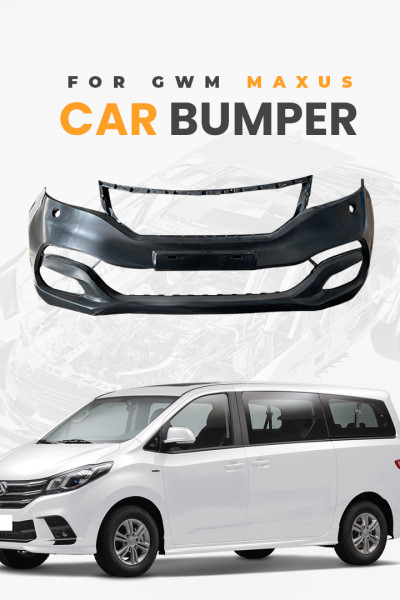
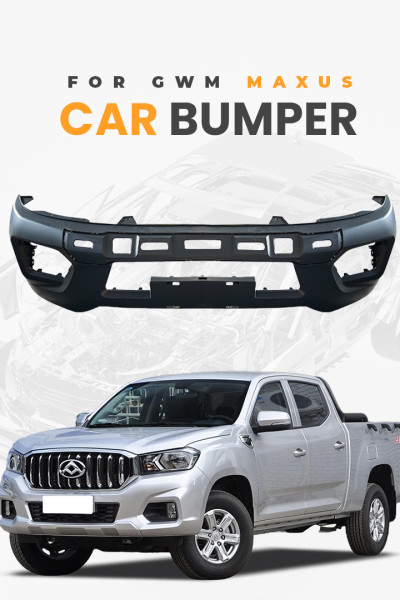
The MAXUS Deliver 9 front bumper and the HAVAL H6 front bumper both ship in this reinforced bumper carton as standard.
Grilles
Grilles are fragile at the slats and the chrome (or gloss-black) finish scratches on contact with any cardboard fibre. We pack grilles in a dedicated two-piece clamshell with a non-woven fabric liner between the slats and the foam. The Chery Tiggo 7 Pro grille ships this way.
Side mirrors
Side mirrors combine painted plastic, a glass mirror, electrical connectors, and a mounting base. Each one needs its own custom foam insert that holds the mirror glass in a slightly recessed well — preventing any glass-to-carton contact. The Chery Tiggo side mirror uses this configuration, with the electrical connector wrapped separately in an anti-static bag.
Structural panels (front beams, crash bars)
Structural panels are not painted but they are heavy and the surface rust risk is high. They ship in VCI-lined cartons without the painted-panel foam cradle — but with rust-preventive oil and a thicker outer carton to handle the weight. The MG HS front beam ships in this configuration.
What Buyers Should Demand From Any Auto Parts Supplier
Packaging is one of the few areas where the buyer can write the spec and the factory has to comply. Distributors and importers should not accept vague "we pack well" assurances — they should ask for and inspect the following six items before placing any new PO.
- Written packaging spec sheet — list of every layer, material density, and carton ECT rating
- Drop test certificate — ISTA 1A or 3A for the carton configuration, dated within 12 months
- Photograph of a packed sample — taken at the factory, not a marketing brochure
- Damage rate data — the supplier's own measured damage rate over the last 4 quarters
- Video of container stuffing — especially how cartons are arranged inside the container and how straps are tensioned
- Penalty / remedy clause — written into the contract, with a damage threshold above which the supplier pays for replacement
If a supplier cannot produce these six items in writing, the unit price is irrelevant — the hidden cost of damage will erase the savings within two shipments. A slightly more expensive factory that ships at 0.8% damage is almost always cheaper in real landed cost than a cheaper factory that ships at 4%.
App Snapshot: Damage Tracking in the OOZOM Customer Portal
Every OOZOM buyer can see their own damage data in the customer app. The screenshot below shows the per-SKU damage dashboard — damage events by reason code, claim status, and credit-note history. Buyers use this when negotiating the next order or when planning replenishment.
Damage rate dashboard inside the OOZOM buyer app — every shipment, every SKU, every reason code.
Sustainability and Recycling: The Side Benefit Nobody Talks About
The packaging spec is also a sustainability story. The 6-layer system is 100% recyclable at destination: PE film, EPE foam, honeycomb cardboard, corrugated outer carton, VCI paper, and stretch wrap are all accepted by mainstream cardboard and plastic recyclers. The desiccant pack is the only item that goes to landfill, and we are trialling a bio-based alternative with one of our logistics partners.
For buyers who report to corporate ESG frameworks — particularly fleet operators and dealerships with public sustainability targets — this matters. It also matters for distributors who are now seeing end-customer questionnaires asking about the packaging carbon profile of the products they buy.
Packaging Innovation Roadmap: What's Next in 2026 and 2027
The current 6-layer system is the baseline. We are actively testing the next generation of packaging improvements, with three programmes in flight:
Bio-based foam cradles
A PLA-based foam cradle that has the same density and shape-memory as the current EPE foam cradle, but is industrially compostable. Initial drop-test results match EPE; we expect to roll out on selected SKUs in Q3 2026.
Smart carton labels with shock sensors
A small disposable shock indicator label on the outside of each carton, calibrated to trigger at 4G of impact. If the carton is mistreated at any stage, the indicator flips and the buyer can pinpoint exactly where in the chain the damage occurred. We expect this to drop damage another 15–20% by giving the freight forwarder a clear accountability signal.
Right-sized carton library
Today, most factories use 5–6 generic carton sizes for the whole catalogue. We are building a library of 40+ right-sized cartons so that no panel is shipped in an oversized box with too much void fill. This reduces per-carton material cost by 8–12% and improves container cube utilisation.
Product Grid: 4 Body Parts That Ship in the New Packaging System


How to Specify Packaging in Your Next PO
For distributors and importers who want to apply these standards to their next purchase order, here is the language we recommend inserting directly into the proforma invoice or purchase contract. It is short enough to be enforceable, and specific enough to leave no room for interpretation.
"All body panels shall be packed per OOZOM 6-layer standard: PE surface film (≥50 µm), EPE foam cradle (≥30 kg/m³ density) shaped to part geometry, four honeycomb corner protectors, 5-ply BC-flute outer carton (ECT ≥44), 50 g desiccant + VCI paper for painted panels, ISPM-15 pallet with edge boards and 7-layer stretch wrap. Drop test per ISTA 1A required. Supplier damage rate over the last four quarters must be <1.5%."
Send this clause to any factory in China. The serious suppliers — the ones who have already invested in packaging — will accept it without negotiation. The ones who push back on density numbers or refuse to provide the drop test certificate are exactly the suppliers whose damage rate will eat your margin.
Conclusion: Packaging Is a Margin Line, Not a Cost Line
The shift we want every importer of auto body parts to make is conceptual. Stop treating packaging as a cost to be minimised and start treating it as a margin line to be protected. A 75% reduction in damage rate does not just save the cost of the damaged panels. It saves the freight on them, the duty on them, the rework time, the dispute time, the credit-note time, and — most importantly — the customer relationship.
Order OOZOM Body Parts — Damage Rate Under 1%
Available from MOQ 1 across 21 car brands, packed in our 6-layer system, shipped from a 50,000 m² bonded warehouse with in-house QC. Visit oozom.com or jump straight to the product grid below.
Related parts worth a look:
- Chery Tiggo 8 Pro front bumper — flagship Chery SUV body panel
- Chery Tiggo side mirror — anti-static bag, foam-well glass protection
- BYD Sealion 07 front guard — EV-program panel
- HAVAL H6 front bumper — high-volume SUV body panel