AI Quality Control in Chinese Auto Parts Manufacturing
Five years ago, the phrase AI quality control in the context of chinese auto parts would have sounded like marketing fluff. Today it is operational reality. The top tier of Chinese body panel manufacturers now run vision systems, machine-learning defect classifiers, and robotic measurement cells on the production line, and the second tier is catching up fast. For overseas distributors sourcing auto parts from China, this matters enormously: the consistency gap between the best and the worst factories has narrowed, but only at suppliers who have invested in AI-driven inspection. Knowing how to spot that investment — and how to demand it — is now a core distributor skill.
This guide explains what AI quality control actually looks like inside a modern Chinese body panel factory, how it changes the economics of wholesale sourcing, and what questions a distributor should ask any potential body parts supplier before signing a long-term supply agreement.
What AI Quality Control Actually Means in a Body Parts Factory
AI quality control is not a single piece of equipment bolted onto an existing production line. The broader landscape of quality control china has invested heavily in this kind of infrastructure over the last decade, and the early results are visible across the country's major parts hubs. It is a layered system that typically combines four technologies: high-resolution industrial cameras, structured lighting, machine-learning models trained on thousands of historical defects, and integration with the factory's manufacturing execution system so that defective parts are automatically rejected before they reach the next station.
Starter Product Grid: AI-QC-Checked Body Parts
OOZOM's bonded warehouse carries AI-inspected auto parts across multiple categories. The four products below are concrete examples of the SKUs that benefit most from machine-vision quality control on the production line, and each links to a live product page with pricing, MOQ, and fitment documentation.
 Painted Front Bumper — AI Paint Inspection
 Chrome-Plated Grille — AI Defect Detection
 Side Mirror — AI Cosmetic Inspection
 Reinforcement Beam — AI Dimensional QC
Three more SKUs that benefit from AI inspection and that complement the core catalogue:
- HAVAL front bumper — runs through the same AI paint-inspection cell.
- BYD front guard — dimensional inspection on steel components.
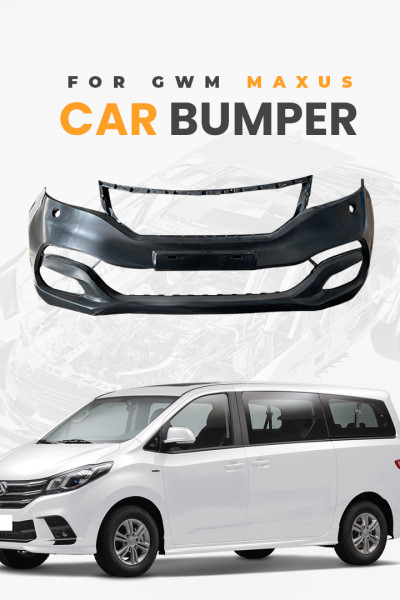
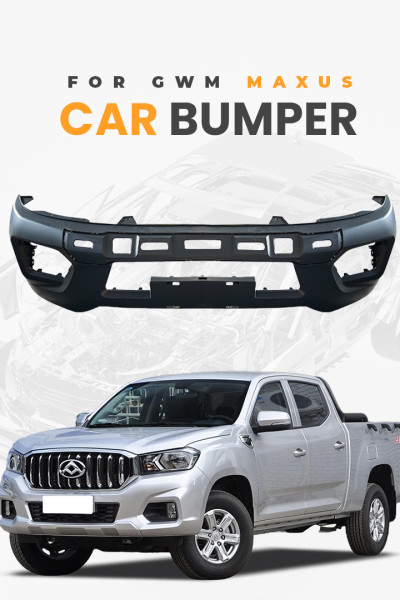
- MAXUS front bumper — large-format painted panel with full surface scanning.
The four layers work together. The cameras and lighting produce consistent image quality across every shift, eliminating the human visual fatigue that drives inconsistent inspection on a manual line. The machine-learning models classify defects that would take a human inspector weeks to learn to recognise reliably — subtle paint orange peel, micro-cracks in plastic weld lines, hairline mould-flow marks, paint thickness variations below 5 microns. The MES integration routes defective parts out of the flow before they reach the packaging station, which means the defect never enters a container.
The practical result is that an AI-equipped line can run defect rates in the 0.3 to 0.8 percent range on complex body panels, where a manual line on the same product will typically run at 2 to 5 percent. That gap is the difference between a profitable container and a margin-eroding claims cycle.
Where AI QC Delivers the Most Value on Body Parts
Not every part benefits equally from AI inspection. The body parts where AI quality control delivers the largest gains are the parts where visual consistency matters most and where minor surface defects trigger customer returns. Five part categories stand out.
Painted Bumper Covers
Painted bumper covers are the single highest-value AI QC use case. The painted surface is the first thing the customer inspects, and a single orange-peel blemish or paint run is enough to trigger a return. AI vision systems can detect paint defects that are below the threshold of human visual inspection on a moving line, and they do so consistently across all shifts. The result is a significant reduction in paint-related returns, which is the largest single category of warranty claims on Chinese bumper exports.
Chrome-Plated Grille Assemblies
Grille assemblies combine plastic moulding, chrome plating, and often a painted emblem mount. AI QC is well-suited to detecting chrome pitting, plating thickness variation, and emblem alignment. The economic impact is significant because grille returns are typically handled as full assembly replacements, and the labour cost of the replacement often exceeds the cost of the part itself.
Headlamp Assemblies
Headlamps are challenging because the inspection criteria include both cosmetic and optical properties. AI vision systems can check lens clarity, reflector alignment, and chrome-ring uniformity in a single inspection pass, which is difficult to achieve with human inspectors working at line speed. AI is also used to verify that the ADAS camera and radar mounts are positioned within tolerance, which is critical for vehicles with adaptive cruise control.
Side Mirror Assemblies
Side mirrors combine painted plastic, glass, electronic modules, and turn-signal indicators. AI QC excels at verifying that the glass-to-housing alignment is within tolerance and that the integrated turn-signal lens is free of mould-flow defects. Mirror electronics are still tested electrically rather than visually, but the cosmetic side benefits enormously from AI inspection.
Reinforcement Beams and Steel Components
Steel reinforcement beams are not typically thought of as AI QC use cases, but the latest generation of robotic measurement cells uses machine vision to verify weld positions, hole locations, and dimensional accuracy on stamped and welded parts. The result is a tighter tolerance band than is achievable with manual gauges, which improves crash performance consistency across production batches.
How AI QC Changes the Economics of Wholesale Sourcing
The economic impact of AI quality control on wholesale auto parts sourcing is structural, not incremental. Three changes matter most for distributors.
Lower defect rates reduce claims costs. A reduction in defect rate from 3 percent to 0.5 percent on a 1,000-unit container means 25 fewer warranty claims per shipment. At an average warranty cost of 30 to 60 dollars per claim (including shipping, replacement part, and admin time), that is a saving of 750 to 1,500 dollars per container. Over a year of regular shipments, the savings compound.
Tighter tolerance bands reduce fitment callbacks. A bumper cover that is within 1 mm of OEM specification on every mounting tab installs cleanly the first time. A bumper cover that drifts to 3 mm out of spec triggers a fitment complaint, even if the part itself is not defective. AI-driven dimensional inspection holds the entire production batch within the tight tolerance band, which reduces the number of fitment-related returns dramatically.
More consistent paint match reduces repaint returns. Paint match is the single largest source of cosmetic returns on body parts. AI-driven paint inspection verifies that every painted unit in a batch matches the reference standard for thickness, colour, and surface finish, which means the retailer can install the part without a repaint in most cases. That is a 50 to 150 dollar saving per part on every install.
How to Tell If a Chinese Supplier Actually Uses AI QC
AI quality control is the new marketing language in the Chinese body parts industry, and not every supplier who claims to use it actually does. A distributor evaluating a potential body parts supplier should ask five specific questions.
1. Ask to see the inspection station. A real AI vision station is a substantial installation: an enclosed booth with structured LED lighting, multiple high-resolution cameras, and a rack of industrial computers. Ask for a video tour of the inspection station on the specific production line that will run your parts.
2. Ask for the batch inspection report format. An AI-equipped line produces a structured batch report with per-unit pass/fail status, defect classification codes, and image evidence. A supplier running manual inspection produces a single signed paper sheet per batch. The difference is visible at the document level.
3. Ask how the line handles a defect spike. When an AI vision system detects a defect cluster, it can stop the line automatically and alert the production supervisor. When a manual inspector detects a defect cluster, the discovery often happens after a full shift of production. Ask what the line-stop procedure is and how quickly the system reacts.
4. Ask for the false-reject rate. AI vision systems occasionally reject good parts. A well-tuned system runs at a false-reject rate below 1 percent. A poorly tuned system runs at 5 percent or higher, which means the supplier is producing good parts and throwing them away. Ask what the false-reject rate is on the line that will run your parts.
5. Ask for a defect library summary. A supplier running real AI inspection can name the defect categories their system is trained to detect. A supplier who waves the question away is either not running AI inspection or running it on a line that has not been trained on the relevant defect types.
The Limits of AI QC: What It Cannot Catch
AI quality control is a powerful tool, but it is not magic. There are categories of defect that even the best AI vision system cannot catch reliably, and a sophisticated body parts supplier knows where those limits are.
Material defects inside the part. An AI vision system inspects the surface of a part. It cannot detect internal voids, weld-line weakness, or contamination embedded inside the moulded plastic. Those defects require destructive testing or X-ray inspection, which is not practical on every part in a production batch.
Long-term UV degradation. AI vision cannot predict how a painted part will age under UV exposure over five years. That requires accelerated weathering testing, which is run periodically on production samples but not on every batch.
Functional electronic defects. A vision system can verify that a mirror motor is present and correctly assembled, but it cannot verify that the motor turns at the correct speed under load. Functional electronic testing is still done with bench testers, not vision systems.
Subjective aesthetic judgments. Some aesthetic properties — the perceived "depth" of a piano-black finish, for example — are still subjective. AI vision can measure gloss and reflectivity, but the final call on whether a part looks "right" is still made by a human inspector.
The practical implication for distributors is that AI QC reduces the most common defect categories dramatically, but it does not eliminate the need for human inspection at the batch level. The best suppliers combine AI inspection with targeted human inspection on the categories where human judgment still outperforms machines.
AI QC and Container-Level Inspection Strategy
For distributors buying containers of chinese auto parts, AI QC at the factory level should be combined with a smart container-level inspection strategy on the receiving side.
Pre-shipment inspection (PSI). A pre-shipment inspection should still be performed on every container, even when the supplier runs AI QC. The PSI confirms that the batch that was loaded is the batch that was approved, and it catches any in-transit damage. An SGS or BV PSI report is the standard.
AQL sampling on critical dimensions. Acceptable Quality Limit sampling on critical dimensions (mounting tab positions, panel gaps, paint thickness) is still the right approach for high-volume SKUs. The AQL threshold should be tightened for parts where cosmetic consistency matters most.
First-article inspection on new SKUs. For any new SKU, the first three production batches should be inspected in detail, with dimensional reports attached to the order record. Once the dimensional consistency is confirmed, the inspection cadence can be relaxed to AQL sampling.
Continuous improvement loop. The best distributors use the warranty data from their own customers as input back to the supplier. If a specific defect pattern appears repeatedly across multiple shipments, the supplier can use that data to retrain the AI model on the production line. This kind of feedback loop is rare but extremely valuable.
"The distributors who capture the most value from AI QC are the ones who feed real-world warranty data back to their suppliers. The model gets smarter, the defect rate drops further, and the supplier-distributor relationship becomes structurally harder to disrupt."
How OOZOM Uses AI QC to Support Distributors
OOZOM operates a 50,000 sqm bonded warehouse that supplies parts from 21 vehicle brands, with quality control built into every shipment. For distributors who care about auto parts quality, the relevant capabilities are:
- Supplier-side AI inspection on high-volume SKUs. Our top-tier production partners run machine vision inspection on painted bumpers, chrome grilles, and headlamp assemblies, with batch reports attached to every shipment.
- Receiving-side inspection on every container. Every container is inspected on arrival at the warehouse, with AQL sampling on critical dimensions and a documented inspection record.
- Real-time QC visibility through the mobile app. Distributors can view batch inspection reports, photo records, and dimensional data from the OOZOM app before authorising a shipment.
- Material certificates and pre-shipment inspection reports. SGS or BV pre-shipment inspection reports are available on request, alongside material data sheets and certificates of origin.
- MOQ 1 ordering so distributors can validate quality before scaling. A distributor can order a single unit of a new SKU, inspect it on arrival, and place the bulk order only after confirming fit and finish.
The Future of AI QC in Chinese Auto Parts
AI quality control in the Chinese auto parts industry is moving fast. Three trends are worth watching.
Higher-resolution inspection. Camera resolution continues to improve, and the next generation of AI vision stations will detect sub-surface defects that today's systems miss.
Predictive quality. Rather than only detecting defects after they occur, AI models are now being used to predict which production batches are most likely to develop defects, so the line can adjust before the defect happens.
Cross-factory learning. The largest Chinese parts groups are starting to share AI model weights across their factory network, which means a defect detected in one factory can update the inspection model in every other factory in the group within hours. This dramatically shortens the learning curve on new defect categories.
For distributors, the strategic implication is that AI QC will become table stakes within the next three to five years. The distributors who build their supplier relationships around AI-capable factories now will have a structural quality advantage for the rest of the decade.
Conclusion: AI QC Is the New Baseline for Serious Auto Parts Sourcing
AI quality control is no longer a competitive differentiator in the Chinese auto parts industry; it is the new baseline. The factories that have invested in AI inspection are producing measurably better parts at lower defect rates, and the factories that have not invested are falling behind on price, quality, and consistency. For distributors, the strategic implication is clear: choose suppliers who run AI inspection, demand batch-level inspection reports as standard, and build the feedback loops that turn real-world warranty data into continuous improvement.
OOZOM supports this model end to end, with MOQ 1 ordering, 21 vehicle brands from a single 50,000 sqm warehouse, real-time QC visibility through the mobile app, and documented pre-shipment inspection on every container.
Source Auto Parts with Documented AI QC
MOQ 1 ordering, 21 vehicle brands, 50,000 sqm warehouse, batch-level QC reports via the OOZOM app.